Christophe Baron and Cayuse: How the Rocks District Changed American Wine
Why one French winemaker looked at a barren field of stones and simply said, "This is it."
Jan de Weerd - Spoken Wines
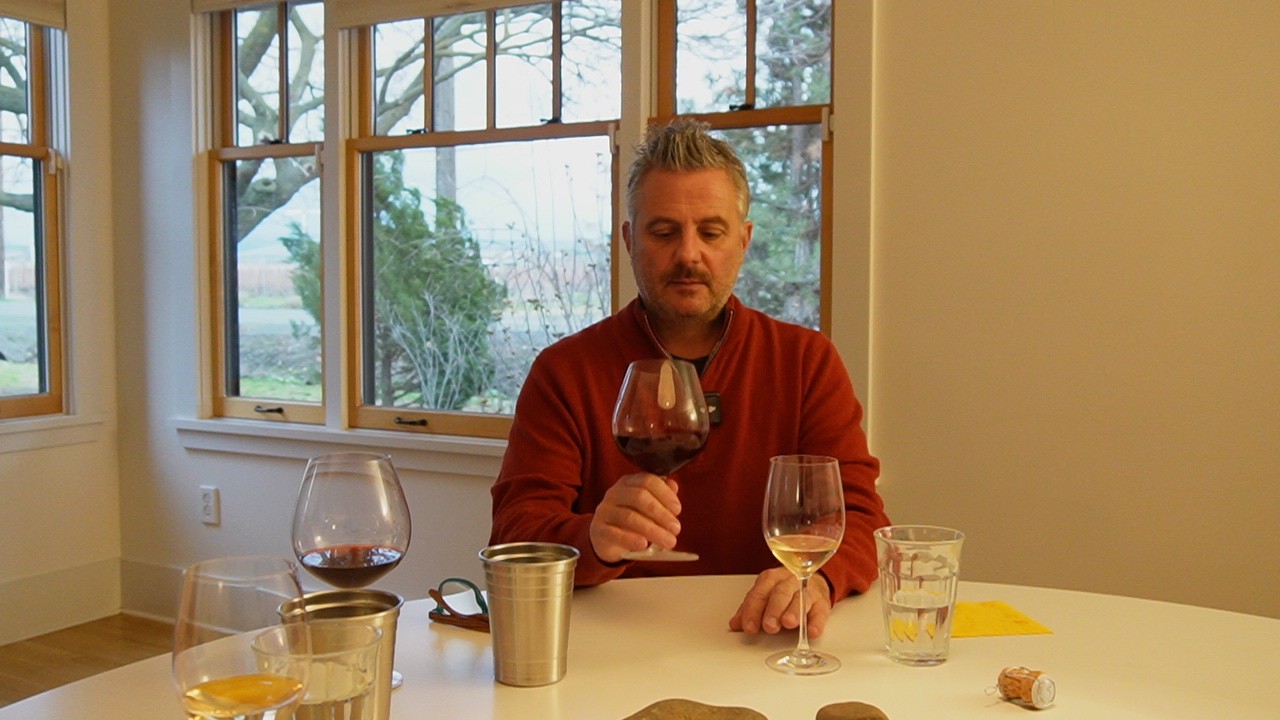
This will hide itself!
The Rocks District of Milton-Freewater is a small wine region near Walla Walla, Washington, built on an ancient alluvial fan covered with volcanic basalt cobblestones. The stones matter because they create an unusually demanding environment for vines: there is little conventional topsoil, water drains quickly, and the dark rocks absorb and release heat around the vines.
Those conditions help produce wines with tension, savory depth, aromatic lift, and remarkable energy. The cobblestones do not simply “flavor” the wine. They shape the growing environment in which the vines struggle, ripen, and develop. Their iron- and manganese-rich basalt reflects a much older story of volcanic geology, ancient floods, and water flowing down from the Blue Mountains.
In 1996, Christophe Baron looked across this landscape and recognized what others had overlooked. The day before he was meant to leave for Oregon’s Willamette Valley, he picked up two stones near Milton-Freewater and said:
“This is it.”
That moment led to Cayuse Vineyards and helped establish the Rocks District as one of America’s most distinctive wine regions.
We had the opportunity to meet with Christophe Baron and hear how that decision changed the course of his life, and the identity of an entire region.
What the Stones Reveal
Christophe had seen landscapes like this before, not in Washington, but in some of the world’s great wine regions. He knew the rounded stones of Châteauneuf-du-Pape, the granite slopes of Hermitage and Côte-Rôtie, and the glacial debris of Mendoza.
Again and again, he had seen the same possibility: expressive wines can come from places where vines must work hard, where the soil is rocky, poor, and unforgiving.
The Rocks District is built on an alluvial fan formed at the end of the last ice age. Ancient floods carried lava-derived basalt stones down from the Blue Mountains, leaving behind a landscape rich in iron and manganese.
The cobblestones matter because they define the growing environment. They create fast drainage, limited soil, and a challenging root zone. They also help moderate heat around the vines. Those conditions encourage the kind of concentration, freshness, savory character, and structural tension Christophe was looking for.
No farmer would call this generous land.
But Christophe wasn’t looking for generosity.
He was looking for tension.
This same combination of stone, elevation, and mountain air shapes wine across the wider Walla Walla region, not just the Rocks District.
Why the Rocks District Tastes Different
The Rocks District’s wines are shaped by the relationship between heat, stone, elevation, and cool air moving through the valley. The cobblestones create a demanding root environment, while the region’s position near the Blue Mountains contributes sunlight, airflow, and long growing conditions. That combination helps explain why the wines can feel powerful without becoming heavy, particularly Syrah, which often carries dark fruit alongside savory depth, mineral character, and aromatic lift.
The important takeaway is that the Rocks District is not simply “a place with rocks.” The stones are part of the reason the region has developed such a recognizable identity. They influence how the vines grow and help create the tension and energy that Christophe recognized from the beginning.
Christophe Baron’s Decision to Follow the Land
“If I hadn’t opened that book the night before,” he told us, referring to a photo of the Southern Rhône cobblestones that he had been sharing the night before with his local farmer friend, “I would probably be in the Willamette Valley today crafting Pinot Noir and Chardonnay.”
Instead, instinct intervened.
He changed his plans overnight, abandoning the safety of an established region to create something entirely new, in a place where fruit orchards once stood and vineyards did not.
He didn’t want to follow a path.
He wanted to set one.
Christophe was not simply choosing a vineyard site. He was choosing to believe that an overlooked landscape could express something no established region could offer in quite the same way.

Christophe found what he was looking for: lava-derived basalt stones, rich in iron and manganese, carried down by ancient floods. Photo Andrea Johnson.
How Cayuse Creates Honest Wine
For Christophe, the Rocks District is only the beginning of the wine’s story. The next responsibility is farming and winemaking that do not cover up what the land is trying to say.
“Honest wine starts in the vineyard,” he says. “It’s about being honest with the land. Listening. Not forcing.”
For Baron, that philosophy is not abstract. It translates into biodynamic farming, meticulous attention to detail, and deep respect for the natural rhythms of the place. Christophe’s belief in biodynamics traces back to his student days in Burgundy, after reading about Nicolas Joly and tasting wines farmed conventionally, organically, and biodynamically, blind.
“The biodynamic wines always had more life,” he said.
“More freshness. More tension. More clarity.”
Like the difference between a two-star and three-star Michelin restaurant, the gap isn’t flash. It’s care. Small decisions made consistently, year after year. It is all about the details.
Everything that happens in the cellar exists only to express what has already been earned in the vineyard. Native yeasts ferment spontaneously. No commercial yeast has ever been introduced. Each vintage carries its own microbial voice, its own fingerprint. “The wine speaks for itself,” Christophe says. “We are there for the wine. Not the other way around.”
This approach gives each vintage room to express its own character. The goal is not to make every year taste identical. It is to preserve the tension, freshness, and clarity that first drew Christophe to the stones.
Taste across Christophe Baron’s wines, and the signature is unmistakable.
Christophe’s Stones Speak Through the Wines
Taste across Christophe Baron’s wines and the signature becomes clear. They are precise and powerful, but they are not heavy. They carry savory depth, layered texture, aromatic lift, and a sense of movement through the palate.
Grenache from Horsepower, planted at extraordinarily high density and cultivated with draft horses, ripens later and at lower sugars. The result is flavor without heaviness, wines that hover rather than sit.
Syrah, the grape that put the Stones on the map, expresses itself with savory depth, mineral edge, and aromatic precision. These are not wines of extraction. They are wines of infusion, tasted daily, adjusted instinctively, pressed before force ever enters the equation.
Across every label and price point, the message remains consistent: place first. Even Double Lucky, intentionally created at a more accessible price point, carries the same stone-driven nuance, just spoken at a softer volume.
“The hand is there,” he said. “But it’s there because of what happens before the grapes ever arrive at the wine studio. Your crop is the shadow of the farmer.” What fascinates us is how this patience coexists with Christophe’s boldest decisions, the ones made in an instant. Cayuse. Hors Catégorie. Horsepower. Each born from a moment of absolute clarity.
If you like to try the wines get on the mailing list now because there is a ‘little of a wait’. Depending on the wine anywhere from 7 to 8 years. But like Christophe’s wines it takes time and patience, and as he showed us, you got to start somewhere: bionicwines.com. Of course, you can also check with your local wine store and they will be able to find a way to get it.
If you are trying a Rocks District wine for the first time, pay attention to the space between the fruit and the structure. The wine may have concentration, but it should also feel lifted, savory, and alive. That tension is part of the place speaking through the bottle.
These wines are precise, powerful, but not heavy, savory, layered, and alive.
“My great grandfather said, if the land is too good to grow wheat, don’t bother planting a vineyard.”
Christophe Baron’s story belongs to a larger conversation about Walla Walla wine. Dunham Cellars carries a similar spirit of place: read Dunham Cellars, Walla Walla: The Art, the Dog, and a Lasting Legacy or watch our video from the winery. FIGGINS Estate does too, with its own hillside vineyard built into the basalt: read about the high-elevation hillside vineyard behind FIGGINS Estate or watch our video from the estate.
The region’s combination of history, place, and careful winemaking also comes through in L’Ecole’s New Era of Purpose and Precision.
The Rocks District of Milton-Freewater began as a landscape many people would have dismissed as too harsh for vines. Christophe Baron saw something else: a place with enough difficulty to create tension, enough character to produce a distinct wine, and enough possibility to justify taking a completely different path.
The stones did not make the wine by themselves. They gave the vines, farmer, and winemaker a particular place to respond to. That is what makes the Rocks District so compelling, not simply that it looks different, but that its volcanic landscape can be felt in the energy and structure of the wines.
Visit our United States page for a full overview of wine in the United States.
For more stories about the places and people shaping American wine, subscribe to our newsletter.
More from this country

United States
Woodward Canyon Winery - What Comes After You Help Build a Wine Region
The evolution of Walla Walla wine and how the Small family is protecting its legacy by continuing to question, experiment, and listen to the vineyard.
United States
What Makes Dunham Cellars Stand Out in Walla Walla? The Dog, the Art, and a Legacy Carried Forward
Inside the former World War II hangar where family, art, wine, and the memory of Eric Dunham continue to shape one of Walla Walla's most personal wineries.
United States
How Kerry Hill Winery Turned a Neglected Idaho Vineyard Into a Working Estate
From McDonald’s pioneer to Kerry Hill Winery, Mindy Mayer’s story of discipline, unthinkable loss, and moving forward



From Vineyard to Inbox
Subscribe to our newsletter