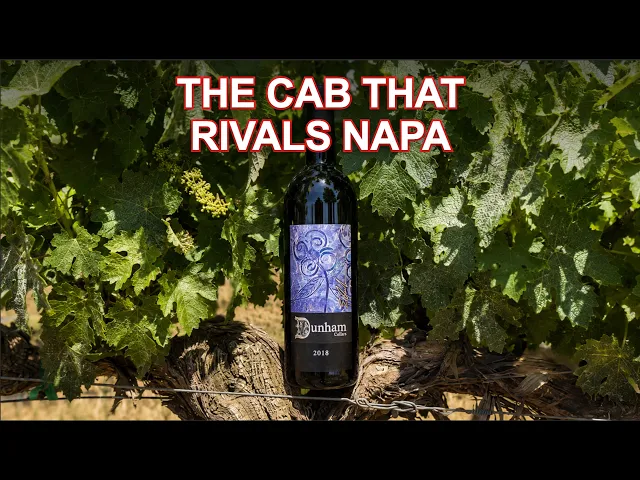
What Makes Dunham Cellars Stand Out in Walla Walla? The Dog, the Art, and a Legacy Carried Forward
Inside the former World War II hangar where family, art, wine, and the memory of Eric Dunham continue to shape one of Walla Walla's most personal wineries.
Tammy de Weerd - Spoken Wines
Smooth Scroll
This will hide itself!
This will hide itself!
If you want a Walla Walla winery whose history is visible the moment you walk through the door, Dunham Cellars is a place to seek out. The winery occupies a former World War II aircraft hangar, where crews once trained on B-17s and B-24s, but its most enduring character comes from the people, paintings, and stories inside it, especially the memory of founder and winemaker Eric Dunham.
His presence remains in the artwork on the walls, in the Three Legged Red label featuring Port, the dog Eric rescued, and in the people who stayed after Eric died far too young. That continuity is what makes Dunham different. It is not simply a historic Walla Walla winery; it is a family and community still finding ways to carry an original vision forward.
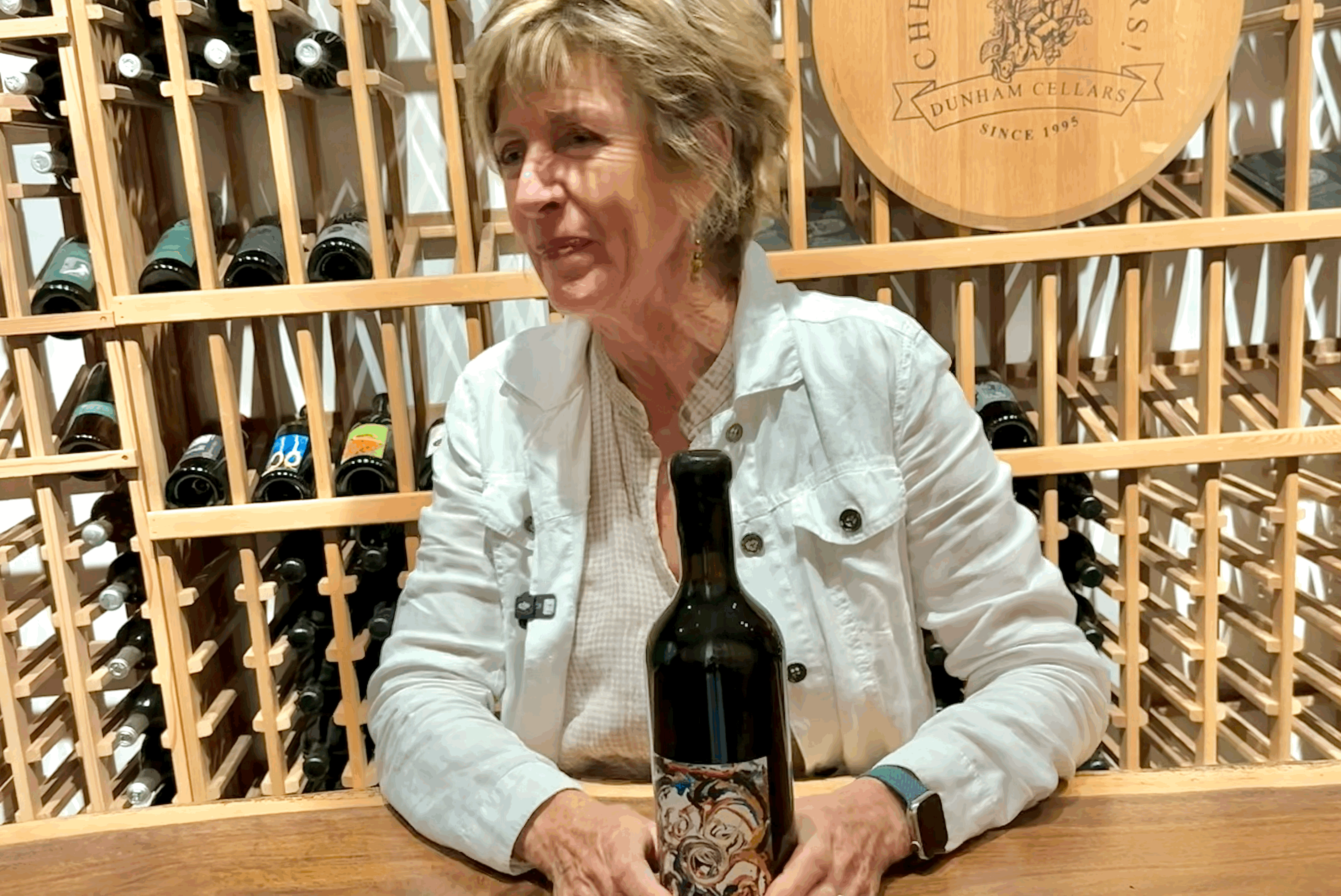
When we visited, Joanne Dunham, John Blair, and the team did not present the past as something polished and finished. They spoke about it as something still lived, with affection, grief, humor, and a deep sense of responsibility.
Dunham is one part of a much larger regional story. Our overview of the soils, elevations, and grape varieties that keep the valley from settling into a single style traces the same ground Dunham calls home.
The Historic Aircraft Hangar
Before Dunham Cellars, the building trained bomber crews for a war fought an ocean away. Today it holds barrels, artwork, and three decades of Walla Walla wine history, proof that a place can carry more than one story at once.
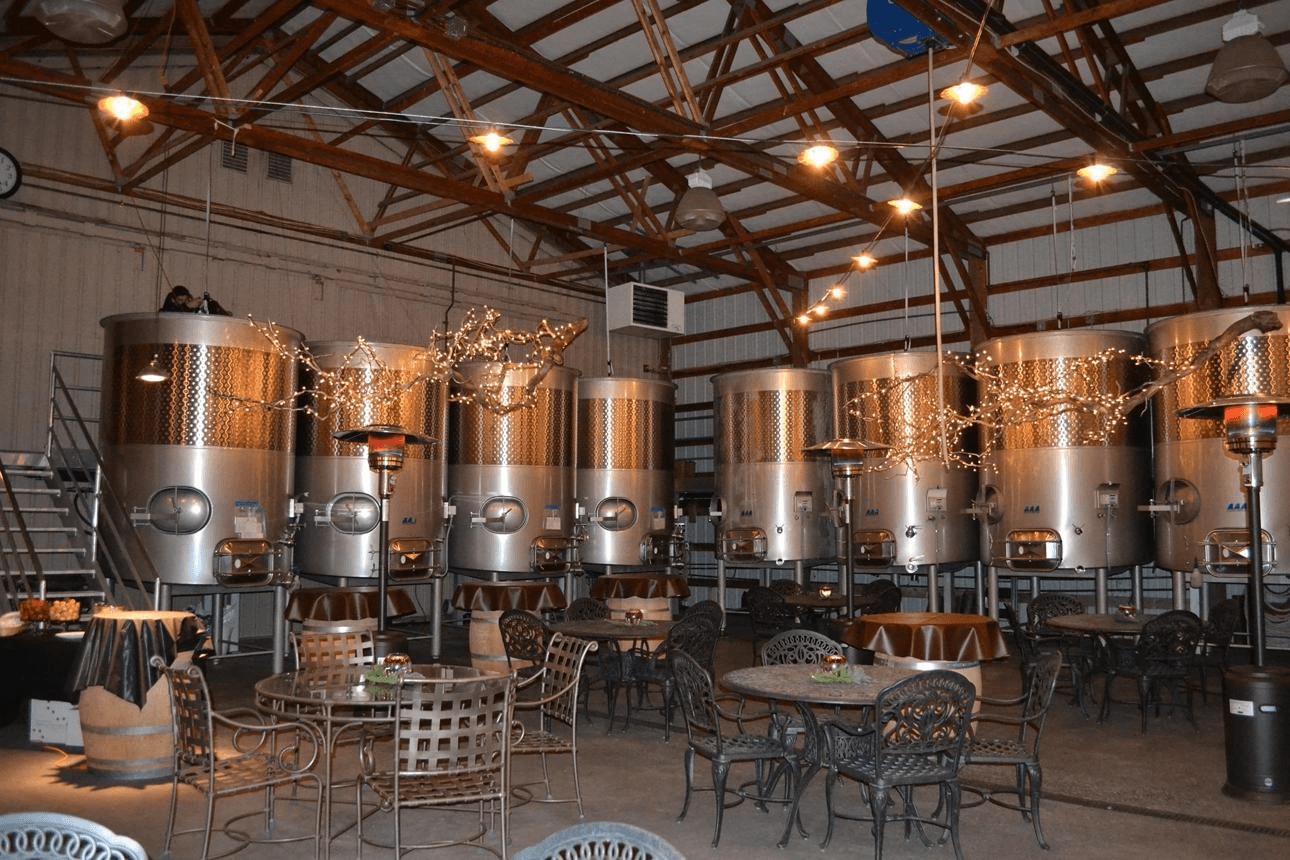
The former airplane hangar that became home to Dunham Cellars, a place where industry, art, wine, and community slowly intertwined.
Eric Dunham’s Path Into Winemaking
Eric’s stepmom, Joanne Dunham, grew up outside Walla Walla in a farming family. Wheat. Alfalfa. Cattle. Open land and long days of work. Wine was never part of the plan.
Eric changed that.
After serving in the Navy, he came home with a growing fascination for wine and decided he wanted to learn how to make it. He started at the bottom: working harvest, cleaning tanks, learning cellar work at the winery where a generation of Walla Walla winemakers got their start, under Marty Clubb. Five years later, he had worked his way to assistant winemaker.
At the time, Joanne and her husband, Mike, Eric’s father, had returned from Seattle and were living in Walla Walla. They were running an insurance business and building a stable life. Then Eric came to them with the idea of starting a winery.
Joanne still laughs softly when she talks about it because there was never some grand strategy behind the decision. “You just kind of keep doing what you’re doing,” she said. “And then one day you stop and look back and think… my God. Where did all that happen?”
The first vintages were tiny. Bottles were filled by hand. Labels were applied by hand. Corks were pushed in one at a time. They waxed bottles themselves because they didn’t own proper equipment yet.
Everyone had a role. Mike handled the finances. Joanne handled facilities and operations. Eric made the wine. And slowly, over time, the little winery inside the hangar became part of Walla Walla’s early wine story.
Port, the Three-Legged Dog Behind Dunham’s Most Recognizable Label
People still walk into Dunham asking for “the dog wine.”
Port was a small dog Eric found badly injured while living in Prosser, Washington, during his early cellar days. A larger dog had attacked him, and the injuries were severe enough that veterinarians believed the leg could not be saved. Eric paid for the surgery anyway. This resulted in Port’s name: two legs port side.
For a while, Port stayed with Mike and Joanne while he healed. Joanne remembers setting the little dog on the kitchen counter several times a day to care for the wound. “We fell in love with him,” she said.
When Eric eventually brought Port home, the dog became part of everyday winery life. Visitors saw him stretched out near the entrance or wandering through the winery on three legs as though nothing had happened.
Years later, when Dunham decided to create a more approachable table wine, they needed a label.
Eric’s answer was simple: “Everybody likes my dog.”
Port was never created to market a wine. He was simply part of the family.
The same is true of Eric’s artwork. Paintings that began casually among friends slowly became part of the winery’s identity. Today his art appears across the Lewis Vineyard series, appearing again vintage after vintage.
After Eric passed away, more paintings surfaced. Friends and family brought them back to the winery, works he had given away over the years that Joanne never knew existed.
“There’s a lot of paintings out there,” she said quietly.
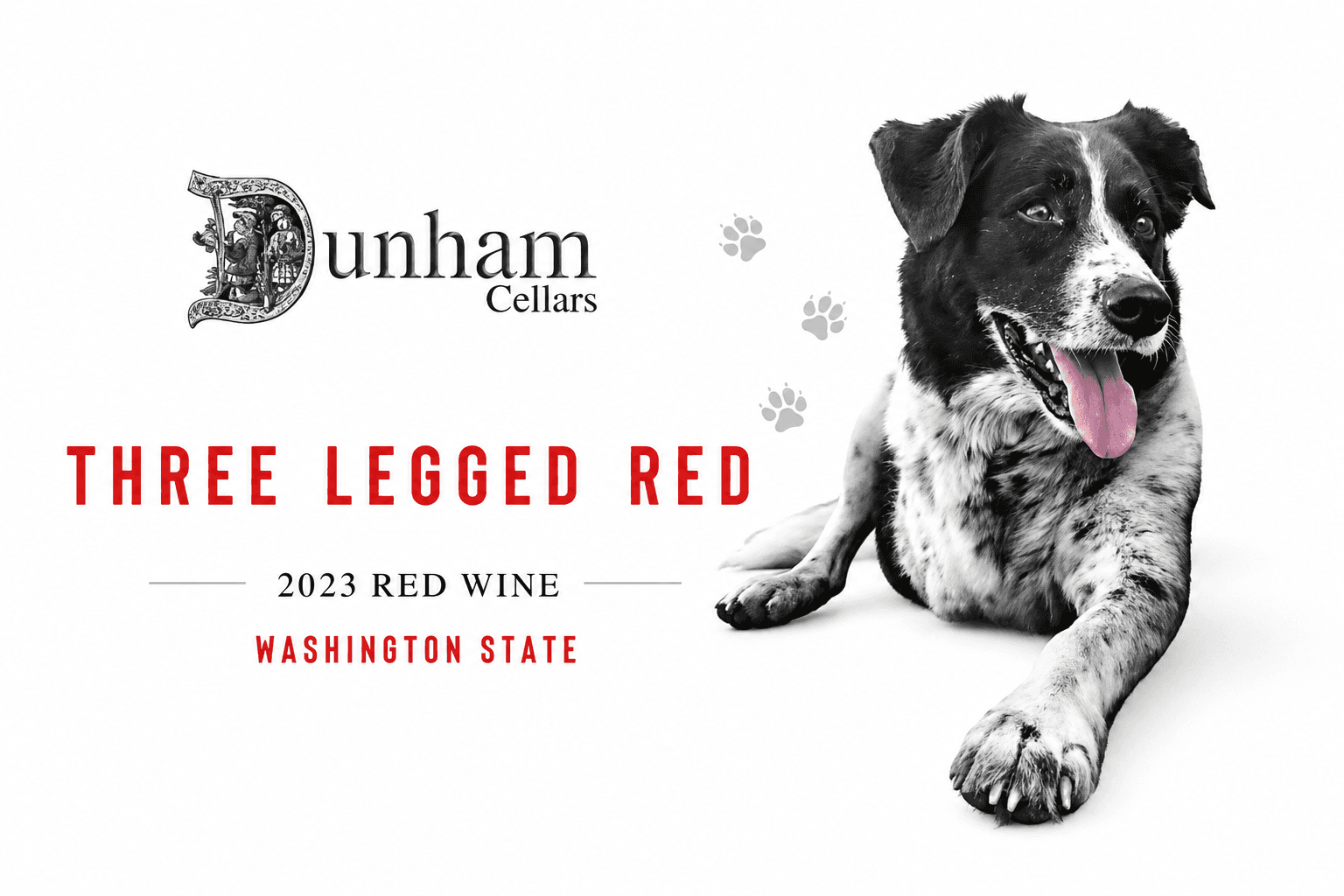
The Three Legged Red label honors Port, the beloved winery dog whose resilience and spirit became part of Dunham Cellars’ identity.
The People Who Stayed
Loss changes the atmosphere inside a winery.
You can feel it at Dunham because no one tries to pretend otherwise.
Mike passed away in 2013. Eric passed away the next year.
The question was not whether Dunham could preserve Eric’s memory. It was whether the people around him could keep the winery alive without turning that memory into a museum piece.
At the time of our conversation, John Blair was serving as general manager at Dunham Cellars. He had already been working alongside the family before everything changed, and he remembered how impossible that season felt, not only personally, but for everyone connected to the winery.
“There’s no blueprint,” he said. “You just become that much tighter and get through it together.”
The people around Dunham stayed.
The vineyard manager had already been farming their sites for decades. The cellar team understood Eric’s style. Relationships with growers remained intact. The continuity came from people who believed deeply in what Dunham already was.
That continuity matters in Walla Walla Valley. The wine community here still carries a sense of shared investment in one another. John described it as “coopetition,” wineries competing while still helping each other improve.
You sense that generosity around Dunham too. Joanne talks openly about helping younger wineries get started, allowing small producers to use equipment while they find their footing. Several former cellar workers and assistant winemakers now run wineries of their own. People here remember who helped them early on.
Dunham’s history also sits within the broader geography of eastern Washington and Oregon, including nearby Milton-Freewater and the Rocks District. Our look at how another winemaker’s early risk-taking helped shape the region’s identity shows a different version of the same pattern: place, persistence, and people who stayed.
Thirty years after Eric first came home with the idea of making wine, Dunham Cellars still feels grounded in those original relationships, the family, the vineyards, the artwork, and the stories that continue to circulate around the table long after the glasses are empty.
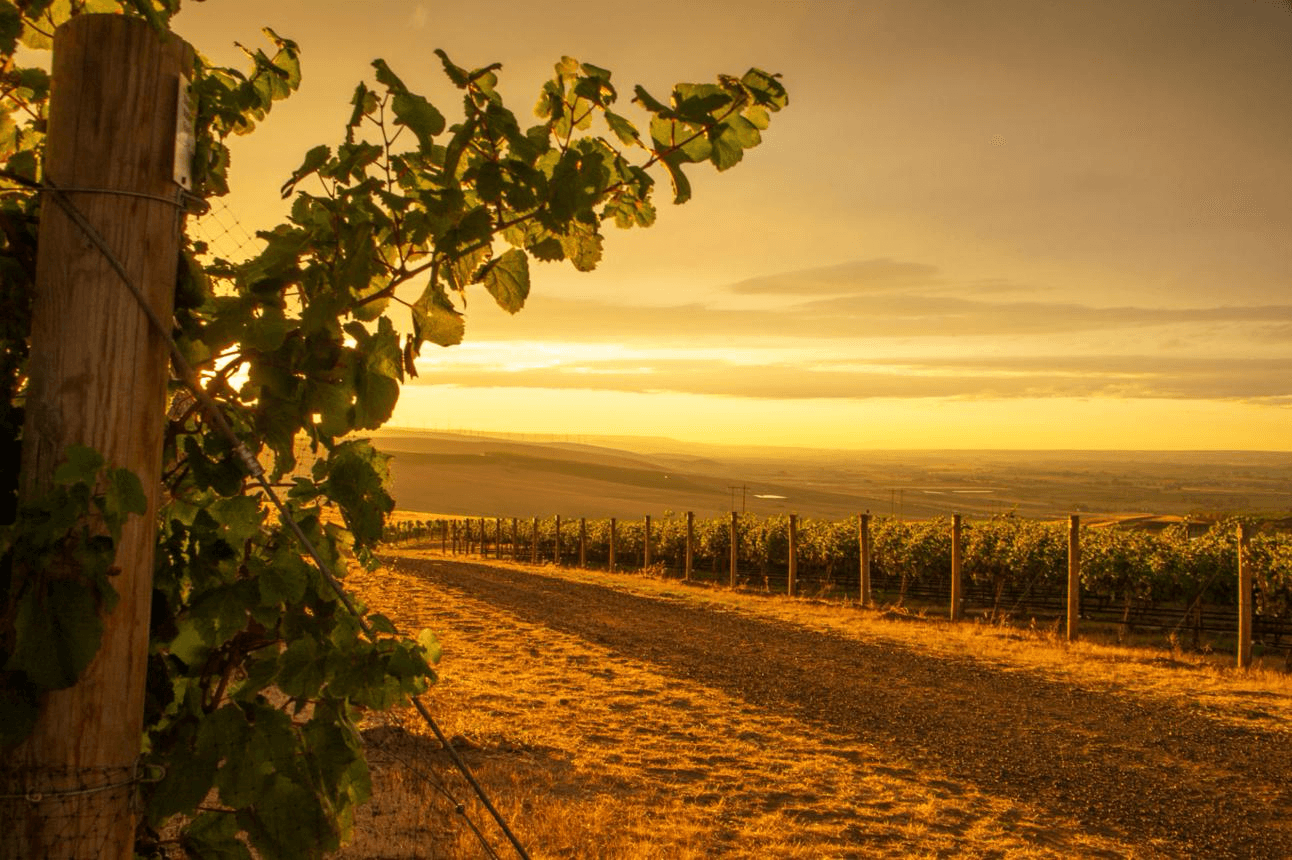
The vineyards of Walla Walla at sunset, where memory and legacy still linger long after harvest.
Dunham feels like a place built by people who cared deeply for one another, then carried forward by others who cared enough to keep showing up.
What to Taste First at Dunham Cellars
Begin with Three Legged Red. It is the bottle that makes Dunham’s story immediately understandable because the dog on the label was not created as a marketing character. Port was Eric’s dog, rescued after a severe injury and welcomed into the Dunham family before he became part of the winery’s identity.
When the family needed a label for a more approachable red table wine, their marketing committee consisted of Eric, Mike, and Joanne. Eric’s suggestion was simple:
“Everybody likes my dog.”
The official Dunham store currently lists the 2023 Three Legged Red as its number-one bestseller. The wine is a red blend, currently priced at $20 and marked in stock. Check current price, inventory, and shipping eligibility through the exact product page.
Availability can change. This should be the article’s only purchase link.
For another way into Dunham’s history, look for its Cabernet Sauvignon and Lewis Vineyard wines during a visit. Cabernet helped establish the winery’s reputation, while Eric’s paintings continue to appear across the Lewis Vineyard series.
Planning a Visit to Dunham Cellars
Dunham Cellars is located at 150 E. Boeing Avenue in Walla Walla, Washington, inside the remodeled World War II aircraft hangar that holds its tasting room, artwork, and family history.
The winery currently offers tastings daily from 11 a.m. to 4 p.m. Reservations are available, and walk-ins are welcome. Because hours and policies can change, confirm current information through Dunham’s visitor page.
Visitors looking for a deeper experience can also ask about the appointment-only Founders Room Experience or a private cellar tour. These experiences include a closer look at the production facility and a guided tasting. Current prices, group requirements, and availability are listed on the visitor page.
Dunham’s courtyard is dog-friendly, although dogs are not allowed inside because of health-department restrictions. Families are welcome, and outside food is permitted as long as it is not overly aromatic.
This is why Dunham Cellars is worth seeking out in Walla Walla. You can come for the wine, but the hangar gives you something more: a way to understand how a winery becomes part of a region. The bottles, Port’s label, Eric’s paintings, and the people who stayed are all connected by the same idea. A legacy is not something you simply inherit. It is something you keep showing up for.
Dunham’s beginnings are also connected to L’Ecole No. 41, where Eric learned cellar work under Marty Clubb before starting his own winery. Read the Spoken Wines story about L’Ecole’s history and evolving legacy.
For more context on the landscape surrounding Dunham, explore the soils, elevations, and grape varieties behind Walla Walla’s wines.
Continue exploring American wineries through the Spoken Wines United States page, or subscribe to the Spoken Wines newsletter for more firsthand stories from the vineyards and cellars we visit.
More from this country

United States
Woodward Canyon Winery - What Comes After You Help Build a Wine Region
The evolution of Walla Walla wine and how the Small family is protecting its legacy by continuing to question, experiment, and listen to the vineyard.
United States
How Kerry Hill Winery Turned a Neglected Idaho Vineyard Into a Working Estate
From McDonald’s pioneer to Kerry Hill Winery, Mindy Mayer’s story of discipline, unthinkable loss, and moving forward
United States
Christophe Baron and Cayuse: How the Rocks District Changed American Wine
Why one French winemaker looked at a barren field of stones and simply said, "This is it."



From Vineyard to Inbox
Subscribe to our newsletter