How Mongata Estate Winery Saved a Harvest and Found Its Place in Walla Walla Valley
Inside the Milton-Freewater, Oregon estate where Scott and Vicki Nokleby followed an unlikely calling into wine.
Tammy de Weerd - Spoken Wines
This will hide itself!
If you are looking for a personal wine experience in the Walla Walla Valley, Mongata Estate Winery is worth the drive into Oregon. Located in Milton-Freewater within the Walla Walla Valley AVA, Mongata grew from an unlikely decision: Scott and Vicki Nokleby bought a mature vineyard they had never planned to own after learning that its grapes might simply be left to fall.
Neither had grown grapes or made wine before. What they had was Resurgent Vineyard, a storm moving in, a community willing to help, and the courage to save a harvest. That origin still shapes Mongata. It is a working estate built around hospitality, place, and the belief that a meaningful second chapter can begin with an unexpected decision.
We first met Scott at Celebrate Walla Walla. While the crowd lined up for dinner, he stood holding a bottle of Mongata Syrah like an open invitation. One by one, he poured for anyone willing to step out of line and into conversation. Owner, server, and storyteller, he carried each role with quiet pride and genuine hospitality. We knew we had to see Mongata for ourselves.
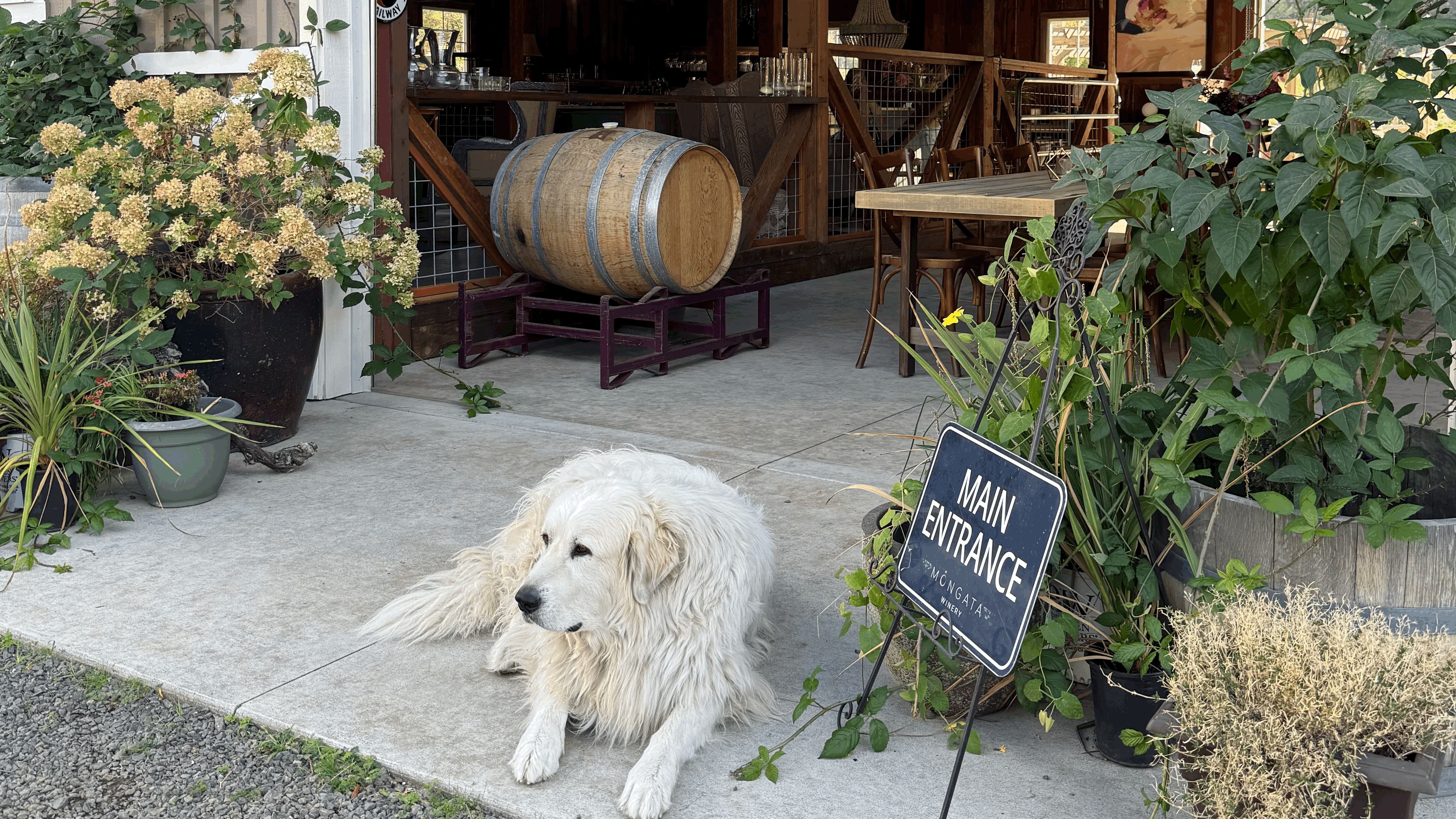
That visit came on October 3, 2025. On a golden autumn afternoon, we followed the South Fork of the Walla Walla River into a narrow valley. Vines lined the driveway, heavy with fruit, and a tasting barn stood warm against the foothills of the Blue Mountains. Two Great Pyrenees guarded the door. Then Scott swept in with the same warmth we remembered from the event.
Within minutes, glasses became bridges, and the story of Mongata unfolded unlike any we had heard.
Mongata belongs to a Walla Walla Valley that resists a single style. The region’s differences in soil, elevation, and growing conditions help explain why neighboring estates can produce such different wines. Our broader look at the land behind Walla Walla’s wines offers more context for the region surrounding Mongata.
The Vineyard That Wouldn’t Let Go
Scott and his wife, Vicki, hadn’t planned on becoming winemakers. They built their lives on the West Coast: Scott in insurance, Vicki in real estate. But nearing retirement, they began to feel a restlessness, a longing for a new rhythm of life. Walla Walla had always drawn them in with its open skies, its easy rhythm, and of course its wines. It felt like a place that invited reinvention.
In early 2020, Vicki spotted a listing for a mature vineyard called Resurgent, a name that would soon feel less like a label than a prophecy. Through that quiet pandemic year, they returned again and again, watching the vines awaken, the grapes turn red. Tempted, then practical, they decided to walk away.
Driving through the valley one last time that October, Scott stopped alone. The fruit still hung heavy on the vines. When he called the owner to ask what would become of them, the reply was simple: “They’ll just fall to the ground.”
He stood for a long moment in silence. The grapes, he thought, were calling.
Resurgent Vineyard sits in a canyon formed by the Walla Walla River as it cuts into the Blue Mountain foothills. Mongata describes the site’s Veazie-series soils as a mixture of basalt cobblestones, river-deposited alluvium, and windblown loess eroded from the mountains. That geology belongs specifically to Resurgent Vineyard and should not be confused with the neighboring Rocks District of Milton-Freewater AVA.
Within minutes the story of Mongata unfolded, unlike any we’d heard.
How a Storm Saved the First Harvest
Scott had made up his mind: they would buy the vineyard and save the harvest. His realtor, Ben, immediately mobilized the Walla Walla community. A picking crew was assembled, bins were borrowed, a crush facility secured, and winemaker Brian Rudin, who knew the vineyards well, stepped in to handle the fruit. But time was running out. A heavy storm was forecasted to hit within 24 hours.
When Scott returned the evening of the next day, rain was falling hard. In the dark he saw a trailer full of grapes and a man in a yellow slicker tying down the load. When the man lifted his hat, Scott recognized Ben, soaked to the bone but smiling. Against all odds, they had made it.
In that moment, Scott understood: this wasn’t about saving grapes. It was about saying yes to a calling, and to a new life.
That kind of community response is part of a familiar Walla Walla pattern. Mongata’s community-driven beginning makes a natural companion to another estate shaped as much by relationships and persistence as by the wine itself.
An abandoned vineyard where the grapes were “calling.”
From “Camp Wine” to Mongata Estate Winery
The early days were a sprint. Licenses and bonds in limbo, a Cabernet Franc rosé that finished near 16% ABV (blame the late pick and high Brix), bottled by hand and marketed on a hand-painted sign by their driveway: “Camp Wine.” It flew. Campers and hikers heading to the mountains stopped in, curious and thirsty. They left with bottles, and with stories. Many became the winery’s first club members.
They found Syrah with savory depth that loves a ribeye, Cabernet with cool-vintage poise and dark-currant focus, and blends that spoke of minerality, the “voice of the vineyard.” Mongata’s range is one expression of a valley that resists a single style. Our broader look at the soils and elevations behind Walla Walla’s variety digs into why the region covers so much ground. They discovered a barn rebuilt with care and a patio where twilight lingers just long enough to hear the river and watch the sky open.
Brian Rudin had helped Scott and the community get that first rescued harvest safely into the winery. Today, Peter Devison guides Mongata’s winemaking and vineyard care, carrying the estate into its next chapter. Mongata has become a reflection of its founders: grounded, genuine, and open to possibility. A reminder that the best paths aren’t always paved; sometimes they appear in moonlight and momentum, in a storm forecast and unsold fruit, in a neighbor’s forklift at midnight and a community that says, “We’ve got you.”
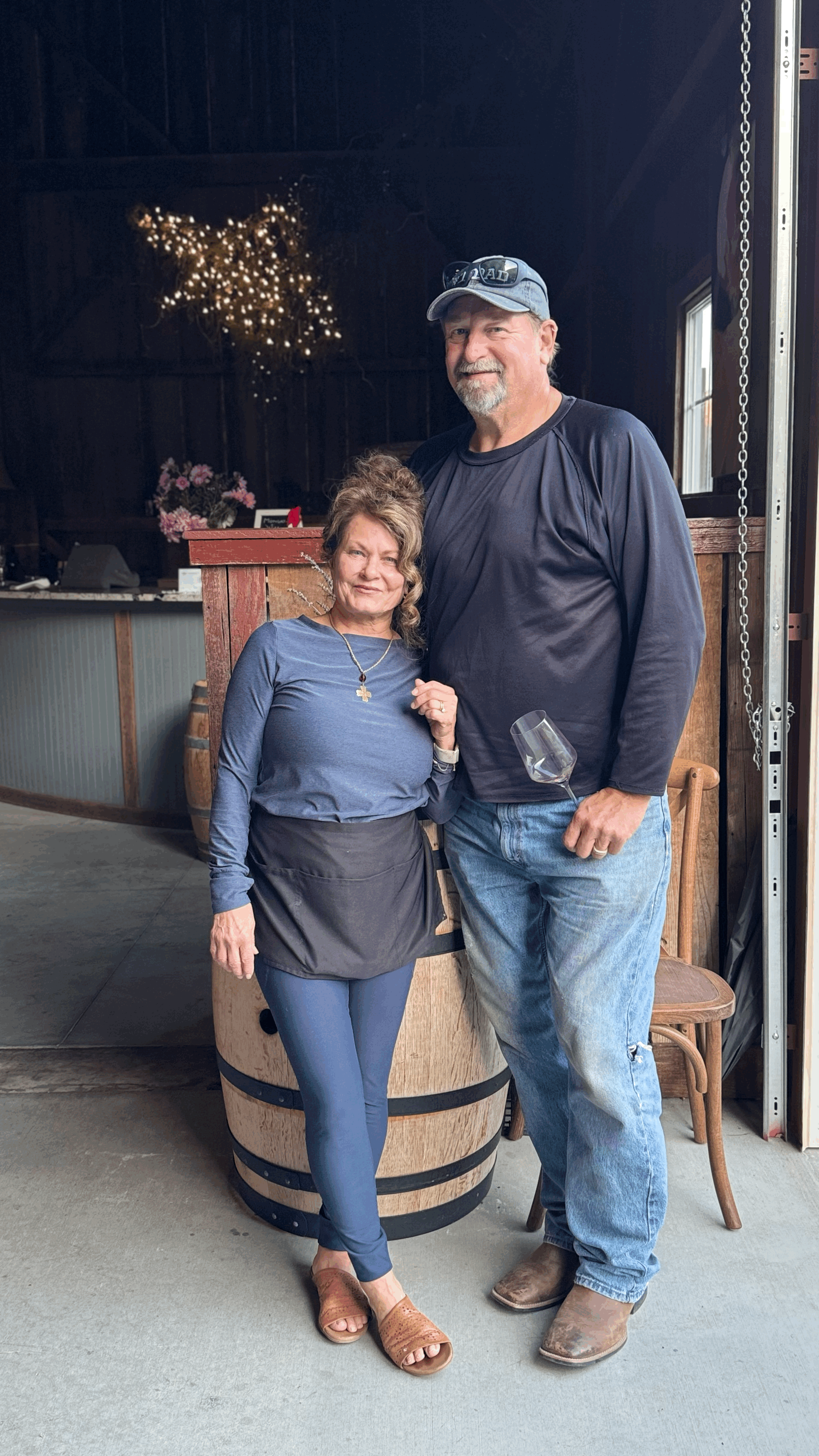
Mongata has become a reflection of its founders, Scott and Vicki Nokleby, grounded, genuine, and open to possibility
“We’d kicked all the numbers around. It came down to an emotional decision.”
Scott Nokleby, cofounder and owner of Mongata Estate Winery
What Mongata Wines Taste Like
The wines that emerged from Mongata’s early years reflect both Resurgent Vineyard and the people who brought it back to life. The Syrah showed savory depth that called for a ribeye. The Cabernet had the poise of a cooler vintage and a dark-currant focus. The blends carried a mineral quality that Scott described as the “voice of the vineyard.”
If you are starting with one bottle, Syrah is the most natural introduction to Mongata’s story. It was the wine Scott was pouring when we first met him, and it carries the same combination of generosity, savory depth, and connection to place that made that encounter memorable.
The official Mongata store currently lists the 2023 Estate Syrah from the Hill for purchase.
This is a current purchase route, not a claim that the 2023 vintage was the wine poured during our original encounter. Availability and shipping eligibility may change.
Planning a Visit to Mongata Estate Winery
Mongata is in Milton-Freewater, Oregon, just across the state border within the Walla Walla Valley AVA. The winery describes the drive from Walla Walla as approximately 10 to 20 minutes, depending on your starting point.
Guests can book a seated estate tasting in the remodeled winery barn or in one of the covered outdoor areas. Mongata also offers reservation-based private vineyard picnics, including experiences near the Syrah blocks and along the Walla Walla River.
The barn is part of the experience. The original structure is more than a century old, and Scott helped transform it using original beams and reclaimed wood from the property. It now contains the winery, tasting room, crescent-shaped wine bar, and spaces where visitors can look out across Resurgent Vineyard.
Mongata is a working farm. Children are welcome during regular tastings and hosted events when accompanied by an adult, but they cannot participate in the vineyard picnic experiences. Dogs are welcome on a leash. Visitors should also note that Mongata does not allow outside food, although paired food and other items are available for purchase.
Hours, reservation policies, picnic offerings, and seasonal closures can change. Confirm current details and reserve an experience through Mongata’s official visitor page.
Mongata is worth visiting because its origin remains visible throughout the estate. The mature vines, rescued first harvest, restored barn, river, and hospitality all belong to the same story. You can arrive for a Syrah tasting and leave understanding how one emotional decision gave a vineyard, and the people who found it, a second life.
Mongata’s beginning also reflects the collaborative spirit found throughout Walla Walla. For another story about a winery sustained by relationships and people willing to keep showing up, read about the family, art, and community behind Dunham Cellars.
Continue exploring wineries across Walla Walla and Idaho through the Spoken Wines United States page, or subscribe to the Spoken Wines newsletter for more firsthand stories from the vineyards and cellars we visit.
More from this country

United States
Woodward Canyon Winery - What Comes After You Help Build a Wine Region
The evolution of Walla Walla wine and how the Small family is protecting its legacy by continuing to question, experiment, and listen to the vineyard.
United States
What Makes Dunham Cellars Stand Out in Walla Walla? The Dog, the Art, and a Legacy Carried Forward
Inside the former World War II hangar where family, art, wine, and the memory of Eric Dunham continue to shape one of Walla Walla's most personal wineries.
United States
How Kerry Hill Winery Turned a Neglected Idaho Vineyard Into a Working Estate
From McDonald’s pioneer to Kerry Hill Winery, Mindy Mayer’s story of discipline, unthinkable loss, and moving forward



From Vineyard to Inbox
Subscribe to our newsletter