How Torreón de Paredes Turned a Father’s Dream Into a Chilean Wine Legacy
A Father’s Dream, Two Sons, and the Soul of Chile in a Glass
Jan de Weerd - Spoken Wines
This will hide itself!
“I dreamed of sitting at a long table, toasting with the great connoisseurs of wine… our glasses filled with mountains of aromas, flavors, and taste.”
This was the dream that Don Amado Paredes shared with his two sons, Javier and Álvaro. Both eventually gave up their promising careers in law and architecture to pursue their father’s vision. Together, they built the Torreón de Paredes wine estate in one of Chile’s most promising wine regions.
Javier said it most clearly:
“It was love for our father. And love for our mother. And loyalty to the family.”
A Late Beginning in the Cachapoal Valley
In 1979, at seventy-three years old, Don Amado Paredes, a highly successful entrepreneur, purchased a property in Rengo, in Chile’s Alto Cachapoal Valley. He was not setting out to build a Chilean winery. He simply wanted to return to the countryside and reconnect with his rural roots. What he discovered was that he had acquired land in one of Chile’s most promising wine regions, at the foothills of the Andes.
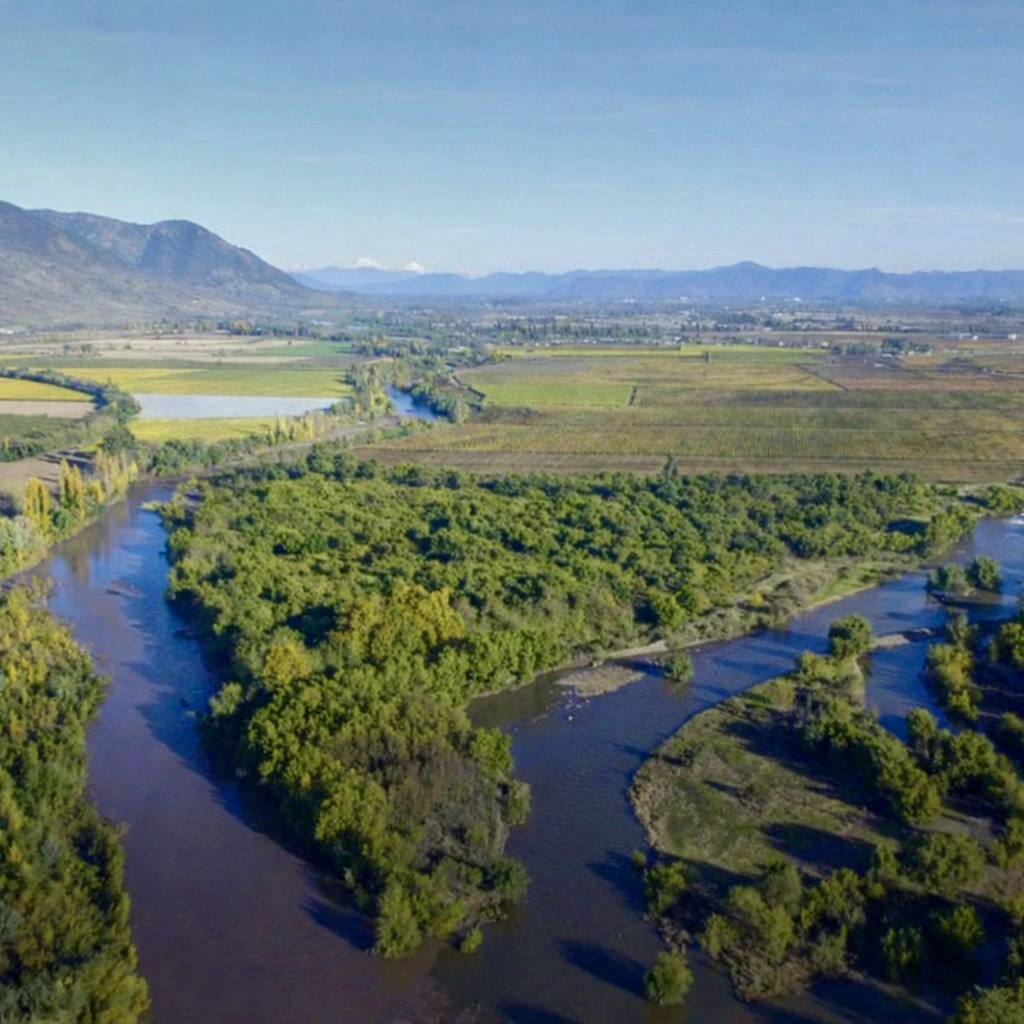
That discovery marked the beginning of what would become one of the most respected family wineries in Chile’s Central Valley. The estate sits in the heart of the Cachapoal Valley, a region known for producing structured, expressive Chilean wines. Rocky alluvial soils, strong day to night temperature variation, cooling air descending from the Andes, and irrigation from the Claro River create conditions that allow grapes to ripen fully while retaining natural acidity. That balance remains a defining trait of Torreón de Paredes wines today.
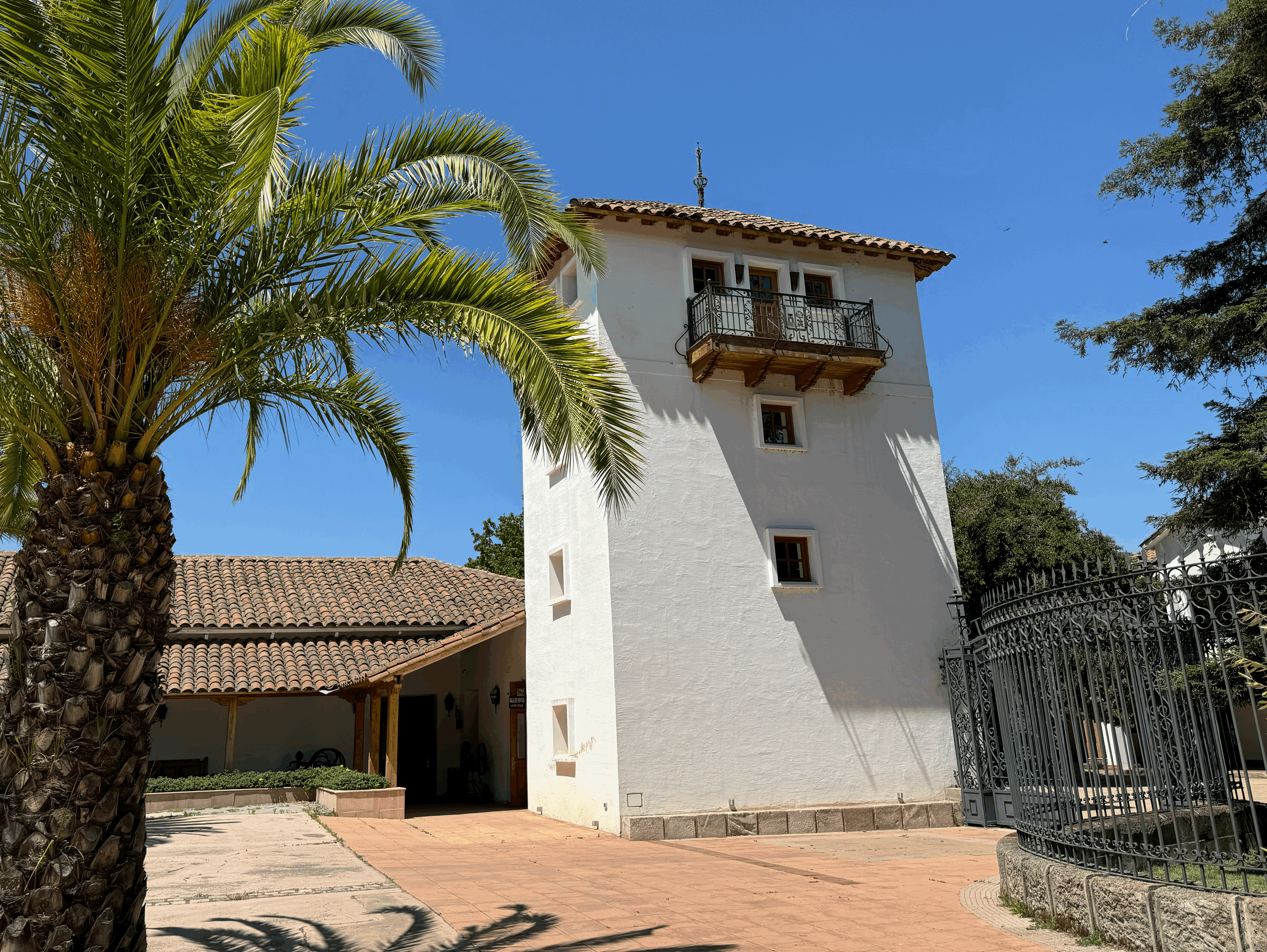
New vineyards were planted. Facilities were constructed. A technical team was assembled. Progress was steady, until 1985, when a powerful earthquake struck Chile just as the first vintage was about to be released. The historic tower, the Torreón that gives the winery its name, was severely damaged, along with key winery buildings. Many projects might have ended there. Instead, the family rebuilt.
That decision became foundational to the winery’s identity. The tower now stands as a symbol of resilience, not only for the estate, but also as a reflection of Chile’s broader history of perseverance. By 1989, Torreón de Paredes released wines capable of competing internationally and began exporting beyond Chile’s borders.
When we arrived at the estate, Javier and Álvaro were waiting for us at the entrance of the estate with the Andes foothills as the backdrop. Historic adobe buildings dating back to the 1700s framed the property, which lies near sites connected to Chile’s struggle for independence.
Yet what stood out most was not the setting. It was the dedication of two sons to their father’s vision.
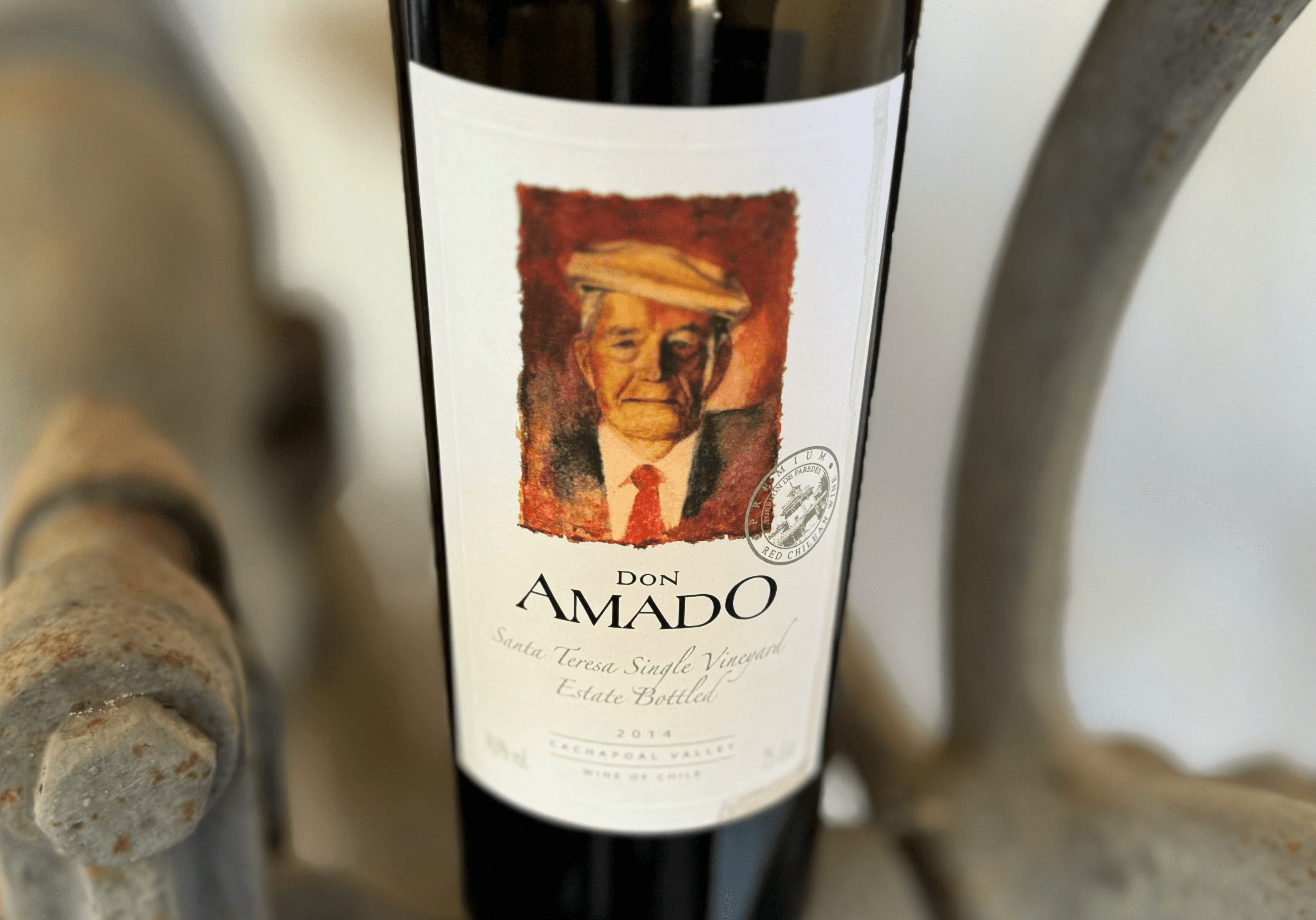
Named after their father and founder, Don Amado Paredes, the winery’s flagship wine honors the dream that started it all.
Choosing Family Over Career
Neither Javier nor Álvaro was obligated to join the winery. Javier studied law and earned a master’s degree in the United States. Álvaro trained as an architect before turning his focus to winemaking. Both had established professional paths ahead of them. Their decision to return was not automatic. It was personal.
For Javier, preserving his father’s work became a responsibility he could not ignore. Walking away would have meant allowing decades of effort to fade. Continuing meant honoring something deeply meaningful. He also speaks with equal respect about his mother, Raquel, whose quiet strength anchored the family. While Don Amado was the visible founder, she was the steady foundation, the unseen roots that allowed everything else to grow.
For Álvaro, the transition from architecture to winemaking happened gradually. He first joined the estate to help his father develop the property, but as the project evolved he became increasingly involved in the vineyard and cellar work. Guided by experienced agronomists and years of practical learning, he discovered that the same instincts that guide an architect, structure, proportion, and balance, also apply to wine. Over time, that path led him naturally into the role of winemaker.
Today, Torreón de Paredes produces approximately 300,000 bottles annually, exporting nearly 90% of its production to markets including the United Kingdom, Ireland, Belgium, Germany, Japan, China, Canada, and the United States.
Despite this international reach, it remains unmistakably a family winery in Chile, defined by humility, discipline, and teamwork.
At the entrance to the Torreón de Paredes estate, where brothers Javier and Álvaro continue their father’s dream.
A Chilean Story in a Glass of Wine
Approximately 130 hectares of estate vineyards in the Andes foothills are planted to Cabernet Sauvignon, Carménère, Merlot, Syrah, and Pinot Noir. The flagship wine, Don Amado, named in honor of the founder, is a blend of Cabernet Sauvignon, Merlot, Carménère, and Syrah. French oak is used selectively to support the fruit without overwhelming it. The result is depth and structure with composure, a wine that reflects both place and intention. While Don Amado stands as the winery’s flagship blend, Álvaro has a passion for Sauvignon Blanc, crafting wines that showcase freshness, precision, and the vibrant character of the Andes and Pacific Ocean influenced vineyards.
Yet through Torreón de Paredes, we encountered more than excellent wine from Chile’s Cachapoal Valley.
We experienced a story of perseverance, loyalty, and multigenerational commitment shaped by land and history. The estate’s proximity to historic independence sites provides context, but it is the family’s decisions, to rebuild after disaster, to return home, and to continue together, that define its character.
That same relationship between water and wine shapes another Chilean estate we visited in the Colchagua Valley, where two rivers wrap around Viña Maquis and give its wines a distinct freshness and structure. Different valleys, different families, but the same lesson: in Chile, the land is never a backdrop. It is a partner.
When a bottle of Torreón de Paredes is opened abroad, it carries more than varietal expression. It carries the geography of the Andes foothills, the discipline of farming in Chile’s Central Valley, and the legacy of a father who chose to begin again at seventy-three.
Salud, Javier and Álvaro.
Explore the wines and current visitor information on the official Torreón de Paredes website.
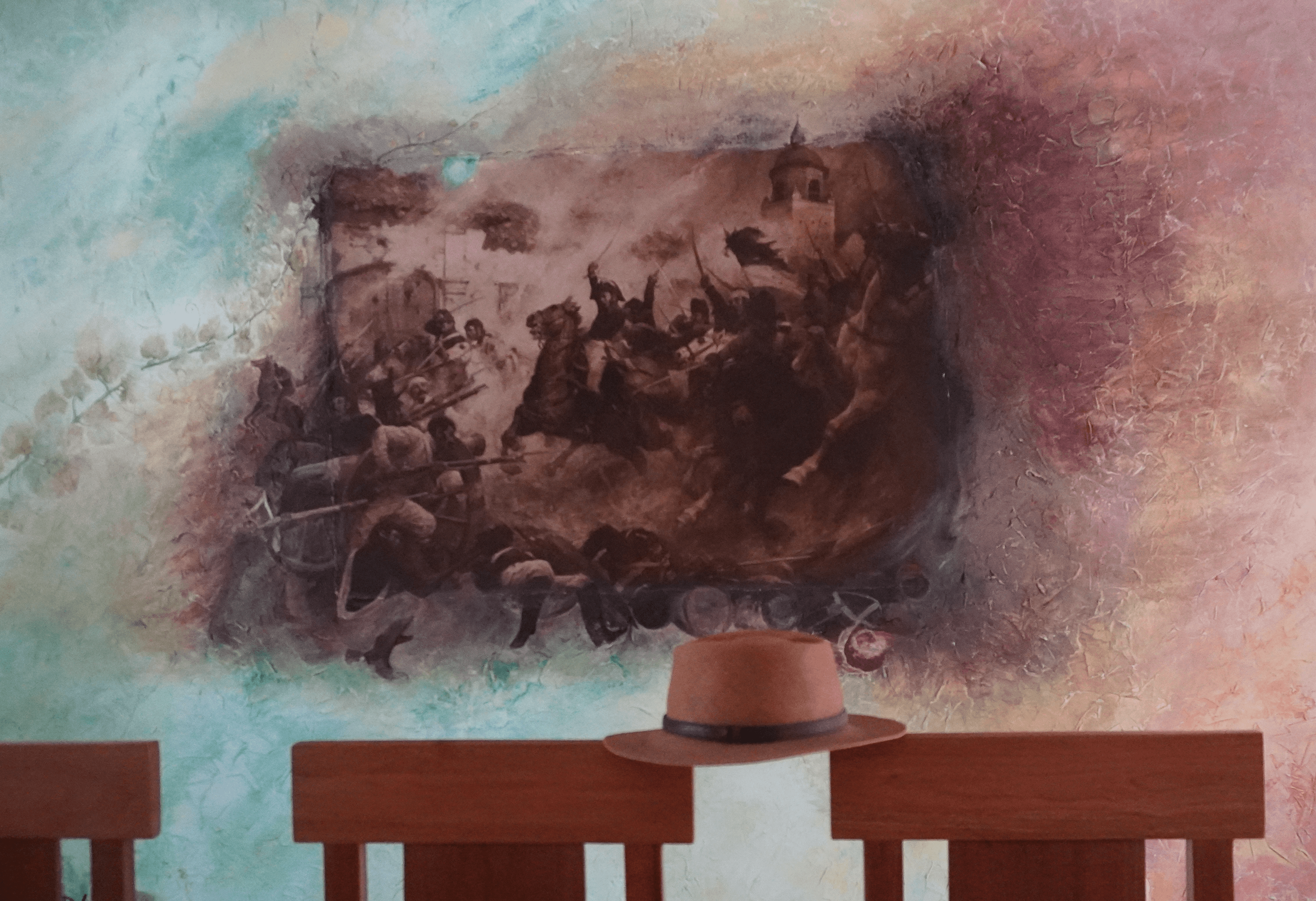
The historic Battle of Rancagua, a key moment in Chile’s fight for independence from Spain, took place not far from the Torreón de Paredes estate.
“Torreón de Paredes was his way of telling the world: I was here. I am sowing seeds that I may never see blossom, but someday someone will be drinking his wine, or resting in the shade of the trees he planted.”
More from this country




From Vineyard to Inbox
Subscribe to our newsletter