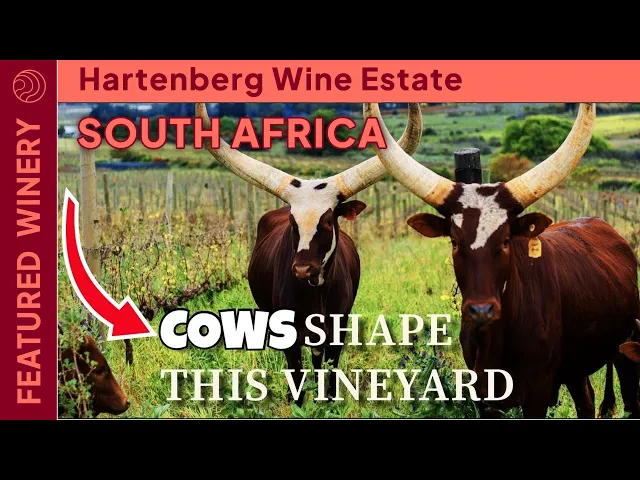
How Hartenberg Is Building the Next 300 Years of South African Wine
How regenerative viticulture, cattle, restored wetlands, and diverse soils shape the wines of this historic Stellenbosch estate.
Tammy de Weerd - Spoken Wines
Smooth Scroll
This will hide itself!
This will hide itself!
Nestled in the Bottelary Hills of Stellenbosch, Hartenberg Wine Estate has produced wine for more than 330 years. Established in 1692, the estate is building its future through regenerative viticulture, an approach that restores soil health, encourages biodiversity, and works with the surrounding ecosystem rather than against it.
For someone trying to understand why a wine can taste distinctly of its place, Hartenberg offers a compelling answer. Healthy soil, grazing cattle, restored wetlands, elevation, climate, and careful stewardship all contribute to what eventually reaches the glass.
The guiding principle is simple: “Leave Hartenberg in better condition than we started.”
Watch our exclusive interview with the people behind Hartenberg Wine Estate.
1. The Regenerative Journey: The Secret Is in the Soil
Hartenberg’s philosophy is rooted in regenerative viticulture, a holistic approach designed to improve the productivity, resilience, and biodiversity of the land by working with nature.
Since 2010, Hartenberg’s viticulturist, Wilhelm Joubert, has experimented with a diverse range of cover crops. These plants add essential nutrients, improve soil structure, and help create a thriving ecosystem of microorganisms beneath the vines.
By 2019, the estate had adopted multispecies cover crops to increase biodiversity and provide nourishment for cattle grazing in the vineyards.
In 2017, Hartenberg introduced cattle into the vineyards, not simply as grazers but as active participants in vineyard management. Their hooves press organic material into the soil and help aerate the ground. Their grazing stimulates plant growth, while their manure and urine return nutrients to the vineyard.
The result is a more self-sustaining ecosystem and healthier soil beneath the vines.
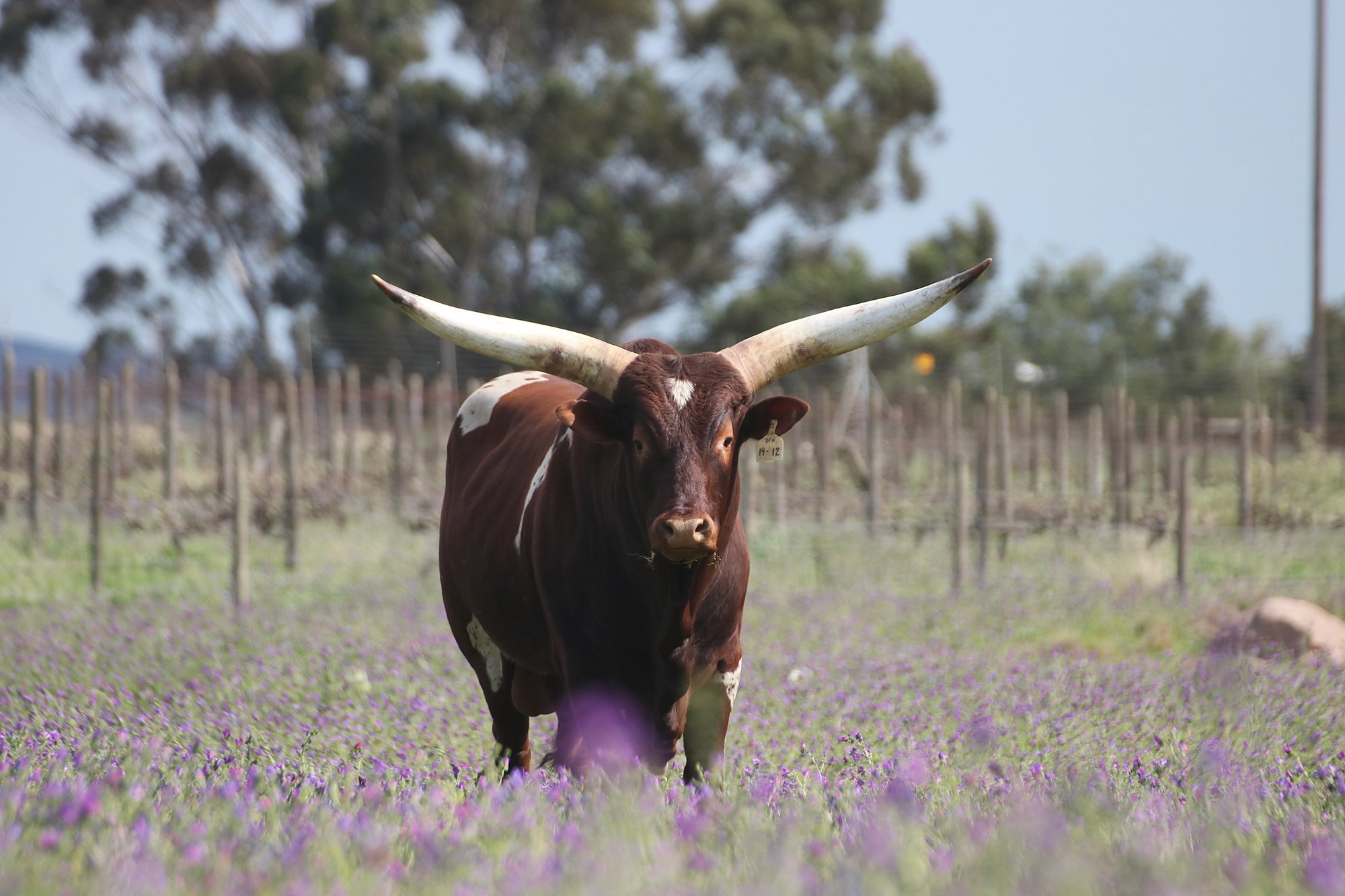
Hartenberg cow grazing among the vineyard cover crops
2. Restoring the Wetlands
One of Hartenberg’s defining natural features is its 60-hectare wetland.
Beginning in 1995, the estate undertook a decade-long effort to remove invasive alien plants and rewild this part of the property. Today, the restored wetlands provide a sanctuary for more than 85 bird species, as well as bucks, wild cats, and caracals.
The wetlands are more than a protected habitat. They help maintain moisture in the surrounding soils, support diverse plant and animal life, and contribute to the estate’s cooling microclimate.
At Hartenberg, the wetland, vineyard, animals, and soil are not treated as separate systems. They are parts of one living environment, and each affects the health of the others.
3. People: A Legacy of Dedication
Hartenberg’s history has been shaped by generations of dedicated stewards since its establishment in 1692.
In 1987, the Mackenzie family took stewardship of the estate. Their goal was not simply to preserve its history, but to create the conditions that would allow Hartenberg to thrive for centuries to come.
The estate honors an earlier chapter of its history through The Eleanor Chardonnay. The wine was named after Eleanor Finlayson, the matriarch of the family that owned Hartenberg before the Mackenzies.
The wine reflects the qualities associated with her character: strength, resolve, sophistication, and poise. Those qualities also speak to Hartenberg’s broader approach to winemaking, where tradition is respected but never allowed to become static.
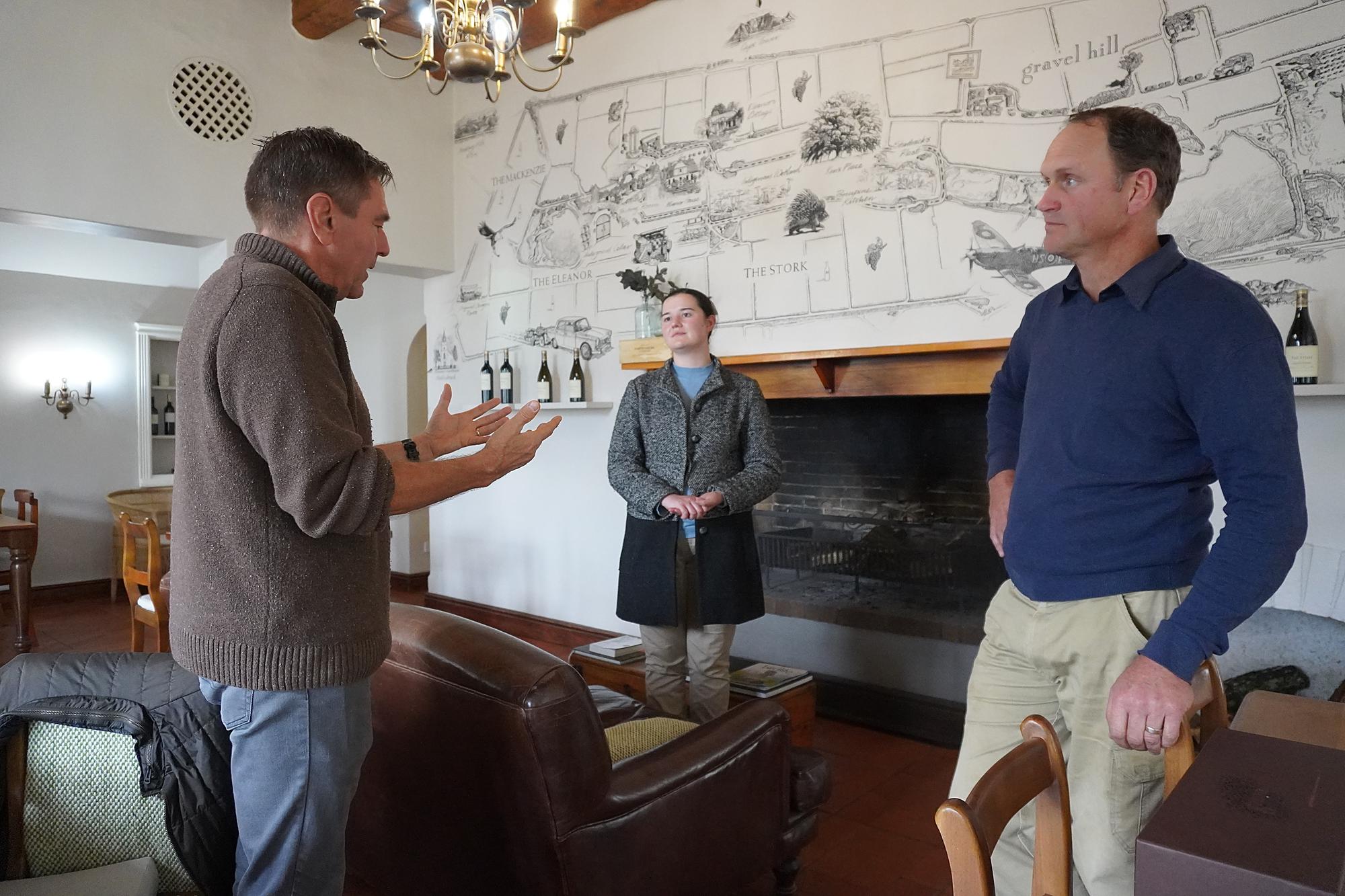
Jan, Andrea, and Wilhelm discussing the Hartenberg estate
4. Place: A Unique Stellenbosch Terroir
Hartenberg sits within an amphitheater of hills in Stellenbosch’s Bottelary Hills.
The estate experiences a Mediterranean climate, with warm, dry summers and cold, wet winters. Its vineyards encompass as many as 12 soil types, with approximately 100 meters of elevation change between the valley floor and the hilltops.
This variation creates distinctly different growing conditions across the estate.
The eastern slope produces a savory, Northern Rhône-style Syrah. The western slope produces a richer, more opulent Shiraz. Although the wines come from the same estate, their contrasting personalities reveal how slope, exposure, soil, and microclimate can shape what we taste.
The restored wetland lies at what Hartenberg describes as the “floor of the theater.” Its cooling influence adds another dimension to the estate’s varied growing environment.
This is what makes Hartenberg so useful for anyone learning to understand terroir. The contrast between its Syrah and Shiraz demonstrates that place is not an abstract wine term. It can be tasted. For another Stellenbosch-area estate where terroir shapes the wine, see how Creation Wines pairs art and Hemel-en-Aarde terroir.
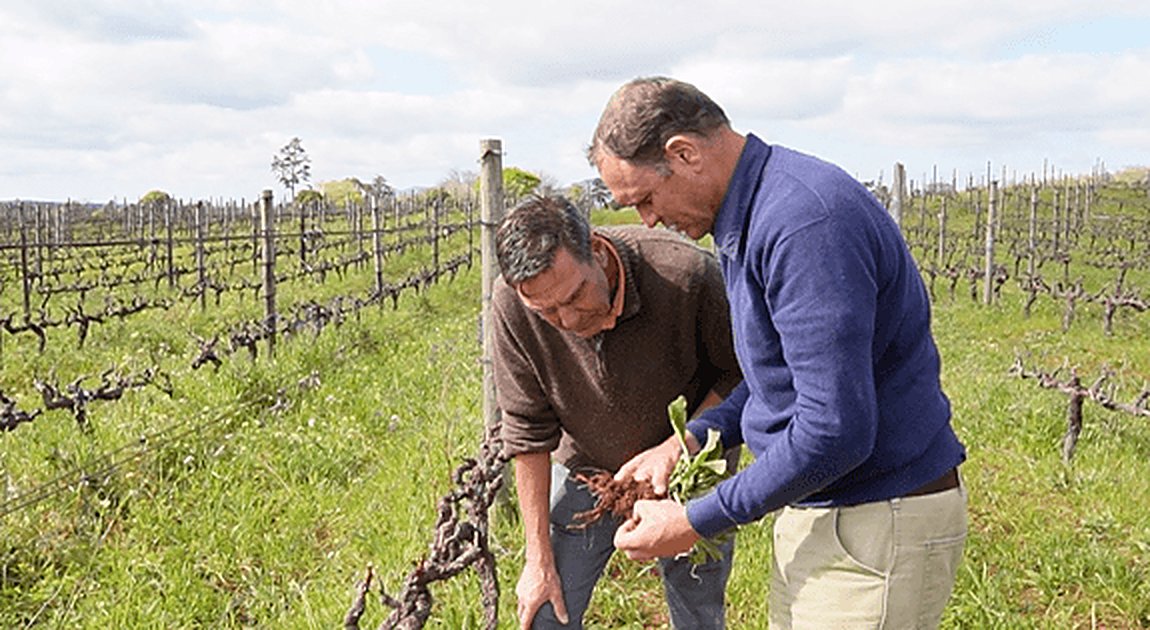
Jan and Wilhelm inspecting the soil in the vineyard
5. A Culture of Stewardship
Since 1994, Hartenberg has implemented projects intended to protect and enhance its natural resources. Over time, those individual efforts developed into a broader commitment to regenerative viticulture.
That commitment can be seen throughout the estate:
Nurturing soil health: Diverse cover crops encourage biological activity and create a stronger foundation for the vines.
Using controlled grazing: Cattle contribute to the vineyard ecosystem while returning nutrients to the soil.
Restoring wetlands: Rewilding supports biodiversity, moisture retention, and the health of the wider estate.
The work is practical, but the philosophy behind it reaches further. Hartenberg is not asking only how to produce good wine this year. The estate is asking what must be done now to protect its vineyards, wildlife, and wines for the next 300 years.
6. Two Wines That Reveal Hartenberg’s Terroir
Hartenberg produces a broad range of wines, but two of our favorites provide a particularly clear demonstration of the estate’s contrasting terroirs. We think of them as the “battle of the Syrahs.”
Gravel Hill Syrah
The Gravel Hill Syrah has striking complexity and depth. It has been described as an “iron fist in a velvet glove,” with robust graphite tannins woven through dark, peppery fruit. Its lingering finish continues to reveal layers of savory complexity.
This is a wine that pairs naturally with meat grilled over an open fire, where the smoky, charred exterior complements the wine’s bold tannins. For a meat-free pairing, try it with barley and mushroom risotto. The umami character of the mushrooms works beautifully with the wine’s savory notes.
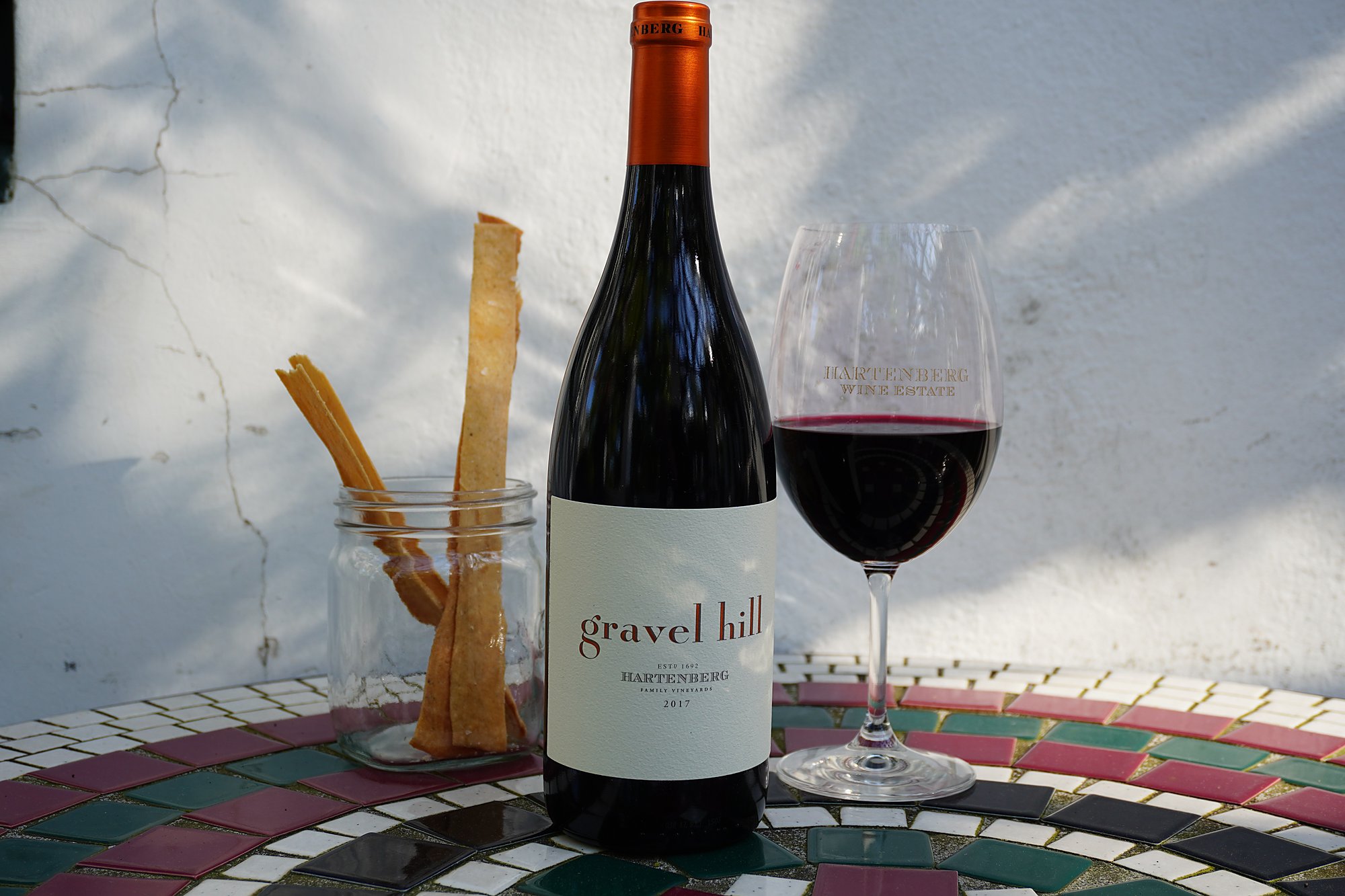
Hartenberg Gravel Hill Syrah bottle
The Stork Shiraz
The Stork Shiraz offers a distinctly different expression. It is more opulent, with juicy dark cherry fruit, black pepper, and sweet, earthy undertones. Its soft, rounded tannins create a generous mouthfeel.
The Stork pairs well with barbecue meats. An unexpected alternative is tempura shrimp sushi. The wine’s savory qualities can play a role similar to soy sauce, adding depth to the pairing without overwhelming it.
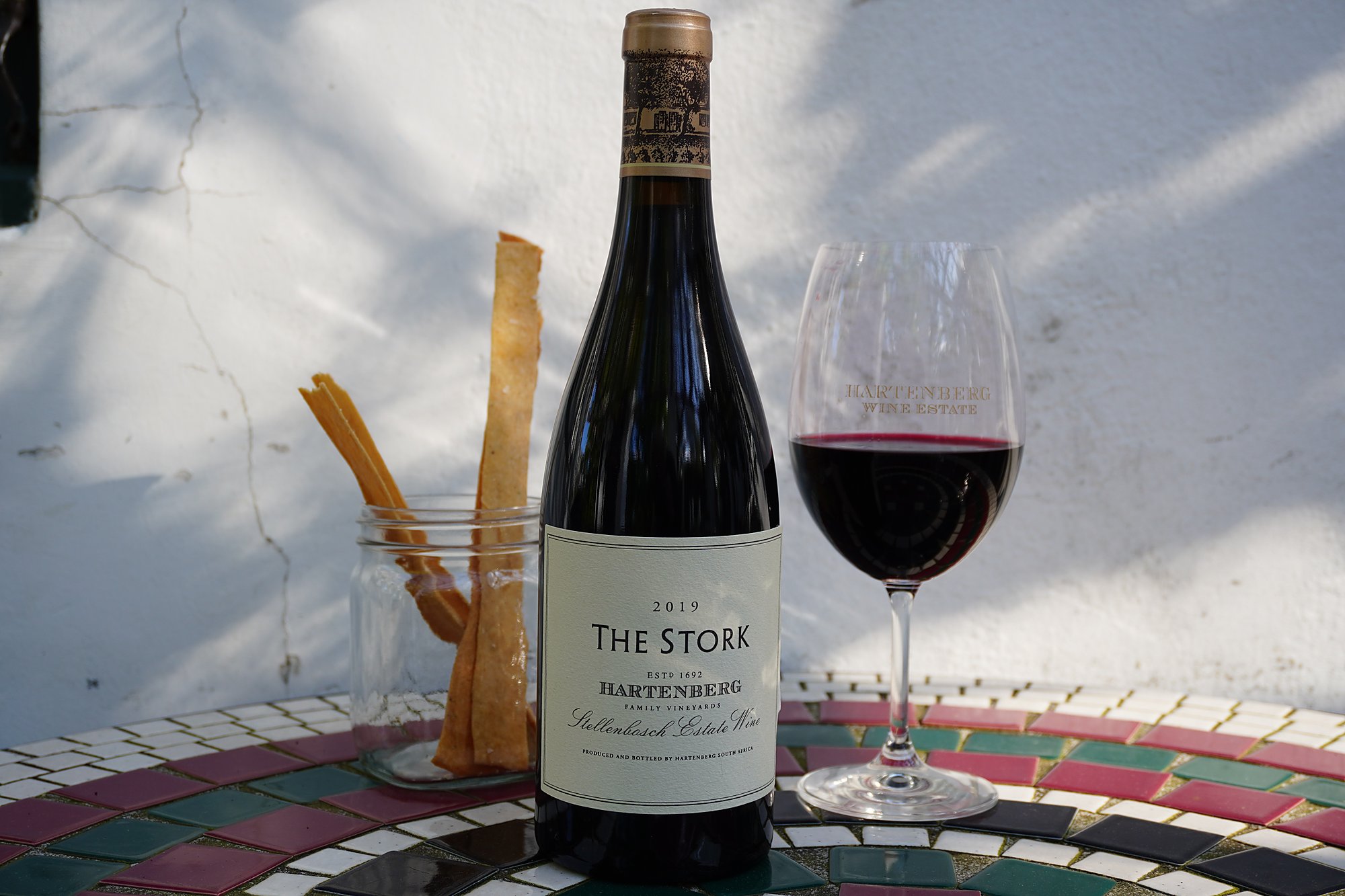
Hartenberg The Stork Shiraz bottle
Together, Gravel Hill and The Stork make Hartenberg’s story tangible. The contrast between the wines shows how different slopes and growing conditions within one estate can produce noticeably different expressions.
Hartenberg’s care for its soil, cattle, wetlands, and vineyards is not separate from its winemaking. It is the foundation of it.
The next time you are choosing a South African Syrah or Shiraz, look beyond the grape name. Ask where on the estate it was grown, how the vineyard was farmed, and what the winemaker wanted that particular site to reveal.
Visit the Hartenberg Wine Estate website: hartenbergestate.com
Explore Hartenberg’s current wines through the Hartenberg Wine Estate online shop.
Continue exploring the country through our South Africa page.
More from this country



From Vineyard to Inbox
Subscribe to our newsletter