What We Learned at Clos Apalta: How Great Wineries Think
Inside Clos Apalta's seventeen micro-terroirs and the philosophy behind every decision
Jan and Tammy de Weerd - Spoken Wines

This will hide itself!
Most wine lovers judge a bottle by what ends up in the glass: its aromas, flavors, texture, balance, and perhaps a score from a respected critic.
But during our visit to Clos Apalta in Chile’s Apalta Valley, we found ourselves asking a different question: how do the world’s greatest wineries actually think?
As we walked the vineyards with viticulturist Igor Jimenez and later sat down with winemaker and Technical Director Andrea León, we discovered that extraordinary wines are rarely the result of one brilliant idea or one exceptional vintage.
They are the product of a philosophy: a way of observing, respecting, and patiently guiding nature through thousands of deliberate decisions.
Great Wine Begins by Understanding Place
Standing high above the horseshoe-shaped Apalta Valley, Andrea shared something that became a true aha moment for us.
Although the estate appears to be one continuous vineyard, she does not see one vineyard. She sees seventeen distinct micro-terroirs, each with its own combination of soils, elevation, sun exposure, drainage, and climate.
That perspective extends far beyond geology and climate. Igor spoke passionately about preserving native forests, encouraging biodiversity, and treating every vine as an individual rather than simply part of a production system.
Even replacing an aging vine requires remarkable patience. Instead of planting new nursery stock, they often propagate from the original vine, allowing the young plant to remain connected to its “mother” for several years before it grows independently.
Only after many more years does that vine truly become part of the vineyard’s identity.
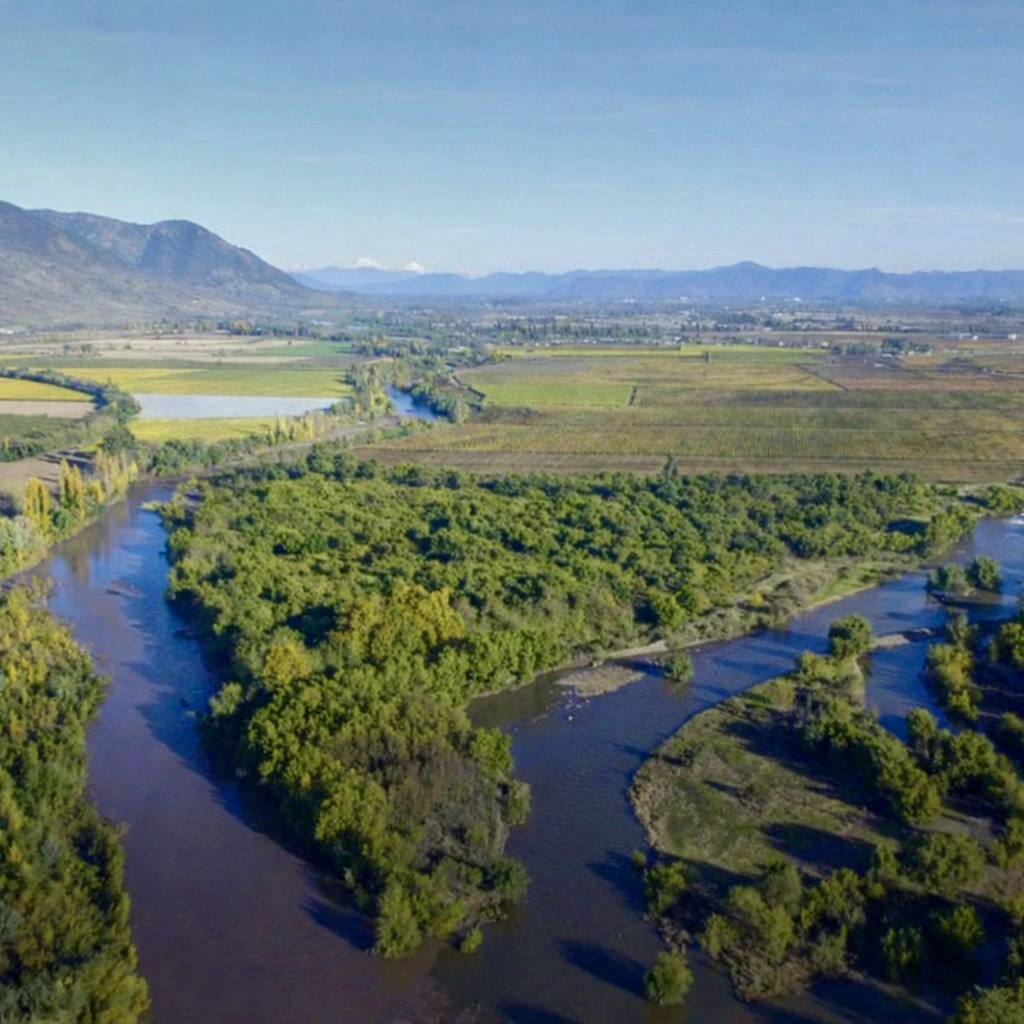
It taught us that world-class wineries begin by asking how to better understand the place that gives the wine its voice, much like the river-carved terroir just down the valley.
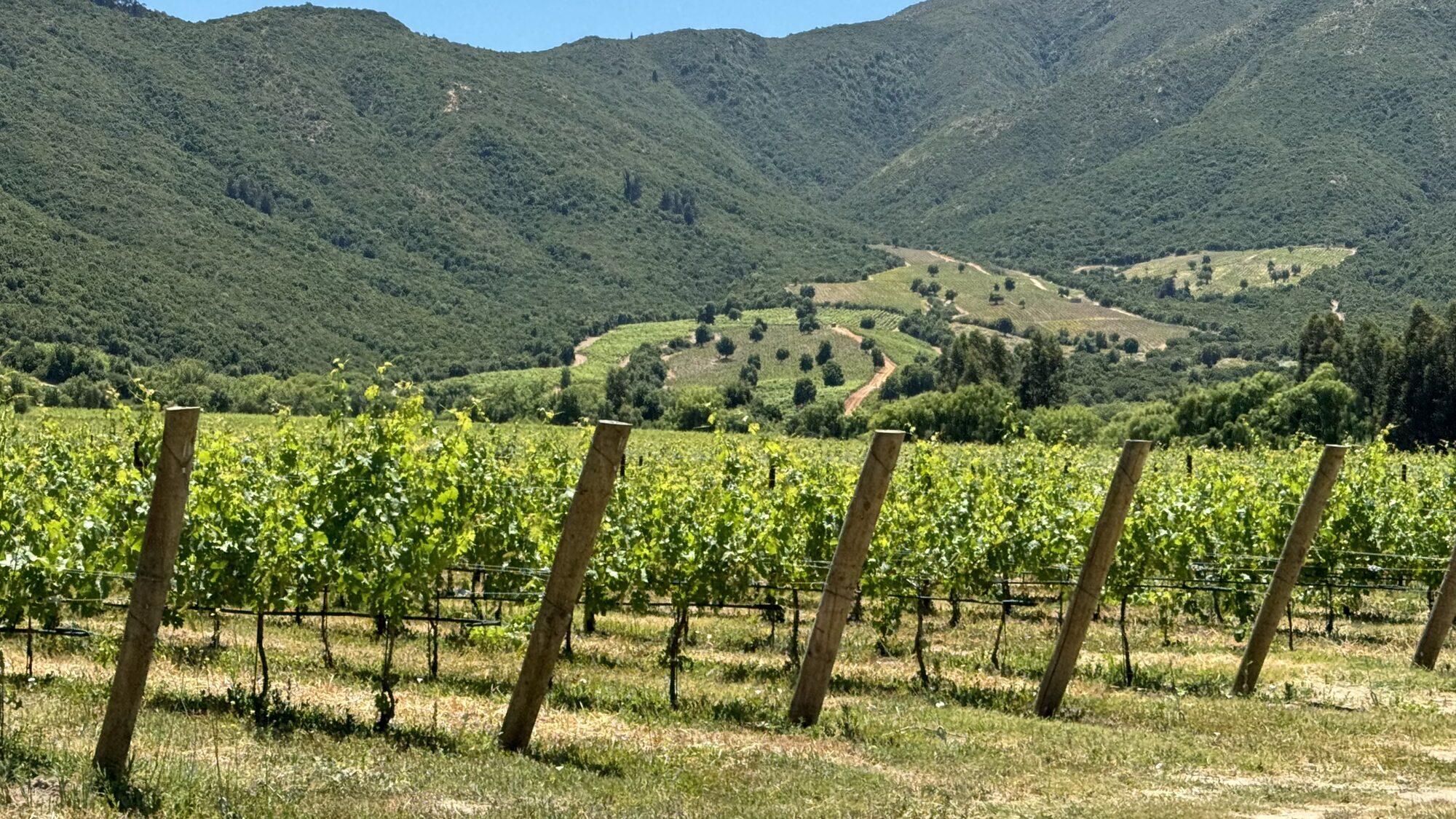
Standing high above the horseshoe-shaped Apalta Valley, Andrea explains why making great wine starts with understanding the place.
Excellence Is Designed One Decision at a Time
The next revelation came inside the winery.
Andrea explained that harvest is only the beginning. Rather than fermenting grapes by vineyard block or variety, Clos Apalta divides many blocks into much smaller “polygons,” based on subtle differences in soil, vigor, drainage, and ripening.
Each polygon is harvested separately, fermented separately, and aged separately.
By the end of harvest, the team may have more than eighty individual wines resting in barrel, each representing a different expression of the vineyard.
We had always viewed blending as combining different grape varieties to achieve balance. Andrea showed us something far more sophisticated: blending is about preserving individuality before seeking harmony.
Every parcel keeps its own personality until the final composition begins. Nothing is averaged. Nothing is rushed. Every decision protects the uniqueness of the vineyard before it becomes part of something greater.

By the end of harvest, more than eighty individual wines may be resting in barrel, each representing a different expression of the vineyard.
The Devil Is in the Details
One comment Andrea made stayed with us throughout our visit: “The devil is in the details.”
The more time we spent together, the more we realized that this was not simply a comment about winemaking. It was a philosophy.
Great wineries build excellence through countless small decisions: when to harvest one small polygon, whether a fermentation deserves its own barrel, which lots bring freshness, which bring structure, and which quietly disappear from the final blend.
Science provides the information, but experience, patience, and intuition guide the final decision.
Perhaps that is why Clos Apalta became the first South American wine to be named Wine Spectator’s Wine of the Year in 2008. That recognition was not earned solely because of a remarkable vineyard or an outstanding vintage.
It was the result of decades of disciplined thinking, where every decision serves a single purpose: allowing the vineyard to express itself as honestly and completely as possible.
As we drove away from Apalta, we realized we had not just learned how Clos Apalta makes great wine. We had learned how greatness itself is built, through thousands of thoughtful decisions made with the same patience and generational commitment we’ve seen define other great Chilean estates, and an unwavering respect for place.
Clos Apalta became the first South American wine to be named Wine Spectator’s Wine of the Year in 2008, a fitting note to end on as we sat down to taste the wines ourselves.
Visit the Clos Apalta website: https://www.closapalta.com/
For more captivating stories behind exceptional wine, subscribe to our newsletter.
More from this country



From Vineyard to Inbox
Subscribe to our newsletter