900 Years Later, This Winery Is Still Making Some of Italy's Most Remarkable White Wines
How Abbazia di Novacella has balanced centuries of tradition with wines that still feel vibrant, fresh, and unmistakably Alpine.
Tammy de Weerd - Spoken Wines

This will hide itself!
Driving north through Alto Adige, the landscape begins to change. Vineyards climb steep mountain slopes, castles overlook villages, and the peaks of the Dolomites dominate the horizon. Then, just outside Bressanone, the walls of Abbazia di Novacella come into view. Founded in 1142, the Augustinian monastery has witnessed nearly nine centuries of European history. Long before Italy existed as a nation, long before the New World discovered wine, vines were already being cultivated here.
Today, Abbazia di Novacella is often described as one of the oldest continuously operating wineries in the world. Yet during our visit, we found ourselves asking a different question. Not how old the winery is, but how it has managed to stay relevant for almost 900 years.
Where The Alps Shape The Wine
Unlike much of Italy, this is mountain wine country. The vineyards stretch between roughly 600 and 900 meters (2,000–3,000 feet), where warm sunny days are followed by remarkably cool nights. Those dramatic temperature swings allow grapes to ripen slowly while preserving the natural acidity that gives the wines their precision and energy. The valley floor is relatively narrow, funneling cool alpine air through the vineyards. Mineral-rich soils of gravel, schist and glacial deposits further contribute to wines that are known for purity rather than power.
This is a place that produces wines with tension, freshness and remarkable clarity. It is a style perfectly suited to varieties such as Sylvaner, Kerner, Grüner Veltliner and Gewürztraminer.
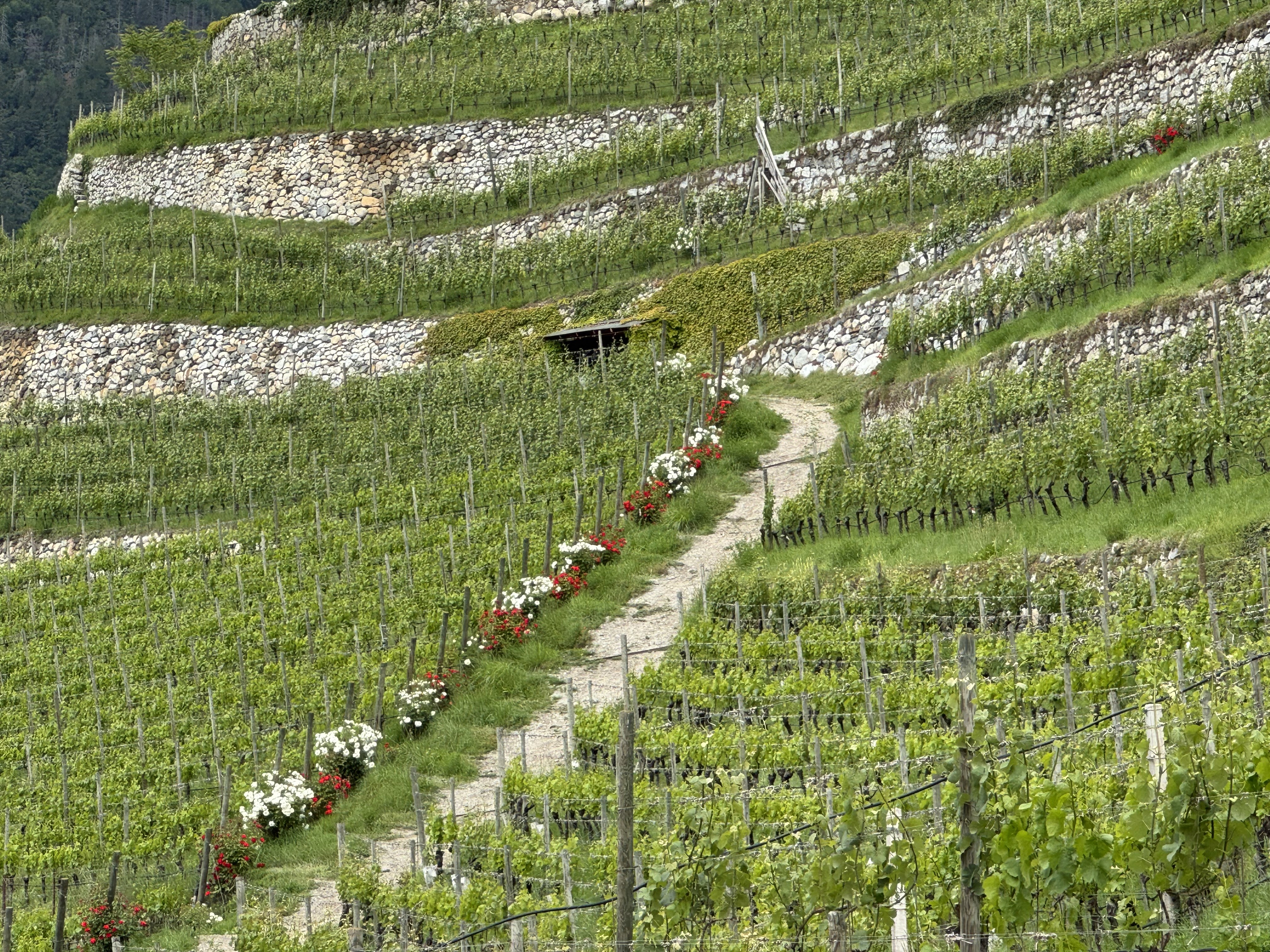
Mineral-rich soils of gravel, schist and glacial deposits contribute to the wines that are known for purity.
Six Wines That Tell the Story
During our tasting we explored wines from both the Classic and Praepositus collections. Each revealed a slightly different expression of this remarkable place.
Grüner Veltliner
Bright, lively and refreshing, with crisp citrus and subtle white pepper notes. An excellent introduction to Alto Adige’s mountain style.
Sylvaner (our favorite)
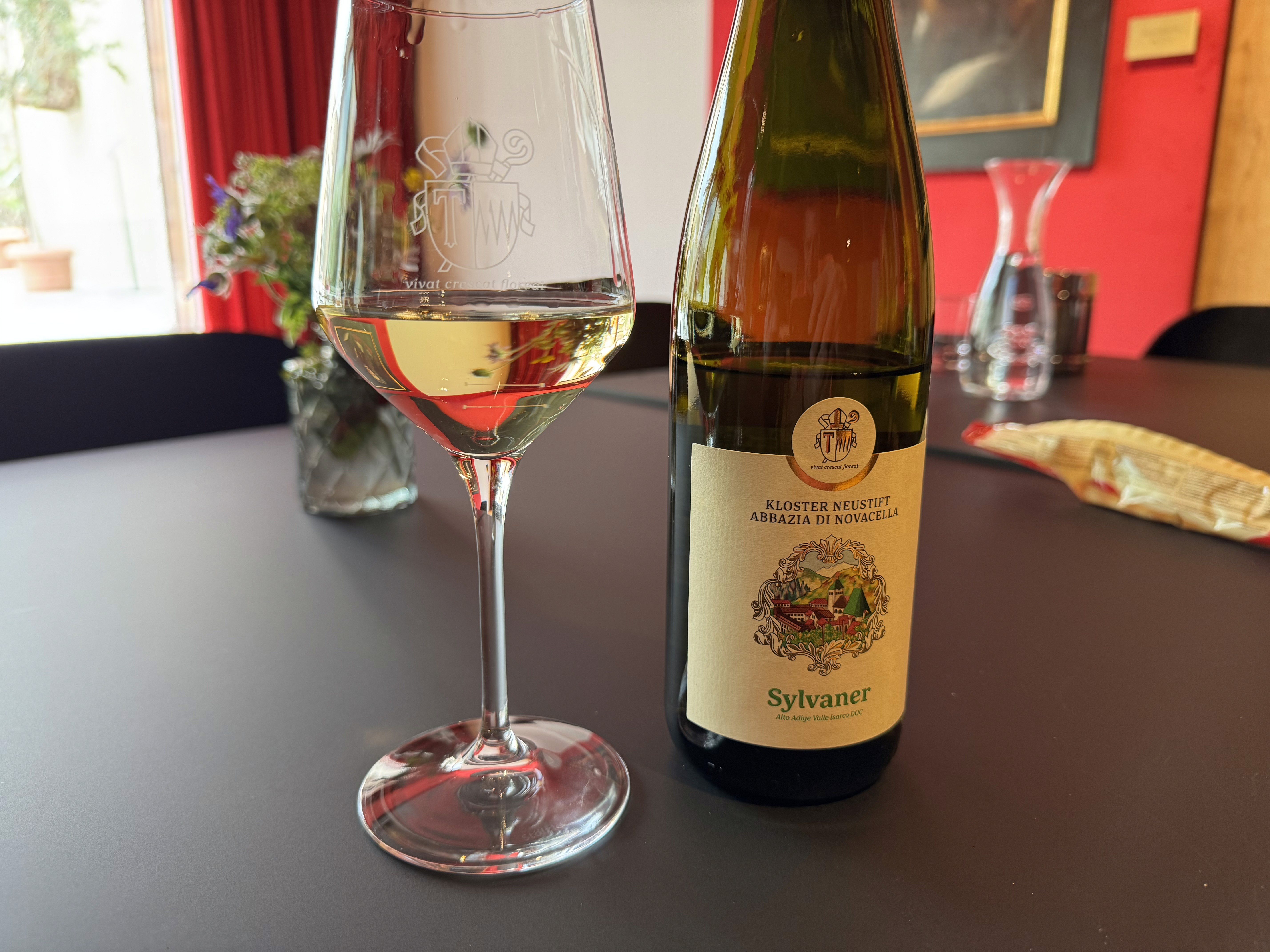
This was the wine that stayed with us. Elegant without trying to impress. Floral notes intertwined with orchard fruit and a distinct mineral backbone that seemed to echo the surrounding mountains. It was remarkably pure, balanced and quietly confident. For us, this wine best captured the character of Abbazia di Novacella.
Kerner (Praepositus)
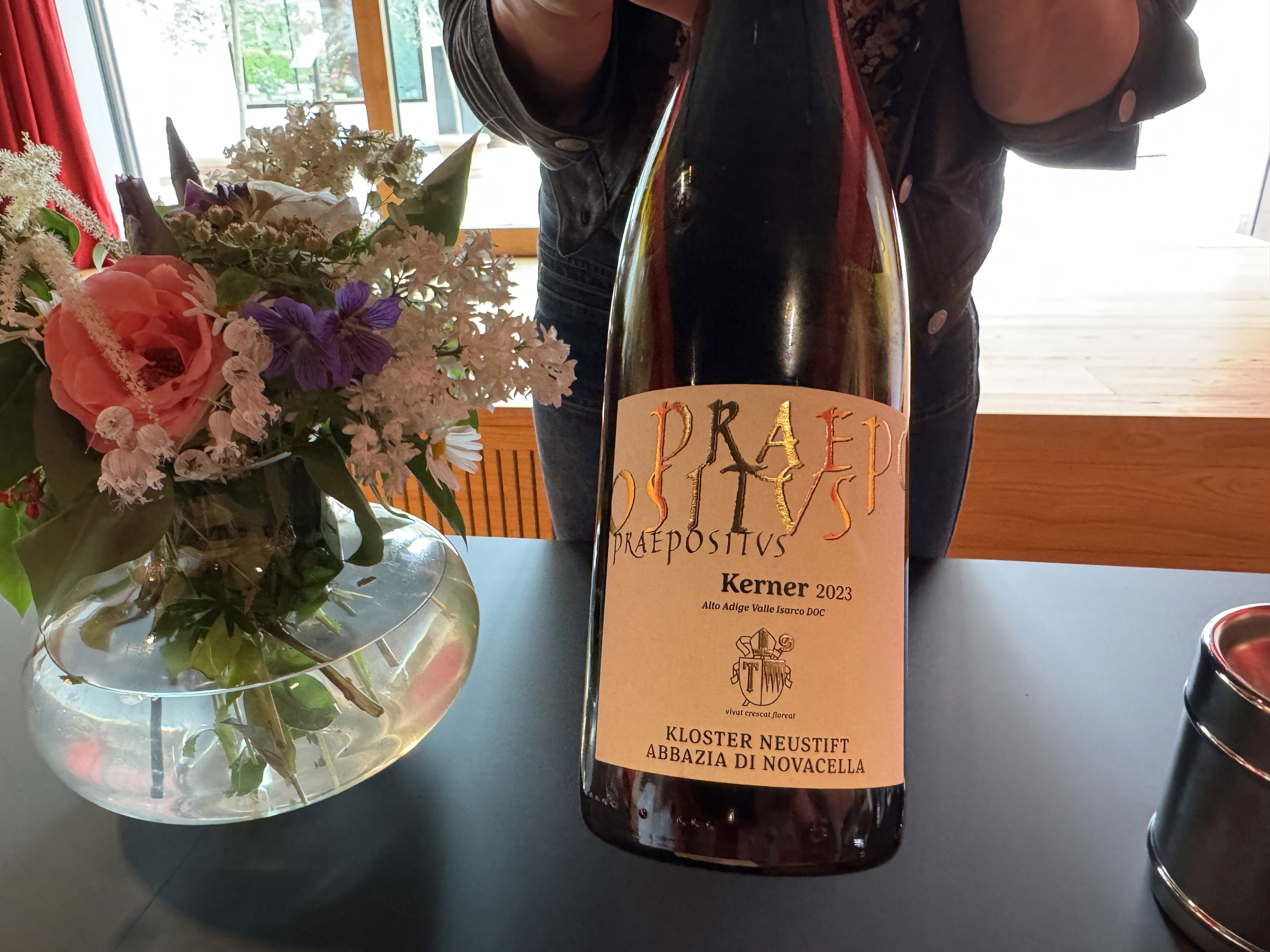
More concentrated and layered than the Classic wines, showing ripe stone fruit, vibrant acidity and impressive length. A wonderful example of why Kerner has become one of Alto Adige’s signature varieties.
Gewürztraminer (Praepositus)
Highly aromatic but beautifully restrained, balancing rose petals, lychee and spice without becoming overly perfumed.
Lagrein
The tasting shifted from whites to Alto Adige’s native red variety. Rich dark fruit, gentle tannins and freshness made it approachable while still reflecting its alpine origins.
Moscato Rosa (our second favorite)
A delightful surprise. Perfumed with roses, wild berries and delicate spice, this sweet wine achieved something many dessert wines struggle to accomplish: elegance. Rather than overwhelming the palate with sweetness, it remained fresh, vibrant and beautifully balanced.
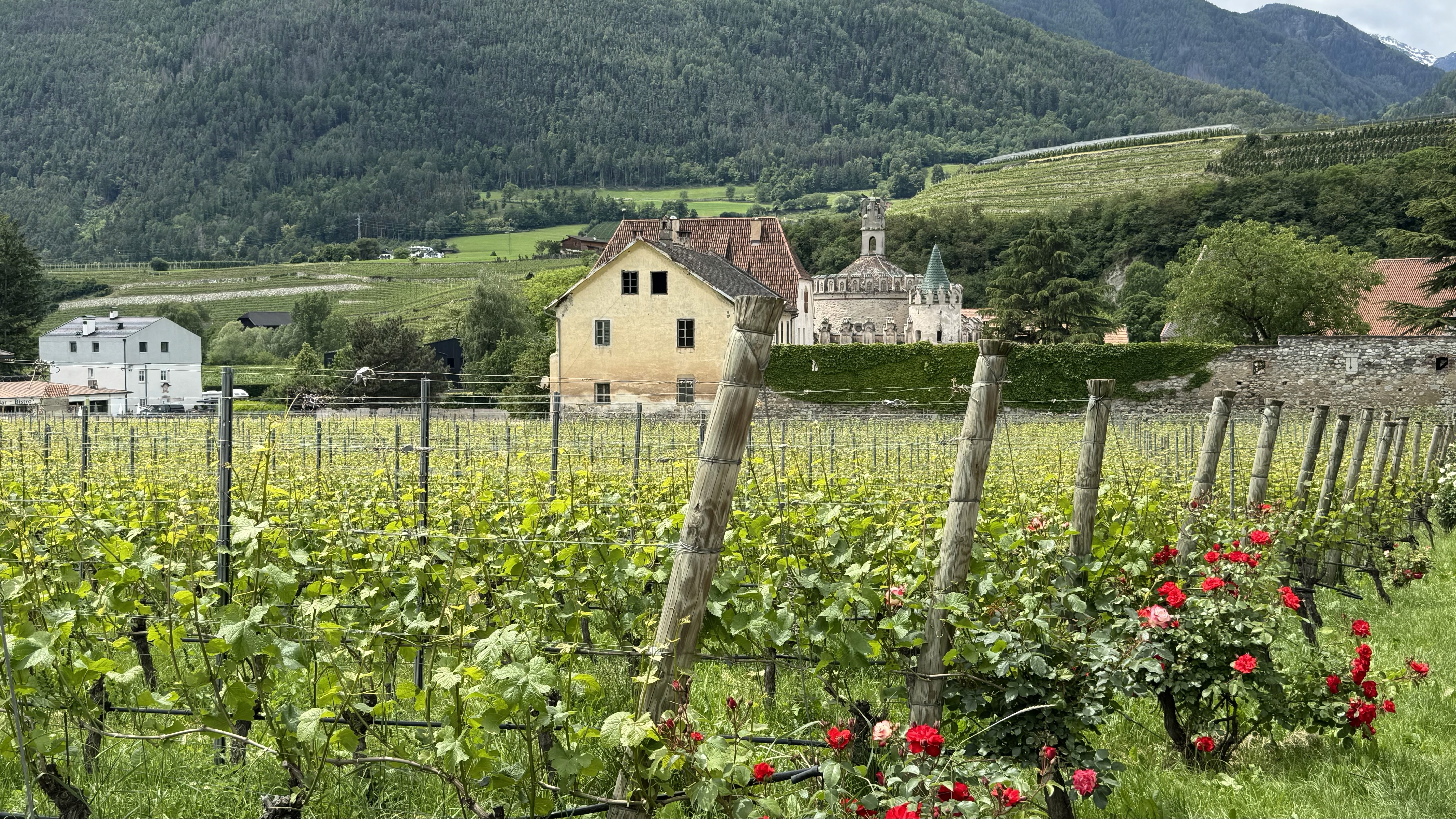
Abbazia di Novacella has been making wine for nearly 900 years.
Preserving Tradition by Continuing to Improve
Walking through the abbey, it’s impossible not to feel connected to history. But perhaps the greatest lesson from Abbazia di Novacella isn’t simply that they have been making wine for nearly 900 years. Every generation has had to adapt while respecting what came before.
Modern vineyard management now complements centuries of accumulated knowledge. Contemporary winemaking techniques help preserve freshness and precision without sacrificing the identity that has made these wines distinctive for hundreds of years. That balance may be the abbey’s greatest achievement. Yes, preserving history in a museum, but also preserving it in living vineyards and bottles that continue to evolve.
To find out more about Abbazia di Novacella and the wines they produce visit: Abbazia di Novacella Alto Aldige
Abbazia di Novacella anchors the Alto Adige chapter of our guide to the most important wine regions in Italy, alongside Tuscany, Piedmont, Valpolicella, and Sicily.
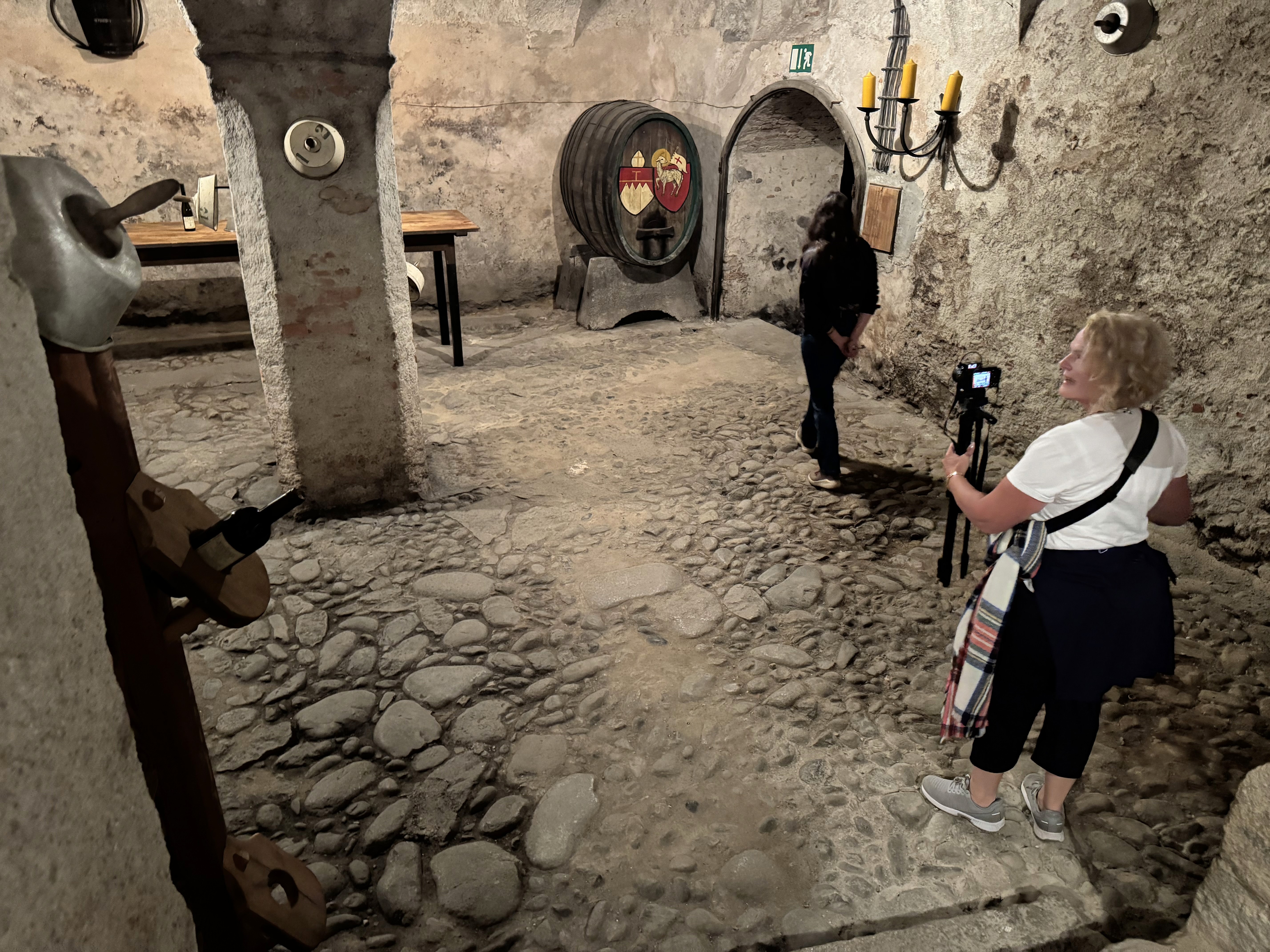
Walking through the abbey, it’s impossible not to feel connected to history.
Visit our Italy page for a full overview of wine in Italy.
More from this country

Italy
The Most Important Wine Regions in Italy, and Where Should You Start?
A traveler's guide to the regions, producers, and stories that make Italian wine easier to understand

Italy
Why Daniel Sigmund’s Alto Adige Mountain Wines Taste So Fresh
A first-generation winemaker turns the steep vineyards of the Eisack Valley into Silvaner, Riesling, and Pinot Noir defined by freshness, elegance, and place.

Italy
The Wines You’ll Never Forget — If You Can Find Them
A journey to Monte dei Ragni, one of the most soulful and elusive producers in Valpolicella.



From Vineyard to Inbox
Subscribe to our newsletter