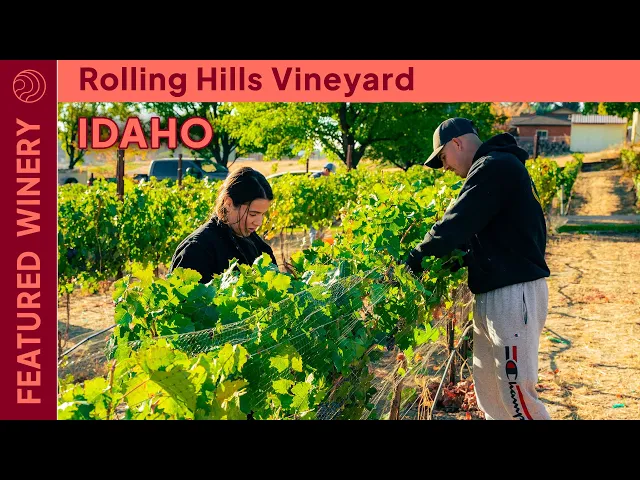
Rolling Hills Vineyard: How Family Heritage Shaped an Idaho Winery
From Ellis Island to the hills of Eagle, the Pasculli family built Rolling Hills Vineyard around wine, shared responsibility, and respect for one another.
Tammy de Weerd - Spoken Wines

Smooth Scroll
This will hide itself!
This will hide itself!
We were traveling when a message arrived from Mark Pasculli: “I would like to learn more about Spoken Wines and how Rolling Hills Vineyard can collaborate with your company.”
Spoken Wines had not even launched, so hearing from Mark, a respected businessman and leader in Idaho’s wine industry, was exciting. We also remembered how much we had enjoyed Rolling Hills Vineyard’s Cabernet Franc at the 2022 Savor Idaho event.
What makes Rolling Hills Vineyard distinctive is not simply that several members of one family work there. The Pascullis have built the winery around the strengths of each generation. Farming, winemaking, design, marketing, and hospitality are shared among Mark, Lori, Daniel, Zach, and Savannah. Their family history, including the sacrifices that brought earlier generations through Ellis Island, gives their work a deeper purpose.
Meeting the Pasculli Family
We met Mark in the Rolling Hills tasting room in Garden City the following November, after returning from four months in the wine regions of South Africa and Australia.
What struck us immediately was how naturally Mark and Lori worked alongside their children. Each person had a role, but no one seemed disconnected from the whole. We knew we wanted to tell their story.
We featured Rolling Hills Vineyard on YouTube the following May, speaking with Mark, Lori, Daniel, Savannah, and Zach about the vineyard, their family history, and what it takes to work together.
Watch the Rolling Hills Vineyard family interview.
How Does the Pasculli Family Run Rolling Hills Vineyard?
“Mark and I love to be with our kids,” Lori told us. “We had bought this beautiful property and this old vineyard that we needed to rehabilitate. Our kids were interested in helping.”
Daniel was finishing his service in the Marines and had become interested in farming and making wine with Mark. Zach brought an interest in video, photography, and marketing. Savannah became the tasting room manager, while Lori contributed her eye for design.
“There is a lot of work to be done,” Lori said. “We have our own job responsibilities and we also work very well together.”
The family’s different abilities allow Rolling Hills Vineyard to function as a shared undertaking without requiring everyone to contribute in the same way.
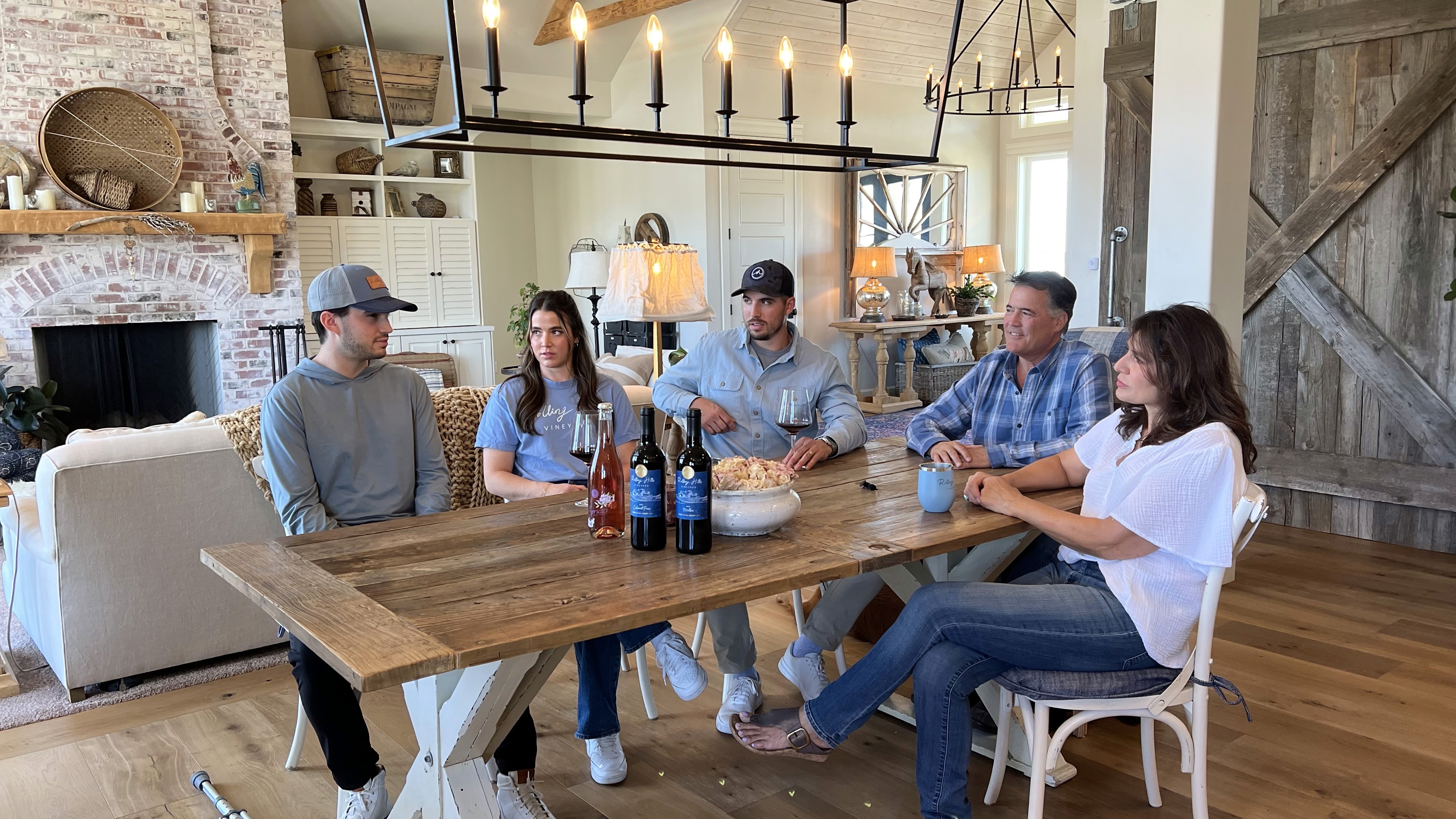
Zach, Savannah, Daniel, Mark, and Lori Pasculli discuss working together as a family.
What Is It Like to Work With Your Family?
“There is constant communication,” Daniel explained. “We have a group chat, all the ideas go there, and get together once a week on various things.”
That communication does not mean every decision is easy.
“It’s not always smooth,” Zach said. “Being in a business as a family we sometimes must drop those family privileges that can get in the way of business. We work to operate as co-workers that care.”
Savannah described how their differences ultimately strengthen the winery:
“Overall, it works very well for us. We have our different strengths and weaknesses. The way it all comes together, we kind of balance each other out in the perfect way. There is a lot of mutual respect.”
That respect may be one of the most important ingredients at Rolling Hills. It allows the Pascullis to disagree as colleagues without losing sight of who they are as a family.
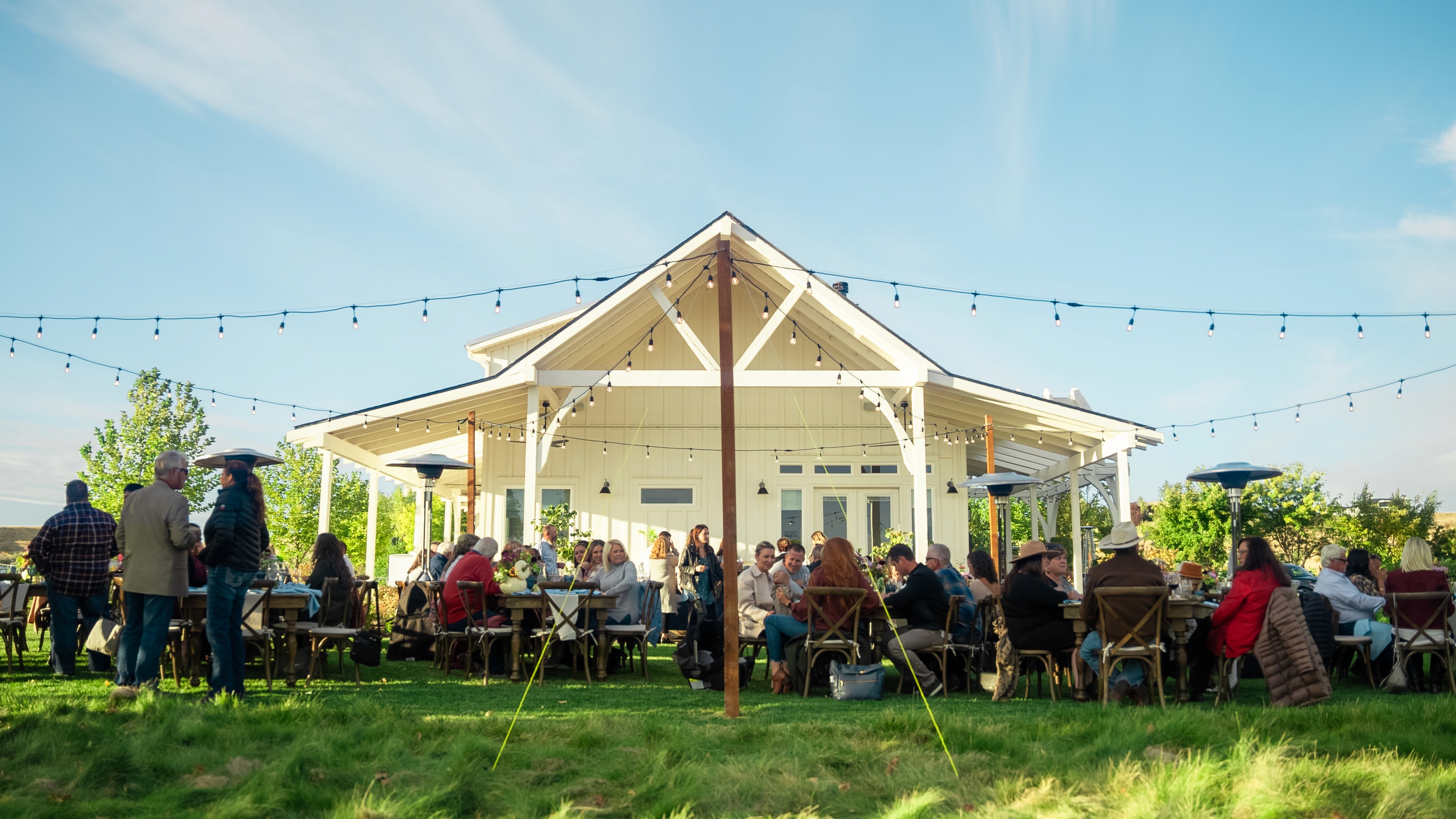
The family homestead at Rolling Hills Vineyard, a place created for wine and connection.
Why Did the Pascullis Start Rolling Hills Vineyard?
For Lori, the vineyard reconnected her with memories from her childhood in central California.
“My grandfather had a small vineyard in central California where I grew up,” she said. “My grandfather would throw me on his lap on the old tractor and we would go up and down the rows. I look back on those times with real fondness.”
She wanted her children to experience that same connection to family and the land.
“So, when we found this old vineyard, it was just calling out to us.”
The property needed to be rehabilitated, but the work offered the family something greater than a finished vineyard. It gave them a place where they could build, create, and work together.
From Ellis Island to Eagle Hills
Mark’s understanding of family comes from another part of the Pasculli story.
“I’m a first-generation immigrant of an Italian family,” he told us. “My grandfather came before WWII started, unfortunately the rest of my family arrived after the war.”
Both Mark’s and Lori’s families entered the United States through Ellis Island. Their histories included the upheaval of war and, in Lori’s family, genocide. Those experiences were inherited through the stories each generation passed down.
“You don’t go through those things personally, but you learn from their story the importance of family in staying together and working together,” Mark said. “What is more important than that?!”
That history helps explain why Rolling Hills Vineyard is more than a family-owned business. It is a place where the Pascullis can carry forward the resilience, closeness, and gratitude they learned from the generations before them.
What Should You Try From Rolling Hills Vineyard?
The wine that first caught our attention was Rolling Hills Vineyard’s Cabernet Franc at the 2022 Savor Idaho event. It gave us our first reason to remember the winery. Meeting the Pascullis gave us another.
If you are discovering Rolling Hills for the first time, begin with the Cabernet Franc. Then explore the family’s other wines through the Rolling Hills Vineyard profile, where you can learn more and find current ordering information.
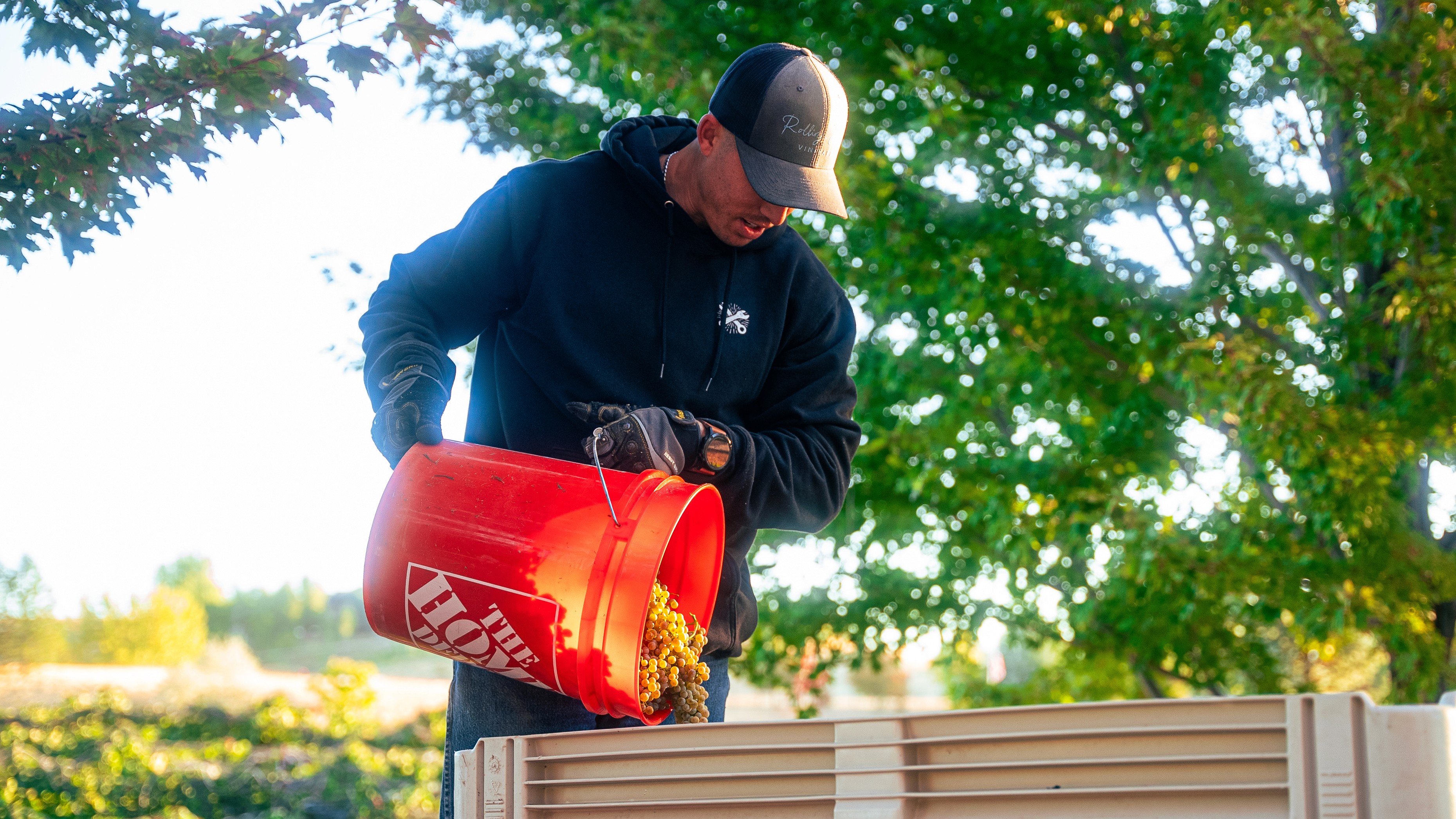
Daniel Pasculli brings freshly harvested grapes into the winery.
Rolling Hills Vineyard reminds us that wine can carry more than the character of a vineyard. It can carry the memory of a grandfather’s tractor, the sacrifices of families who crossed an ocean, and the decision of one generation to build something meaningful with the next.
As Savannah said, “The way it all comes together, we kind of balance each other out in the perfect way. There is a lot of mutual respect.”
Visit the Rolling Hills Vineyard website: rollinghillsvineyard.com
Visit our United States page for a full overview of wine in the United States.
For more stories behind compelling wines and the people who make them, subscribe to our newsletter.
More from this country

United States
Woodward Canyon Winery - What Comes After You Help Build a Wine Region
The evolution of Walla Walla wine and how the Small family is protecting its legacy by continuing to question, experiment, and listen to the vineyard.
United States
What Makes Dunham Cellars Stand Out in Walla Walla? The Dog, the Art, and a Legacy Carried Forward
Inside the former World War II hangar where family, art, wine, and the memory of Eric Dunham continue to shape one of Walla Walla's most personal wineries.
United States
How Kerry Hill Winery Turned a Neglected Idaho Vineyard Into a Working Estate
From McDonald’s pioneer to Kerry Hill Winery, Mindy Mayer’s story of discipline, unthinkable loss, and moving forward



From Vineyard to Inbox
Subscribe to our newsletter