Why Visit Casa de Uco in Mendoza’s Uco Valley?
High-altitude wines, Andes views, and a rare invitation to stay among the vines or create wine from your own vineyard parcel.
Jan de Weerd - Spoken Wines

This will hide itself!
Casa de Uco is more than a winery or mountain hotel. In Los Chacayes, high in Mendoza’s Uco Valley, it invites visitors to stay among the vines, taste wines shaped by the Andes, and even create wine from their own vineyard parcel.
That sense of belonging was immediate when we arrived. The hospitality of Adriana Fontanarossa, the enthusiasm of winery director Germán Frenk, and the passion of winemaker Gustavo Bauzá made the estate feel less like a destination and more like a home opened to guests. Each wanted to share not only what Casa de Uco does, but why this place matters to them.

Winery director Germán Frenk (right) and winemaker Gustavo Bauzá (left) shared why Casa de Uco means so much to them.
We soon discovered that this feeling is central to Casa de Uco’s identity. The invitation goes far beyond a tour or tasting. You can stay among the vineyards, enjoy wines that express the character of the Andes, or own a vineyard parcel and work with the winemaking team to create wine under your own label. At Casa de Uco, you do not have to own a vineyard to feel at home. Remarkably, you can.

Nestled against the Andes, at Casa de Uco you can stay among the vines or even purchase your own vineyard parcel.
More Than Hospitality: An Invitation to Belong
Located in Los Chacayes, one of the distinctive wine-growing areas of Mendoza’s Uco Valley, Casa de Uco sits at approximately 1,300 meters (4,265 feet) above sea level, where vineyards stretch toward the rugged foothills of the Andes. Its contemporary hotel frames breathtaking mountain views, inviting guests to immerse themselves in the surrounding landscape.
Over lunch, enjoying beautifully prepared salads, Argentine empanadas and Casa de Uco wines, hospitality director Adriana Fontanarossa shared the estate’s fascinating origins. The hotel was initially envisioned as a clubhouse for vineyard owners, where they could stay, follow the development of their wines, and enjoy the property. As interest in visiting the Uco Valley grew, the concept evolved into a boutique hotel. But its philosophy remained unchanged: visitors should feel as though they have been welcomed into someone’s home.

Hospitality director Adriana Fontanarossa telling the story of the estate.
That philosophy extends into everything Casa de Uco offers, from horseback rides into the Andes and traditional Argentine asados to vineyard tastings and shared conversations over wine. Adriana spoke passionately about connecting with nature, with others, and with ourselves. Mi casa es su casa, my home is your home, felt like a promise and, as we would discover, a very real possibility!
How Casa de Uco Lets Each Vineyard Parcel Speak
Germán Frenk took us into the vineyards to explain the extraordinary diversity of soils shaped by the Andes. Within just a few rows, sandy ground gives way to large angular stones coated with calcium carbonate. These differences influence warming, vine growth, and grape characteristics. Rather than treating the vineyard uniformly, the team manages individual parcels according to their particular conditions, adjusting irrigation and harvest timing to capture their distinctive expressions.

Each vineyard parcel is managed according to its distinctive soil conditions.
Winemaker Gustavo Bauzá sees his role as helping those differences find their voice. When we asked whether he considered himself a director guiding an orchestra or a cook working with ingredients, he immediately chose the cook. For Gustavo, winemaking cannot follow a fixed recipe. Every vintage and vineyard parcel requires attention, experience, and judgment. Even the winery’s design reflects this philosophy, allowing small batches to be fermented and aged independently. Gustavo carefully selects fermentation vessels and French oak barrels to complement each wine, using gentler oak treatment for Cabernet Franc to preserve its distinctive fruit and pepper characteristics.

Different soils, cold mountain nights, varied aging vessels, and indigenous yeast allows for a wide range of wines shaped by the Andes.
During our tasting, we experienced this philosophy firsthand. Their Salvaje orange wine surprised us with its floral and citrus aromas, lively acidity, and intriguing texture. But perhaps most memorable was comparing two Cabernet Franc wines from different vineyard parcels, made and aged differently. One was youthful and direct; the other unfolded gradually, revealing layers of fruit, spice, and roasted red pepper, with a finish that seemed to evolve long after the first sip. It was a wonderful reminder that the same grape variety, even from one estate, can produce remarkably different wines. But the home-run wine for us was Casa de Uco's Flora & Fauna Malbec, demonstrating great intensity with layers of evolving complexity all in perfect concert. Reminding us that Malbec truly found its home in Argentina where it can shine at its best.
From Feeling at Home to Creating a Wine of Your Own
Casa de Uco takes its invitation to belong one extraordinary step further. Wine enthusiasts can purchase their own vineyard parcels and work alongside the winemaking team to create wines that reflect their personal tastes. Germán described it as experiencing the beautiful game of being a winemaker. Owners can explore their vineyard’s characteristics, choose the grape varieties and styles of wine they want to produce, and collaborate with Gustavo and his team throughout the process, from growing grapes to creating their own labeled bottles.
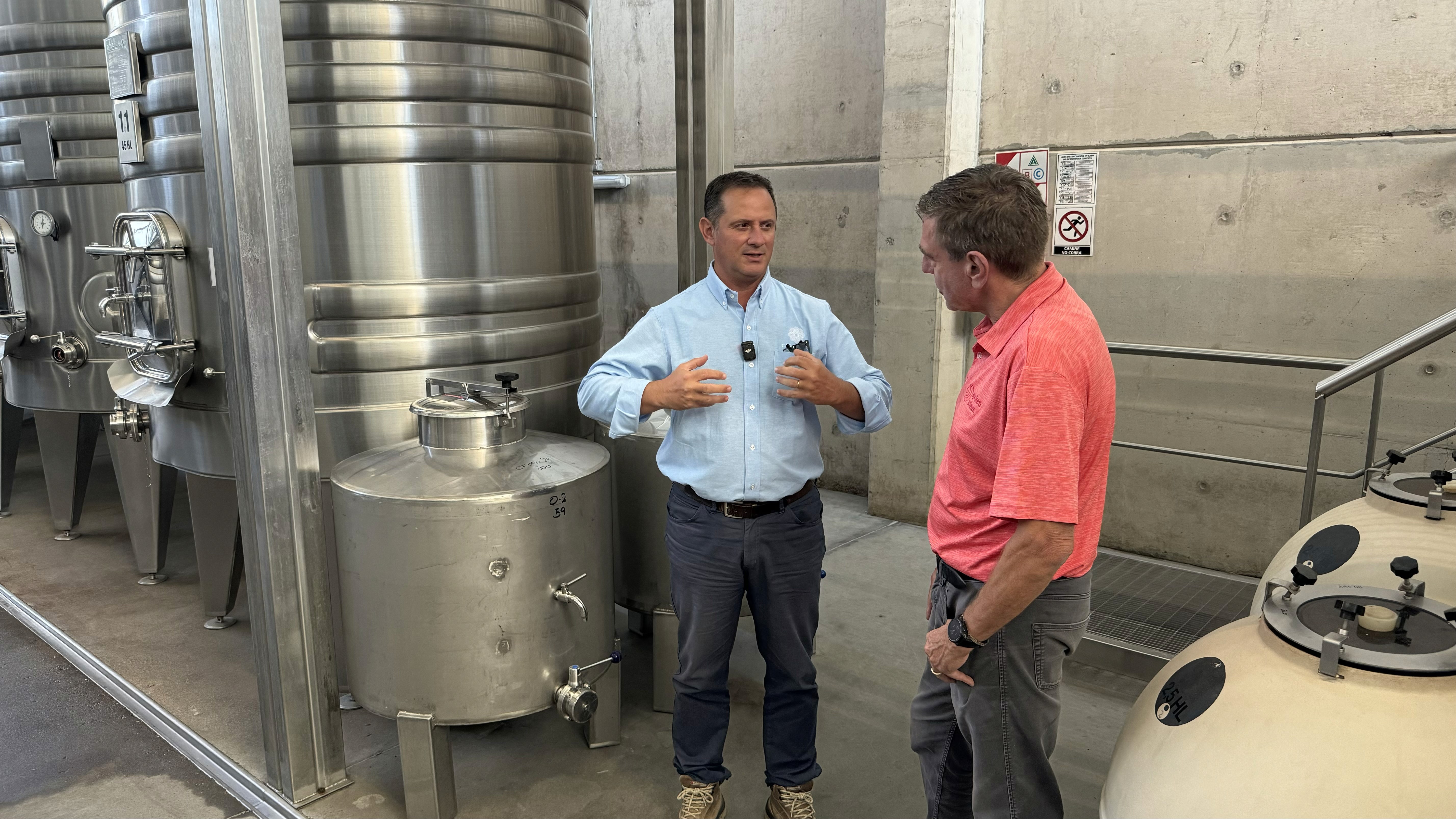
The winery is designed so small batches can be fermented and aged separately.
The winery’s thoughtful design and Gustavo’s flexible approach to winemaking made even more sense now. Its ability to handle small batches separately and tailor winemaking decisions allows individual owners to develop distinctive wines. Imagine choosing the style of Malbec or Cabernet Franc you love, learning how your vineyard’s mountain terroir shapes its grapes, and working alongside an experienced winemaker to create something uniquely yours.
Oh, I was so ready to sign up! I could already imagine crafting my own version of a crisp mountain Chardonnay and a vibrant, complex Pinot Noir, shaped by this extraordinary mountain environment. Alas, I had to move on from my dream. After all, our mission is to connect you with these captivating wines and the people who make them, not to make the wines ourselves!
As we left Casa de Uco, we carried with us a feeling that wine is at its best when it connects us to something beyond the bottle. Whether experiencing their hospitality among the vineyards or enjoying their wines around our own dinner table, the invitation remained the same: Mi casa es su casa.

Casa de Uco’s Salvaje orange wine brought floral and citrus aromas together with lively acidity and texture.
Planning a Visit to Casa de Uco?
Casa de Uco offers winery experiences in Los Chacayes, along with accommodations among the vineyards. Experiences and reservation details may change, so review the winery’s current options before planning your visit.
More from this country

Argentina
Why Pulenta Estate's Wines Taste So Precise
Inside the family winery in Luján de Cuyo, Mendoza, Argentina
Argentina
Why Visit Altieri Family Winery in Mendoza? The Story of the Three Marías
At Altieri Family Winery in Luján de Cuyo, three women carry a family wine tradition from historic concrete vats into precision viticulture.
Argentina
Why Does Zuccardi Wine Taste Like the Andes?
How mountain water, alluvial soils, precision viticulture, and concrete shape Zuccardi’s wines in Argentina’s Uco Valley.



From Vineyard to Inbox
Subscribe to our newsletter