
What Makes Mendoza Wine So Special, and Where Should You Start?
From historic Luján de Cuyo to the high-altitude vineyards of Uco Valley, discover the wines, people, and places redefining Argentina’s most celebrated wine region.
Tammy de Weerd - Spoken Wines

Smooth Scroll
This will hide itself!
This will hide itself!
What Makes Mendoza Wine So Special, and Where Should You Start?
There are places where the landscape takes your breath away before you’ve tasted a single glass of wine. Mendoza, Argentina, is one of them. The Andes rise above an immense expanse of vineyards, their snow-covered peaks stretching toward the sky. The scale is difficult to comprehend until you’re standing there. Mendoza wine is special because these mountains shape nearly everything that reaches the glass. From the water that sustains the vineyards to the soils beneath the vines and the dramatic changes in elevation, the Andes influence the character of the wines. The result is not one Mendoza style, but many.
If you are wondering where to start, begin with three areas: Luján de Cuyo for historic vineyards and polished Malbec, Maipú for family heritage and approachable wines, and Uco Valley for high-elevation sites and vivid expressions of place. Taste two Malbecs side by side, then look beyond the grape to Cabernet Franc, Bordeaux-style blends, Chardonnay, and Torrontés.
We have visited Mendoza several times, but our most recent trip gave us a deeper understanding of what makes it one of the world’s great wine regions. We discovered Malbecs that were rich and velvety, others that were vibrant and surprisingly delicate, and some so complex that we struggled to find words for them. We also tasted exceptional Cabernet Franc, Bordeaux-style blends, Chardonnays that challenged our expectations, and expressive Torrontés, Argentina’s signature aromatic white.
What stayed with us was the diversity of the wines and the people finding new ways to express this extraordinary place. One winemaker we had met during our latest trip explained: “In this last decade, Mendoza has put a 100 year evolution into a 10 year revolution of both viticulture and winemaking.”
The Andes: The Mountains Behind Mendoza’s Great Wines
The Andes are far more than Mendoza’s spectacular backdrop. Snowmelt from the mountains supplies water to vineyards in this dry region, while ancient rivers and streams carried rock, gravel, sand, and sediment into the valleys. These alluvial deposits created a striking diversity of soils, sometimes even between neighboring parcels.
Elevation adds another dimension. Sunny days help grapes ripen, while cooler nights can preserve the acidity that keeps wines fresh and balanced. Yet there is no single Mendoza terroir. Soil, elevation, exposure, grape variety, and winemaking decisions interact differently across the region.
That is why Mendoza rewards comparison. A Malbec from Luján de Cuyo may feel generous and polished, while one from a rocky Uco Valley site may show more freshness, tension, or savory complexity. Neither expression tells the whole story on its own.

Rock and sediment carried down from the Andes helped form the varied soils beneath Mendoza’s vineyards.
So Much Mendoza to Discover
Mendoza is Argentina’s wine heartland, home to hundreds of wineries spread across a province more than one-third the size of California. From historic vineyards to high-altitude valleys along the Andes, its wine regions offer an extraordinary diversity of landscapes, grape varieties, and winemaking traditions.
During half a dozen visits, we’ve explored wineries large and small, tasting wines and meeting the people whose stories make this region so compelling. Yet every visit brings new discoveries.
The wineries and wines featured throughout this guide are among those we’ve particularly enjoyed and recommend exploring. Whether you’re planning a winery visit or discovering Mendoza through a bottle at home, consider these recommendations a starting point. There is far more to Mendoza than any single guide, or even several visits, could capture.
Explore Mendoza Wine Country
Luján de Cuyo: Where History Meets a New Generation
Maipú: Where Mendoza’s Past and Future Meet
Uco Valley: Where the Andes Take Center Stage
Beyond Malbec: Mendoza’s Next Chapter
What Should You Try? Our Mendoza Wine Guide
Planning a Visit to Mendoza
Frequently Asked Questions
Luján de Cuyo: Where History Meets a New Generation
In Luján de Cuyo, historic vineyards and longstanding winemaking traditions share the landscape with producers reexamining how wines can be made. We encountered many of the generous, polished Malbecs that helped establish Argentina’s reputation, along with styles that challenged our expectations.
Pulenta Estate: The Art of Precision
At Pulenta Estate in Agrelo, winemaker Javier Lo Forte introduced us to an approach that reminded us of assembling a puzzle, or perhaps building a luxury car. Grapes may be harvested at different stages of ripeness and fermented separately, allowing each component to contribute freshness, concentration, texture, or depth. The final blend reflects a series of deliberate decisions.
Their Gran Malbec was beautifully polished and vibrant. The Gran Corte offered greater depth and complexity. A phrase we encountered there stayed with us: “Making wine is an act of generosity.” It captured the care behind wines intended to be shared.
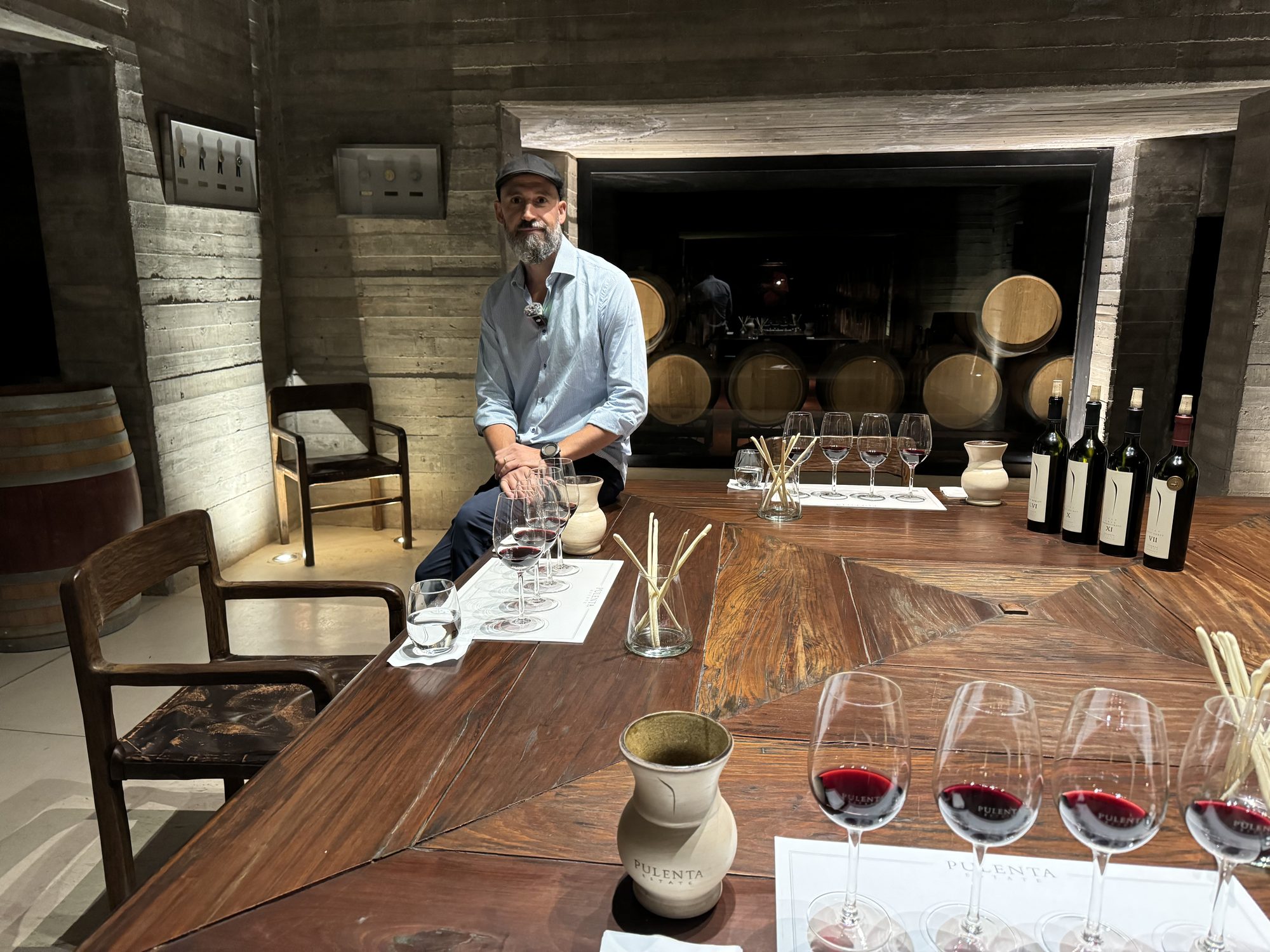
A tasting with winemaker Javier Lo Forte at Pulenta Estate brings the cellar, barrels, wines, and precision of the experience into one frame.
Mendel Wines and Altieri Family Winery: History in Motion
At Bodega Mendel, a Malbec vineyard planted in 1928 stands beside the historic winery. Under winemaker Roberto de la Mota, these old vines continue to tell an important part of Luján de Cuyo’s story. We had intended simply to taste the wines, but the peaceful atmosphere drew us to our cameras.
At Altieri Family Winery, historic concrete fermentation vats and older equipment sit alongside modern winemaking facilities. Cecilia and her daughters, Angie and María, known as the “three Marías,” are carrying that legacy forward with carefully made Malbec, blends, and Chardonnay. Together, the visits showed how Mendoza’s history continues to inform its future.

At Altieri Family Winery in Luján de Cuyo, a historic concrete fermentation vat has found new life as a storage space for oak barrels, a fitting reflection of the winery’s connection between past and present.
MAAL and Pulmary Family Winery: Malbec’s Many Personalities
We thought we understood Malbec until MAAL introduced us to an astonishing range of expressions. Founded by Matías Fraga and Alfredo Merlo, the winery explores the possibilities of one grape, from lighter and unoaked wines to deeply concentrated reds. Its creative use of repurposed materials gives the winery a distinctive upcycled character, just as its wines reveal fresh possibilities within Malbec.
Another discovery happened by chance in Chacras de Coria. At Pulmary Family Winery, winemaker Ramiro Maures and his mother welcomed us into their small organic winery. A bright, unoaked Malbec offered vivid red fruit and freshness. Comparing it with an oak-aged version reminded us how dramatically style can change, and how rewarding an unplanned stop can be.
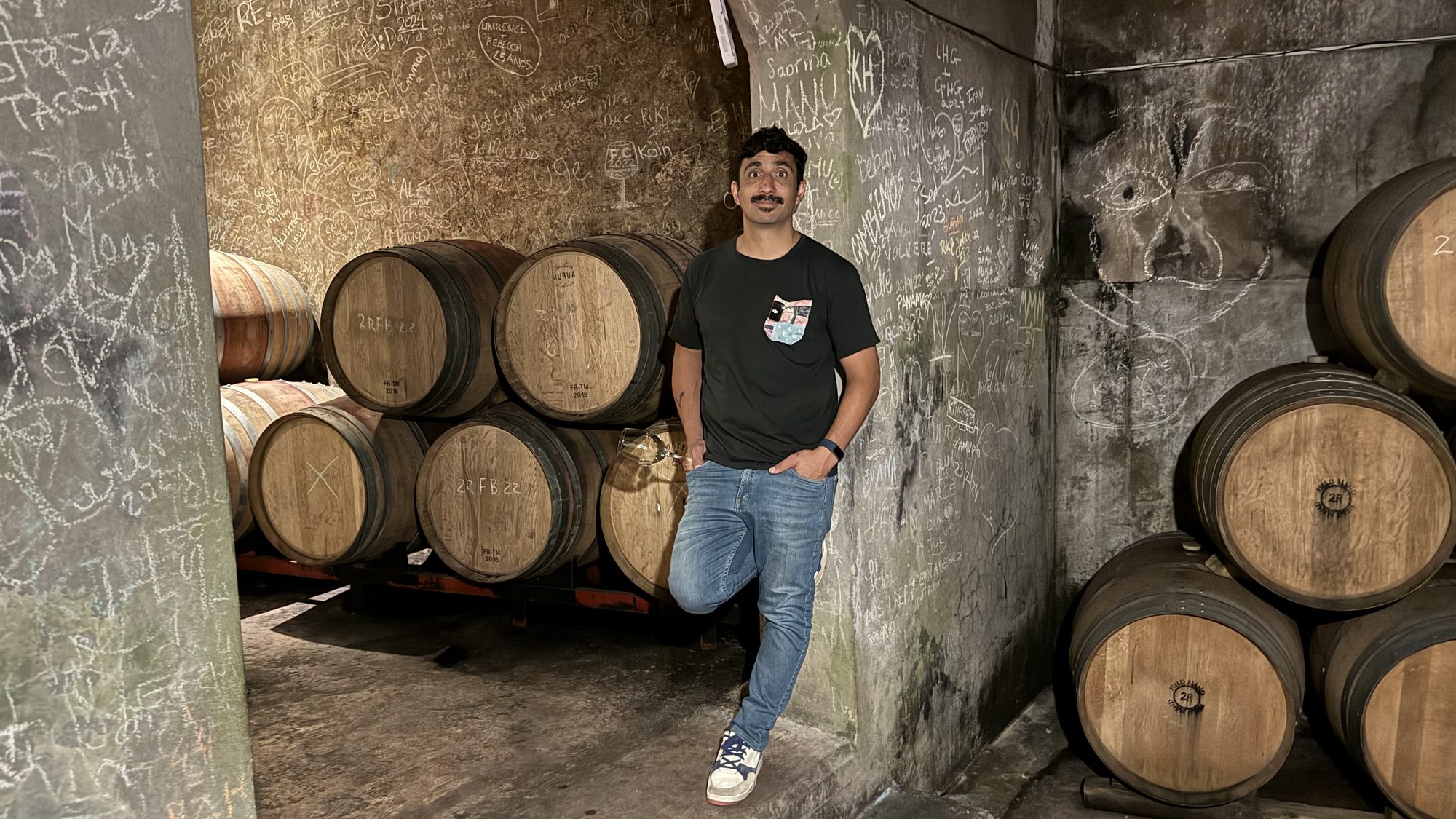
Inside Pulmary’s intimate cellar, oak barrels and walls covered with visitors’ signatures create a sense of discovery. Featured: Ramiro Maures, winemaker and family owner.
Where to Begin in Luján de Cuyo
Start by comparing a classic Luján de Cuyo Malbec from Mendel, Altieri, or Clos de Chacras, with a lighter or unoaked expression from Pulmary or MAAL. The differences reveal how varied Malbec can be, even within the same region.
Then explore a Bordeaux-style blend from Pulenta or Altieri. And don’t overlook the whites. Altieri’s Chardonnay is a reminder that Luján de Cuyo offers much more than red wine. Clos de Chacras is also worth including on your winery itinerary.
Maipú: Where Mendoza’s Past and Future Meet
At Bodega Santa Julia, the Zuccardi family’s history connects irrigation, farming, community, and experimentation. Alberto Zuccardi’s work on irrigation helped shape the family’s agricultural beginnings, while the family’s commitment to workers and their communities remains part of the winery’s identity.
Santa Julia became an early advocate for organic farming and continues to explore natural wines and more accessible formats. During our visit, the winery was nearing completion of a facility dedicated entirely to natural wines. Rarely had we tasted natural wines that felt so smooth, balanced, and complete.
Another remarkable value was the Santa Julia Malbec Reserve, which cost around $10 at the time of our visit. Paired with delicious empanadas and the warmth of the people who welcomed us, it reminded us that exceptional wine experiences are not measured by price alone.
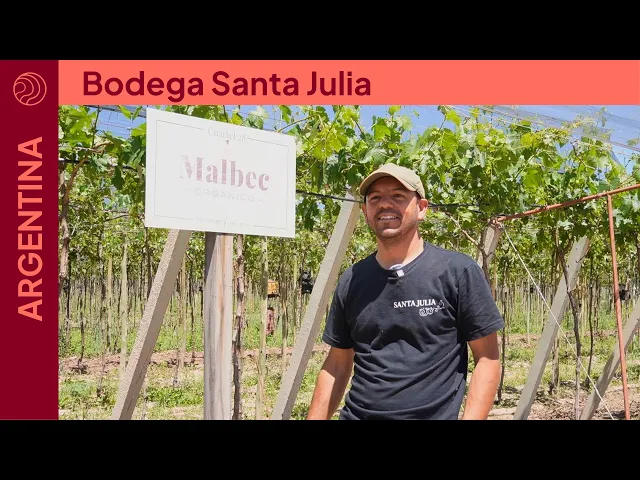
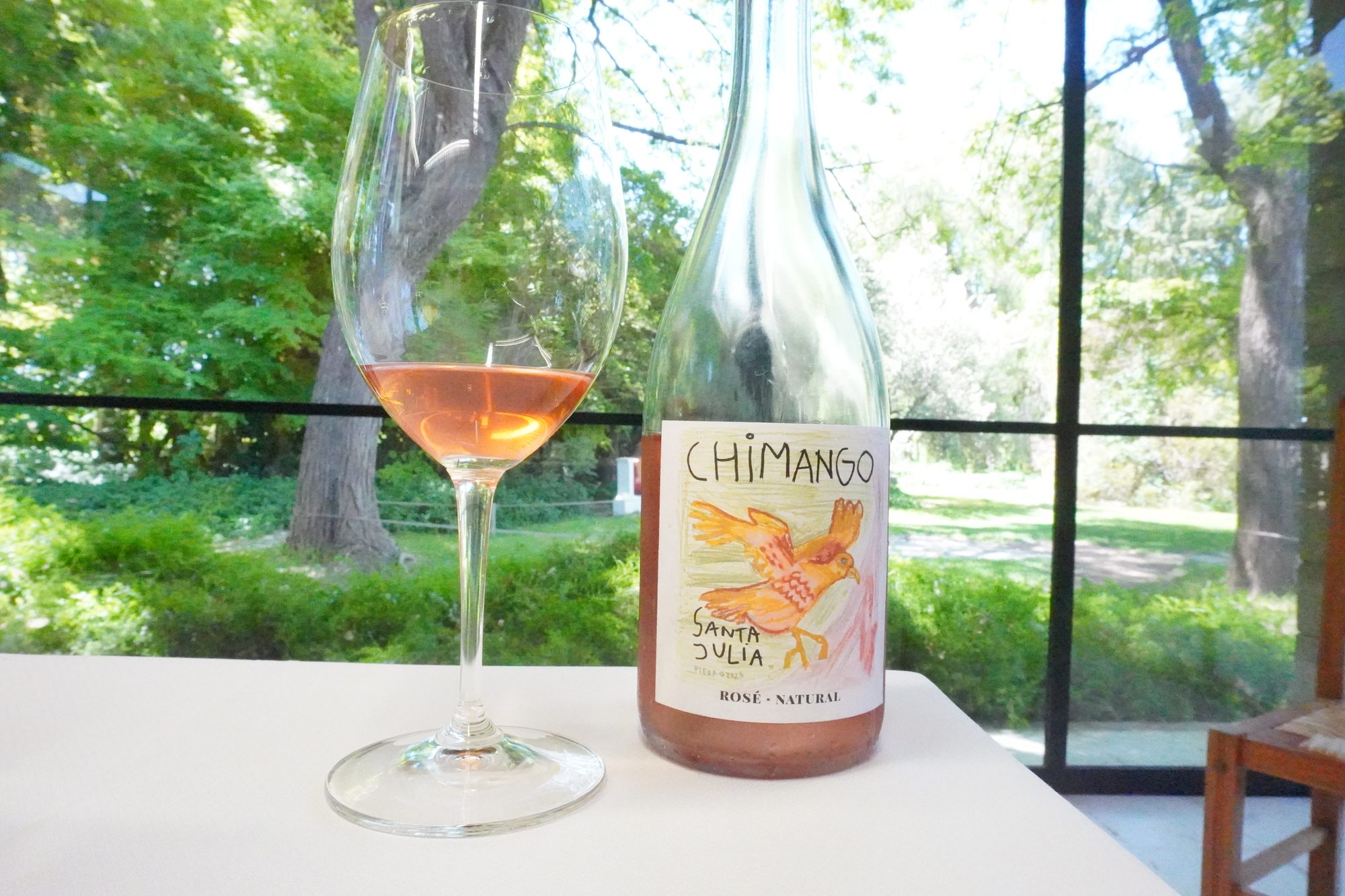
Santa Julia Chimango natural rosé, made from Malbec, was a memorable match for Chacha’s empanadas.
Where to Begin in Maipú
Santa Julia offers a welcoming introduction to Maipú’s family history, organic farming, natural wines, and hospitality. Start with its Malbec Reserve, then explore a contrasting natural wine. If available, pair Chacha’s locally famous empanadas with Chimango natural rosé, made from Malbec.
For another perspective on the region, visit El Enemigo and explore its acclaimed single-vineyard Cabernet Franc wines.
Uco Valley: Where the Andes Take Center Stage
In Uco Valley, the mountains felt closer and the landscape more rugged. We often noticed freshness, tension, and savory complexity in the wines, although differences between vineyards and winemaking approaches were just as important as any broad regional description. Here, the relationship between the Andes and the glass became especially vivid.
Zuccardi Valle de Uco: Understanding Wine from the Mountains Down
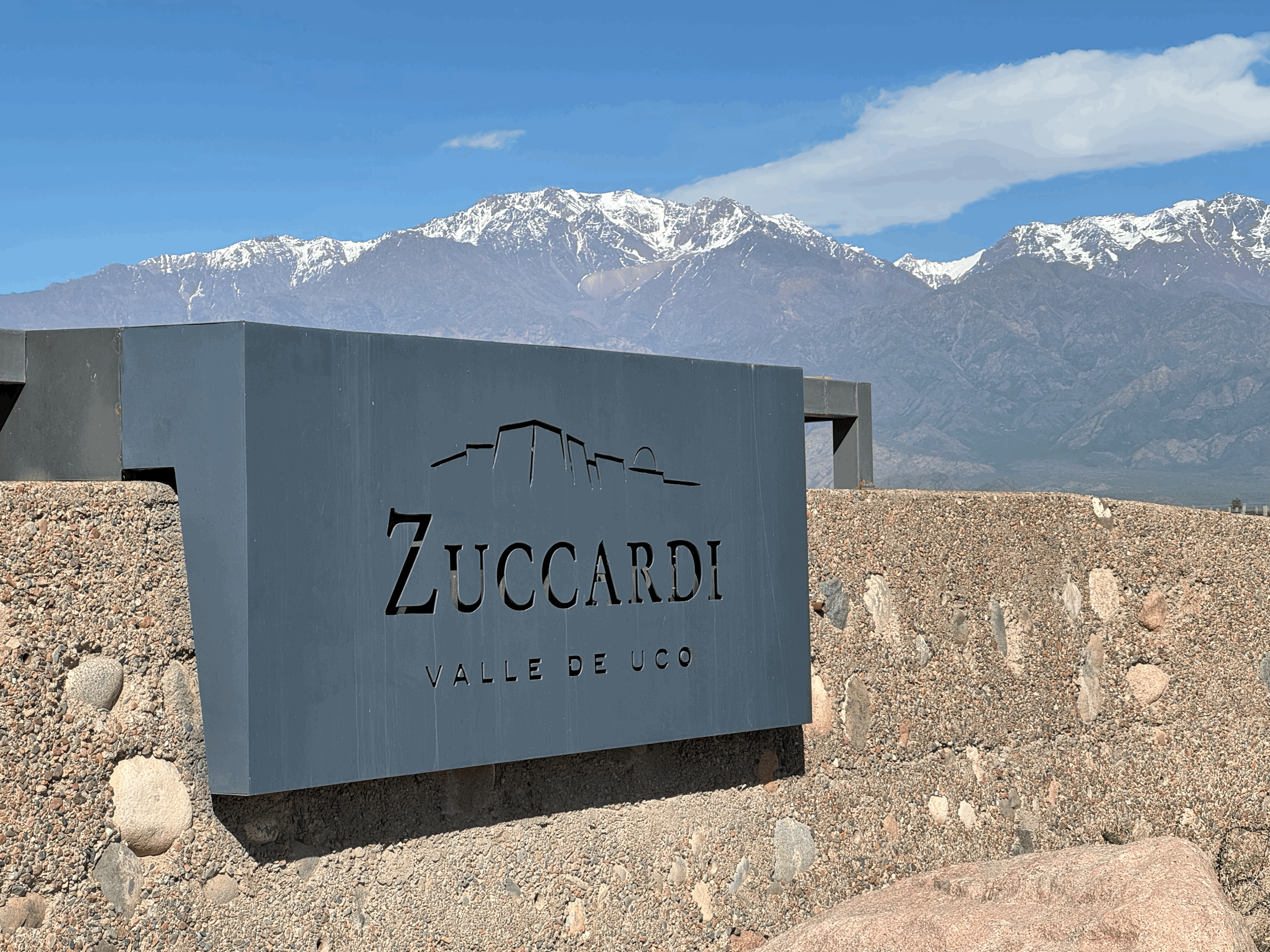
At Zuccardi Valle de Uco, viticulturist Martín Di Stefano showed us how the winery studies individual vineyard parcels and the alluvial soils beneath them. He explained how millions of years of erosion carried rocks, gravel, and sediment from the mountains into the valley, creating remarkably diverse soils beneath Mendoza’s vineyards. Rather than masking those distinctions, the team aims to make them more visible in the finished wines, often using concrete vessels.
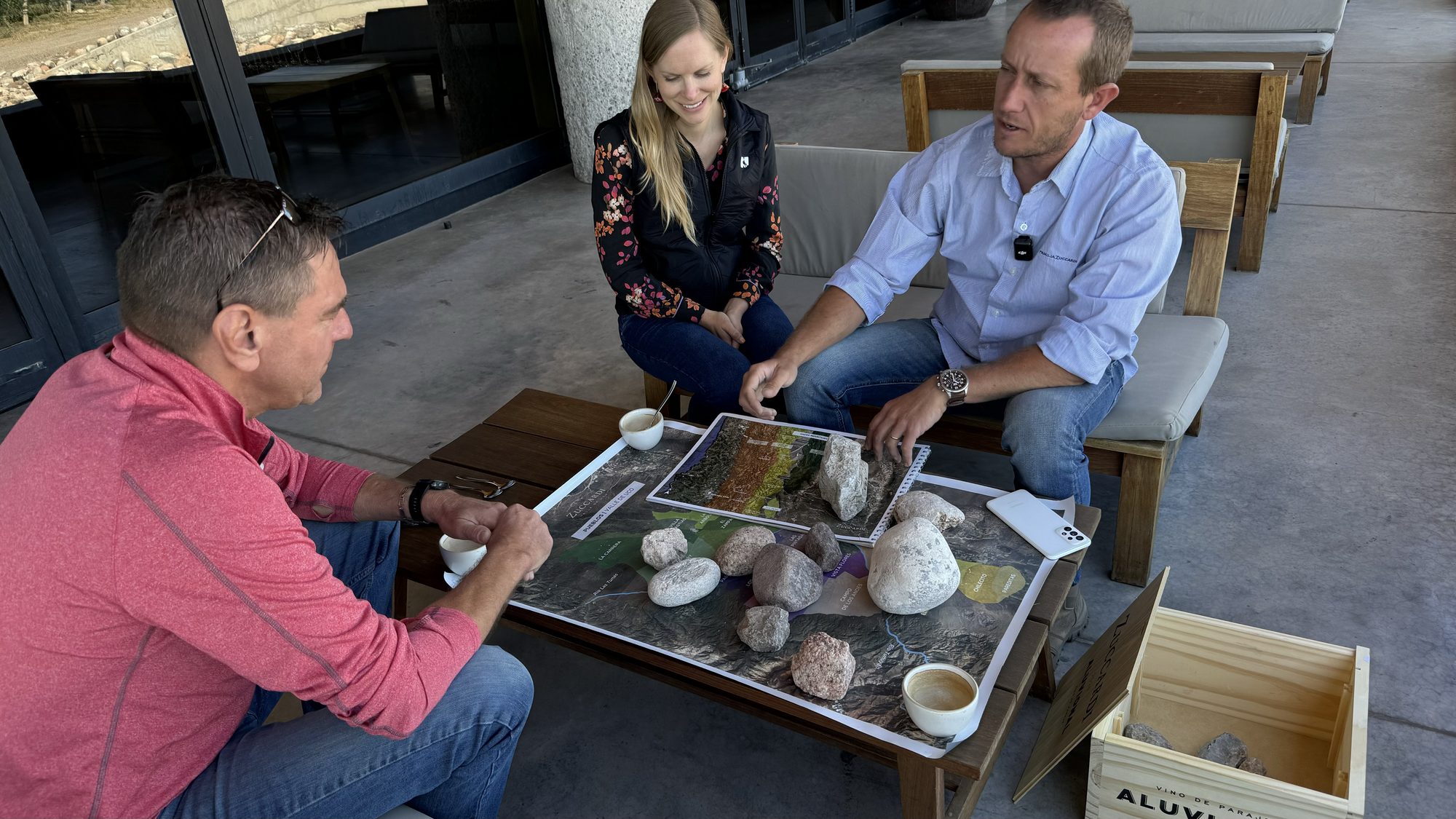
At Zuccardi in Argentina’s Uco Valley, viticulturist Martín Di Stefano uses rocks and geological maps to show Jan how the Andes shaped the diverse soils beneath Mendoza’s vineyards.
We loved the freshness of Fósil Chardonnay, and Finca Las Cerrilladas Malbec was unforgettable. Notes of black olive, rosemary, and anise transported both of us to an Italian grandmother’s kitchen. It was a vivid reminder that Malbec can express far more than familiar dark-fruit richness.
The following day, Jan’s hike on the Cerro San Pedro Trail made the lesson tangible. The rock formations, sediment, and streams he encountered were part of the same mountain system that shaped the vineyards below.

Casa de Uco: Where Wine Becomes Personal
At Casa de Uco, the Andes felt close enough to touch. Located in Los Chacayes at approximately 1,300 meters, or 4,265 feet, the estate sits against the mountains, surrounded by vineyards planted in rocky soils. The Tonconogy family began developing the property in 2009, transforming rugged land into an estate encompassing vineyards, a boutique winery, and a hotel.

At Casa de Uco in Mendoza’s Uco Valley, contemporary winery architecture frames a spectacular view of the snowcapped Andes, connecting the estate’s winemaking philosophy with the landscape that shapes its wines.
Their vision extends beyond producing exceptional wines. Casa de Uco offers people the opportunity to own a small vineyard parcel and work with the estate’s winemaking team to create a wine that captures their own interpretation of the Andes. Winemaker Gustavo Bauzá described how individual parcels, native yeasts, and different fermentation vessels help the team explore the character of Los Chacayes.
We tasted several expressions, and the Cabernet Franc particularly impressed us. It offered layers of fruit and grilled red pepper, with a finish that continued evolving long after the first sip. The experience continued over a leisurely lunch of handmade empanadas, fresh salads, and thoughtfully paired wines.
Adriana explained that the estate was originally envisioned as a gathering place for vineyard owners. Today, its restaurant, hotel, horseback riding, and mountain excursions invite guests to connect with the landscape. She spoke about connecting with nature, with others, and with oneself. From the welcome to the setting and wines, Casa de Uco stayed with us long after we left. It truly felt like “mi casa es su casa.”
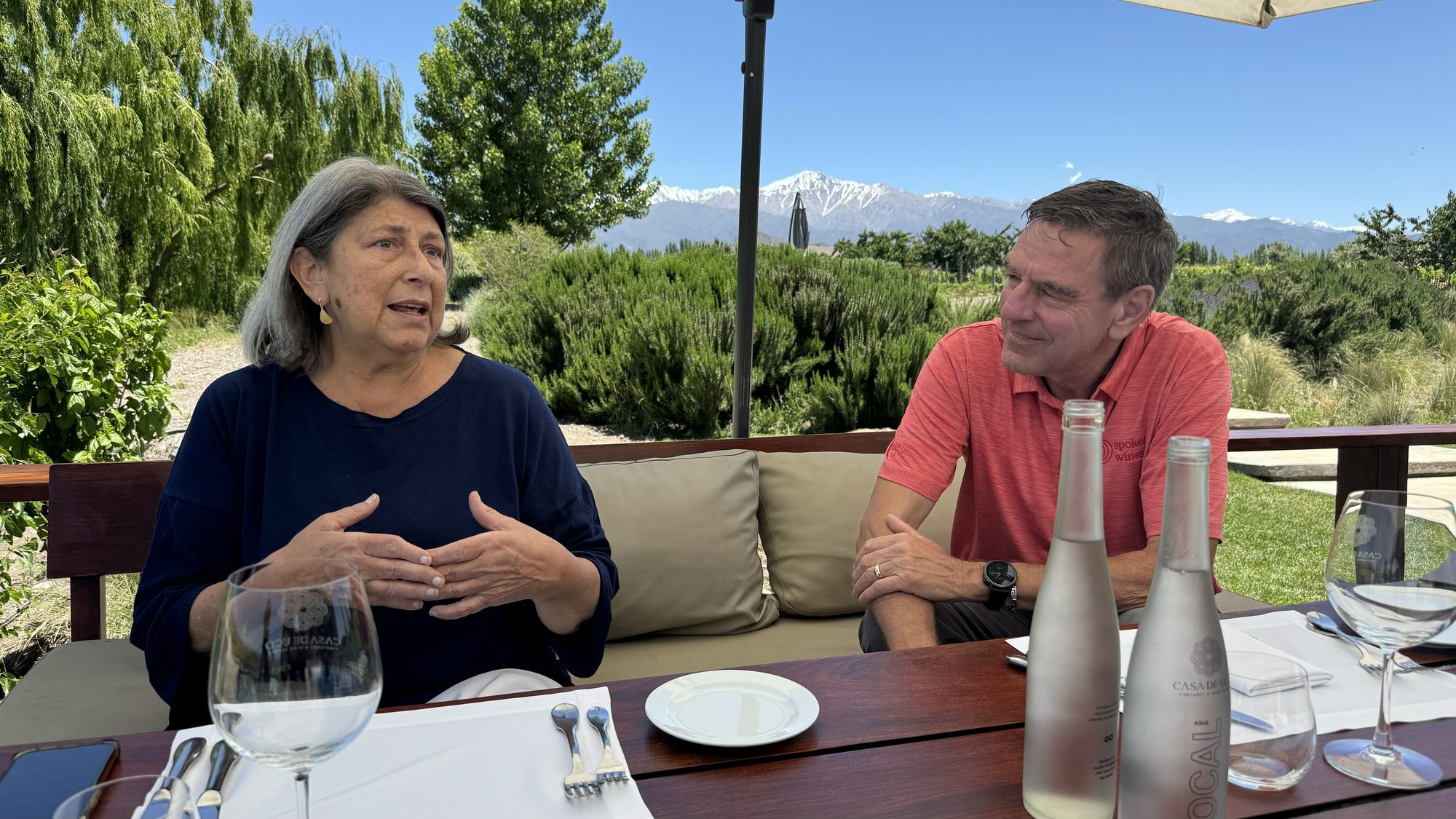
Over lunch at Casa de Uco in Mendoza’s Uco Valley, Adriana shares the estate’s philosophy of hospitality and the importance of connecting with nature, with others, and with ourselves.
Monteviejo: A Wine Worth Remembering
Sometimes a wine stays with you long after the bottle is empty. For us, it was a 2005 Linda Flor from Monteviejo. We visited the winery behind that memorable bottle, where the elevated Montevista restaurant looks across vineyards toward the Andes. Returning to the place behind a wine we had loved years earlier added another layer to the experience.

Rows of oak barrels stretch through the cellar at Bodega Monteviejo in Mendoza’s Uco Valley, where the wines include Linda Flor, the memorable Malbec that first inspired our visit.
Grazie Mille Wines: The Wine That Reminded Us What Matters
While exploring La Consulta in Uco Valley, we entered the gates of a young winery called Grazie Mille, unaware that we were about to encounter one of the most touching stories of our time in Mendoza.
The winery was created by two friends, Fernando and Leandro, separated by more than twenty years in age but connected through a friendship that had grown through extraordinary challenges. Their story inspired three wine collections: Amistad, for friendship; Libertad, for freedom; and Design. The names reflect the trust, freedom, and shared vision behind their work.
The wines were subtle, elegant, and beautifully nuanced. At the heart of the estate stood an old Malbec vineyard, more than a century in age, surrounded by a winery, restaurant, and art studio. Beyond it, the Andes rose against the sky. Grazie Mille means “a thousand thanks,” and gratitude seemed to be everywhere: in the friendship, the wines, the land, and the welcome we received.
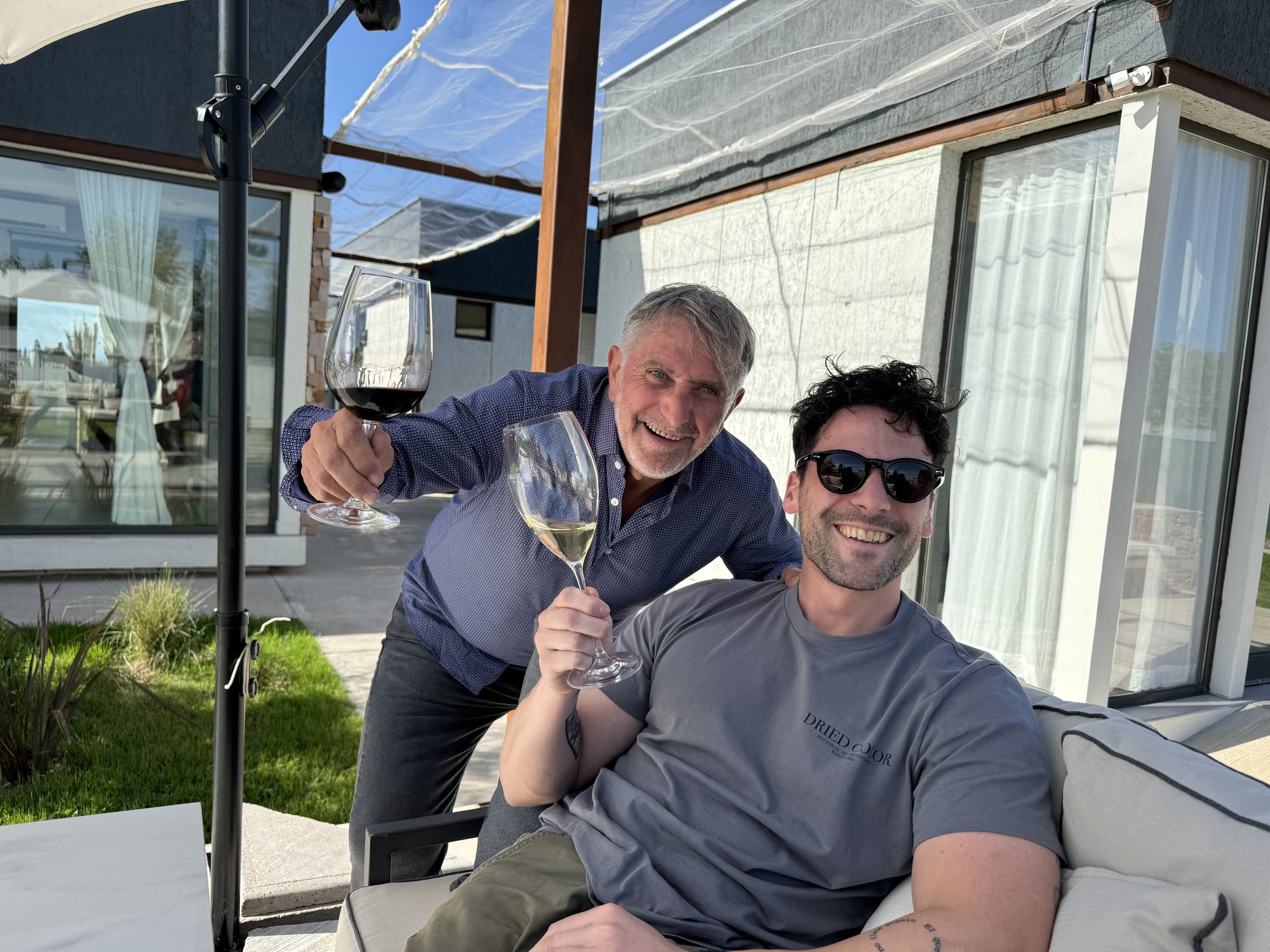
At Grazie Mille in Mendoza’s Uco Valley, founders Fernando and Leandro, friends separated by more than twenty years in age, raise a glass to the friendship that inspired their winery.
Where to Begin in Uco Valley
At Zuccardi, compare vineyard-specific Malbecs and explore Chardonnay. At Casa de Uco, discover Cabernet Franc and its orange wine fermented with native yeasts. Monteviejo offers an opportunity to experience the relationship between wine, food, and the Andes. At Grazie Mille, explore elegant Malbecs and the story of friendship behind the wines.
For additional discoveries, consider Piedra Negra for its expressive Malbecs and vibrant white blends, or Bodega Atamisque for Cabernet Sauvignon, Petit Verdot, and its Assemblage Bordeaux-style blend.
Beyond Malbec: Mendoza’s Next Chapter
Malbec introduced much of the world to Mendoza, but our visits revealed Cabernet Franc, Bordeaux-style blends, Chardonnay, and Torrontés deserving equal curiosity.
At Casa de Uco, two Cabernet Francs showed very different personalities. One was youthful and firm. The other was layered with fruit, spice, and savory notes. Jan compared the contrast to an orchestra, one led by brass and the other softened by violins and drums.
Those differences cannot be attributed to one decision alone. Vineyard site, vintage, growing conditions, fermentation, and aging can all influence the result. The pleasure lies in tasting thoughtfully and discovering how many expressions one region can offer.
What Should You Try? Our Mendoza Wine Guide
Whether you’re visiting Mendoza or exploring its wines closer to home, these are some of the bottles and styles that have stayed with us.
For polished Malbec: Pulenta Estate Gran Malbec or Casa de Uco Flora & Fauna Malbec.
For site-driven Malbec: Zuccardi Concreto, the Aluvional series, or Zuccardi Finca Las Cerrilladas Malbec. Compare them with the medium-bodied, elegant style of Grazie Mille, especially its Grand Malbec Design.
For a different side of Malbec: A lighter or unoaked MAAL wine, or Pulmary’s organic, unoaked Malbec with vivid fruit and freshness.
For excellent value: Santa Julia Malbec Reserve, then one of the winery’s natural wines.
For a Bordeaux-style blend: Pulenta Gran Corte or Altieri Château Brandsen.
For a distinctive white: Zuccardi Fósil Chardonnay, Altieri Chardonnay, or an expressive Santa Julia Torrontés.
For Cabernet Franc: Casa de Uco Cabernet Franc. Compare it with El Enemigo’s single-vineyard Gran Enemigo Cabernet Franc series or Altieri’s Winemaker’s Selection Cabernet Franc.
These are starting points rather than rankings. If possible, taste two Malbecs side by side, one from Luján de Cuyo and one from Uco Valley. Notice the fruit, acidity, tannins, texture, and finish. The grape gives you a point of comparison. The place and the winemaker reveal the difference.
Planning a Visit to Mendoza
Give yourself enough time to explore Maipú, Luján de Cuyo, and Uco Valley without racing from tasting to tasting. Santa Julia provides an introduction to Maipú’s family history and hospitality. Pulenta and smaller discoveries such as Pulmary reveal different sides of Luján de Cuyo. Zuccardi, Casa de Uco, and Monteviejo offer memorable ways to experience Uco Valley.
Many Mendoza wineries welcome visitors by appointment, and some offer experiences that extend well beyond a traditional tasting. Reserve winery visits and lunches in advance, especially during busy travel periods. Because the wine regions are spread across considerable distances, consider arranging a driver or guided transportation so you can enjoy the wines and the journey without worrying about navigating between wineries.
Leave room in your itinerary for conversation, leisurely lunches, and unexpected discoveries.
Four or five days is a useful starting point for all three areas. A week is better if you want unhurried meals, deeper winery visits, and room for a mountain excursion. Harvest generally falls from February through April. Spring brings growing vineyards and often striking views of snowcapped peaks.
For a broader introduction before you travel, visit our guide to wine in Argentina.
Why Mendoza Stays With Us
Looking back, we remember the extraordinary landscapes and wines that challenged our expectations. But we also remember the people whose knowledge, generosity, and friendships gave those wines meaning.
Perhaps that is what makes Mendoza unforgettable. Its wines carry the character of an extraordinary place, and behind every bottle is a human story worth discovering.
People. Place. Culture. That is the story of Spoken Wines.
FAQ: Exploring Mendoza Wine Country
What wine is Mendoza best known for?
Mendoza is best known for Malbec, in styles ranging from rich and velvety to fresh and delicate. Cabernet Franc, Cabernet Sauvignon, Bordeaux-style blends, Chardonnay, and Torrontés are also worth exploring.
What is the difference between Luján de Cuyo and Uco Valley?
Luján de Cuyo is known for historic vineyards and many polished, generous Malbecs. Uco Valley includes high-elevation sites with varied alluvial soils and often notable freshness. Individual vineyards and winemaking choices matter in both.
Is Maipú worth visiting?
Yes. Maipú offers historic wineries and opportunities to experience Mendoza’s family traditions, food, hospitality, organic farming, and natural wine.
When should I visit Mendoza?
Harvest generally falls from February through April. Spring offers growing vineyards and often striking mountain views with snowcapped peaks. Other seasons bring their own atmosphere, so choose based on whether harvest energy, green landscapes, or quieter visits matter most to you.
How many days should I allow for Mendoza wine country?
Four or five days is a useful starting point for visiting Maipú, Luján de Cuyo, and Uco Valley without rushing. A week allows more time for long lunches, conversations, and the unexpected.
Do I need to be a wine expert?
Not at all. Begin with wines you already enjoy, ask questions, and stay open to something unfamiliar. A side-by-side tasting of two Malbecs is one of the simplest ways to begin understanding Mendoza.
More from this country

Argentina
Why Pulenta Estate's Wines Taste So Precise
Inside the family winery in Luján de Cuyo, Mendoza, Argentina
Argentina
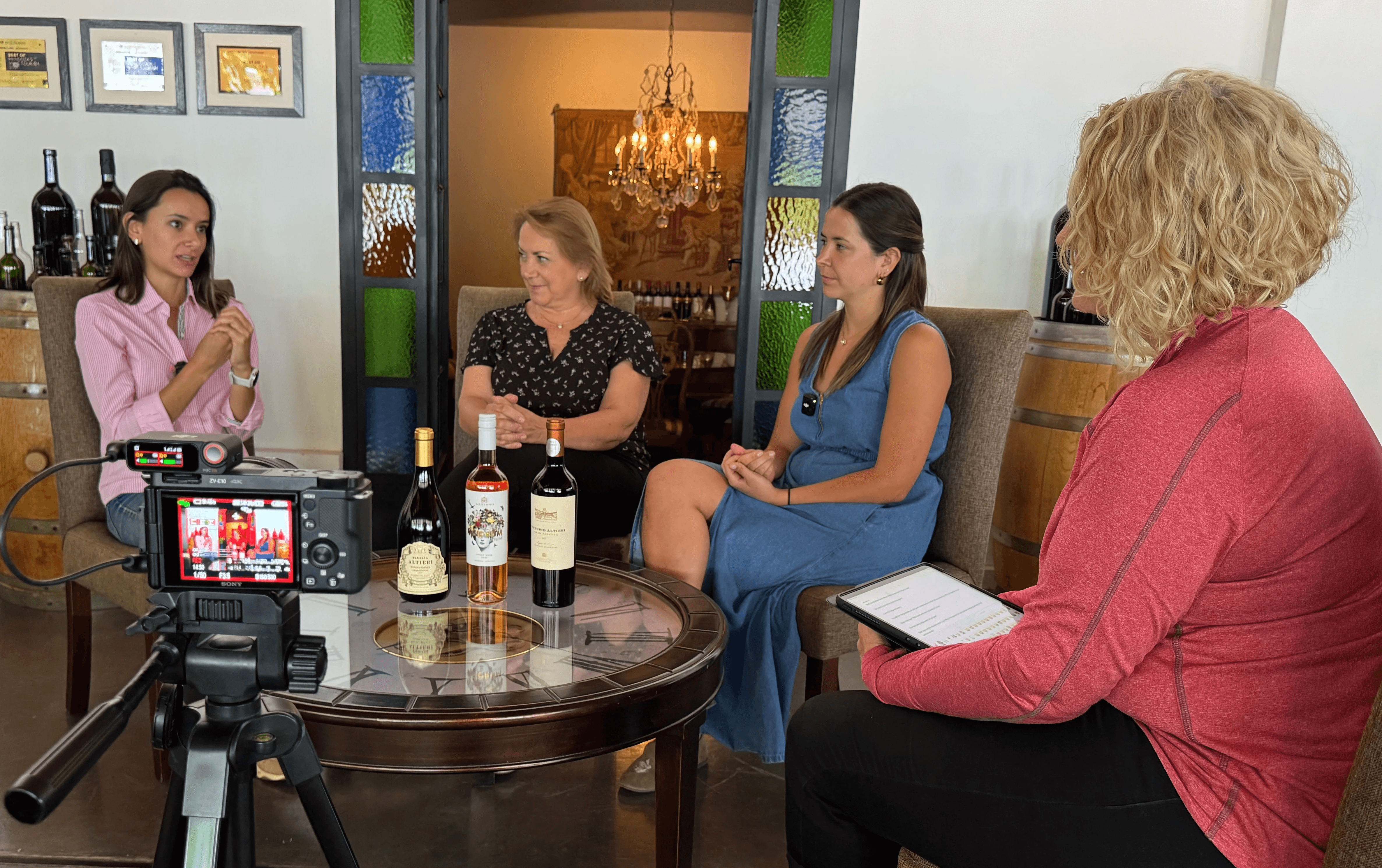
Why Visit Altieri Family Winery in Mendoza? The Story of the Three Marías
At Altieri Family Winery in Luján de Cuyo, three women carry a family wine tradition from historic concrete vats into precision viticulture.
Argentina
Why Does Zuccardi Wine Taste Like the Andes?
How mountain water, alluvial soils, precision viticulture, and concrete shape Zuccardi’s wines in Argentina’s Uco Valley.



From Vineyard to Inbox
Subscribe to our newsletter