How MAAL Wines Shows the Many Faces of Malbec in Mendoza
At MAAL Wines in Luján de Cuyo, one familiar grape becomes sparkling, white, light, fruit-driven, and deeply structured.
Jan de Weerd - Spoken Wines

This will hide itself!
During our visit to MAAL Wines in Luján de Cuyo, our host, Jordi, introduced us to a series of wines that challenged the familiar idea of Malbec. We then sat down with cofounder Matías Fraga, who explained the winery’s “less is more” mission and its decision to focus entirely on Mendoza’s defining grape.
What makes Malbec taste so different from one bottle to another? MAAL demonstrates that vineyard selection and winemaking choices can bring forward very different sides of the same grape. Its portfolio moves from a delicate sparkling Blanc de Noir and lighter red styles to an unoaked, fruit-driven Malbec and a bold, deeply colored red.
MAAL calls these the “many faces of Malbec.” The idea is simple, but the wines reveal just how much possibility can live inside one grape.
Who Founded MAAL Wines?
MAAL was founded in 2010 by Alfredo Merlo and Matías Fraga. The name brings the founders together: MA from Matías and AL from Alfredo.
The winery focuses exclusively on Malbec, combining traditional winemaking with refreshing and sometimes unexpected expressions of the grape.
Rather than starting with one predetermined style, MAAL chooses vineyards capable of producing the character it wants each wine to express. This allows the wines to reflect Mendoza’s varied terroirs while revealing different natural characteristics of Malbec.
The resulting portfolio stretches from a delicate sparkling Blanc de Noir made from Malbec to a bold, full-bodied, deeply colored red, with many expressions in between.
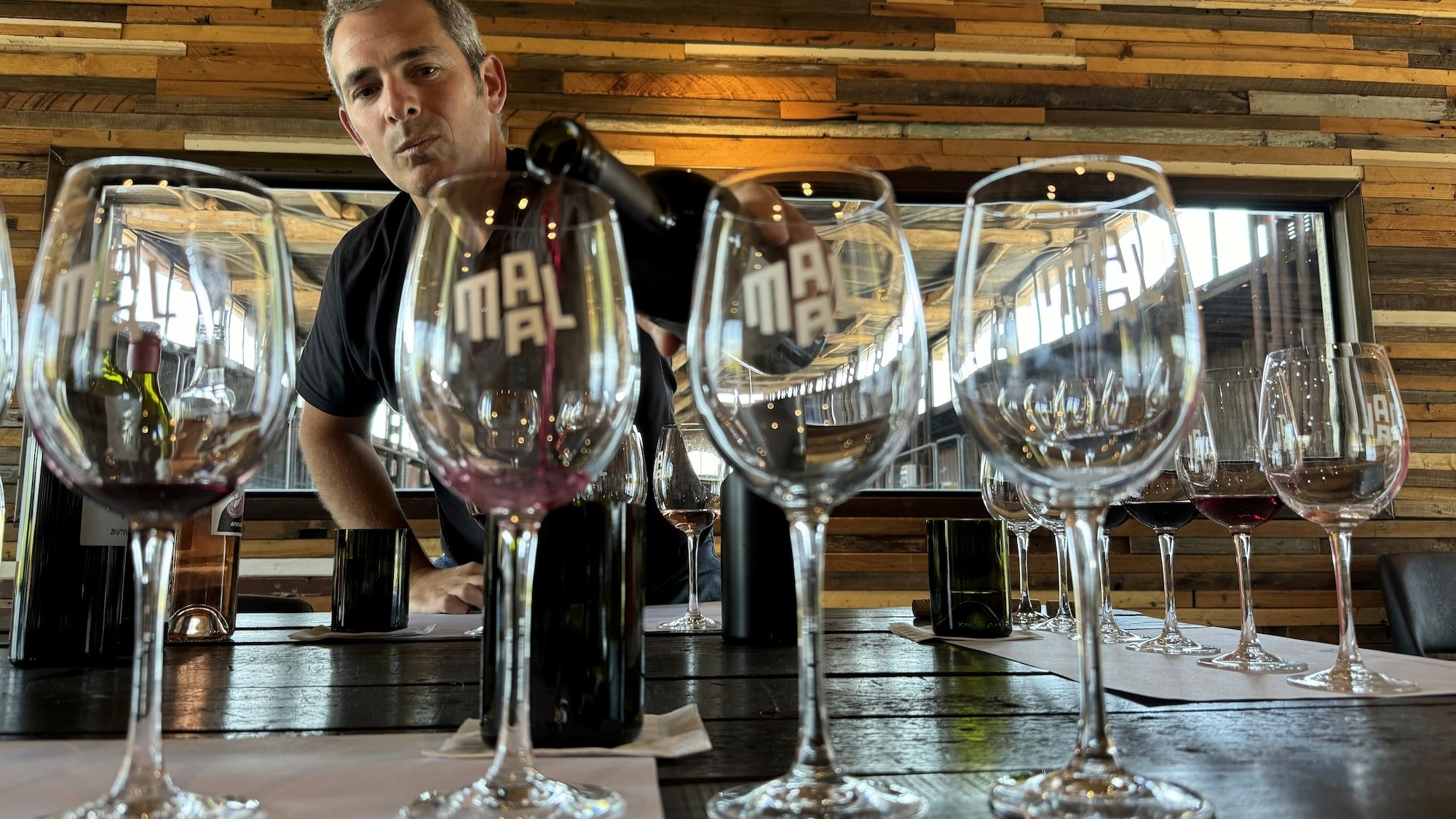
Matías Fraga pours several of MAAL’s expressions of Malbec.
Can Malbec Be More Than a Bold Red Wine?
MAAL makes its wines traditionally, but applies winemaking techniques that reveal Malbec in precise and unconventional ways.
The grape can become a “white” Malbec, a light red with a Pinot-like style, an unoaked wine centered on pure fruit, or the intense, dark, full-bodied Malbec many drinkers already recognize.
This range matters when you are standing in front of a wall of Argentine wine and assuming every Malbec will taste alike. MAAL offers a useful reminder: knowing the grape is only the beginning. Vineyard selection and winemaking can change its color, weight, texture, and role at the table.
At MAAL, Malbec is not treated as one established formula. It becomes the starting point for exploration.
Why Do MAAL Wines Work So Well With Food?
MAAL creates narrower, more precise expressions of Malbec rather than asking every bottle to deliver the same broad style.
That precision makes the wines particularly useful for food pairing. A lighter Malbec can accompany dishes that would be overwhelmed by a powerful red. An unoaked, fruit-driven expression can bring freshness without the added flavors of oak. A deeper, more structured Malbec can stand beside richer food.
This gives people a practical reason to explore beyond the familiar bottle. Instead of asking only, “Do I like Malbec?” they can ask, “Which expression of Malbec fits this meal?”
MAAL’s range attracts both older and younger generations, moving from familiar styles toward the novel. That range creates room for what wine does especially well: starting conversations.
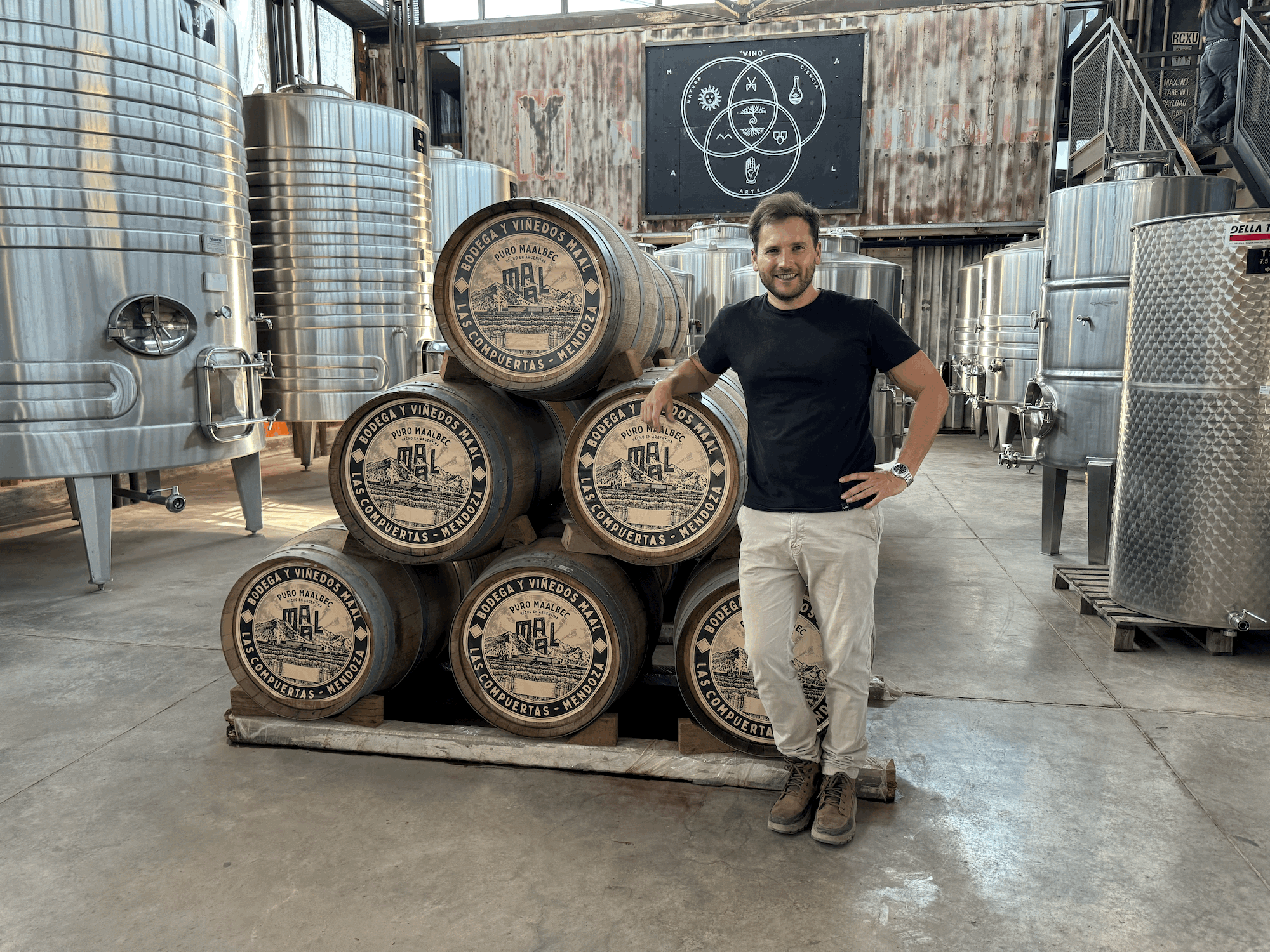
Winemaker Facundo Azzoni, described by MAAL as the “Malbec Whisperer.”
How Does Upcycling Shape the MAAL Winery?
MAAL’s first wine came from an old, abandoned vineyard. The founders then created the winery and tasting room from reused materials, transforming what had been discarded into a distinctive gathering place.
The winery is constructed with stacked, previously used shipping containers. Inside, old washing-machine drums have been repurposed as lampshades hanging from the ceiling.
The building reflects MAAL’s wider philosophy. The team takes something familiar or overlooked and asks what else it could become.
That spirit may also reflect the influence of Matías’s mother, an artist who worked with reused plastics. During our interview, Matías remembered being late for school more than once because his mother, while driving him, spotted something beside the road that could be collected and repurposed.
That instinct became deeply ingrained in MAAL. An abandoned vineyard became the source of its first wine. Shipping containers became a winery. Discarded machine drums became lights. A grape people thought they understood became an entire spectrum of wines.
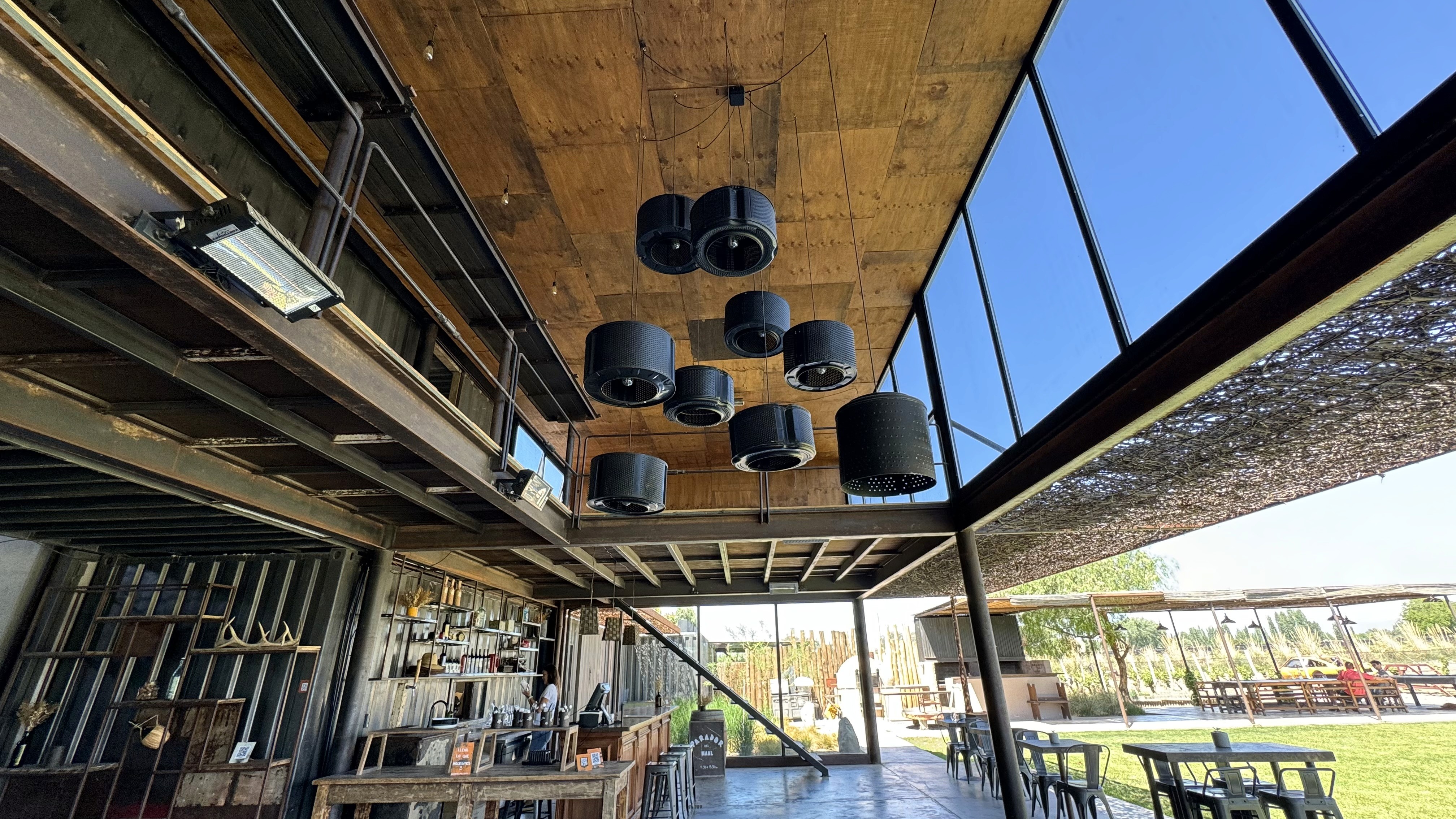
MAAL’s winery and tasting room were created from stacked shipping containers and other reused materials.
Where Should You Start With MAAL?
Start by tasting contrasting expressions rather than selecting only the style of Malbec you already know.
Compare a lighter or unoaked Malbec with one of MAAL’s deeper, full-bodied wines. If available, include the sparkling Blanc de Noir or white expression. Tasting the wines together makes MAAL’s central idea immediately clear: Malbec is not one flavor, weight, or color.
You can explore MAAL’s current portfolio through the official MAAL Wines website.
For more context on how geography and winemaking shape the country’s wines, continue through our look at how the Andes shape the wider Uco Valley.
MAAL takes the old and upcycles it into something new. In doing so, the winery creates room for discovery, connection, and conversation.
Why focus entirely on Malbec while refusing to make it only one way?
As Matías Fraga said, “Why? Because we can.”
Visit the MAAL Wines website: maalwines.com
Visit our Argentina page for a full overview of wine in Argentina.
More from this country

Argentina
Why Pulenta Estate's Wines Taste So Precise
Inside the family winery in Luján de Cuyo, Mendoza, Argentina
Argentina
Why Visit Altieri Family Winery in Mendoza? The Story of the Three Marías
At Altieri Family Winery in Luján de Cuyo, three women carry a family wine tradition from historic concrete vats into precision viticulture.
Argentina
Why Does Zuccardi Wine Taste Like the Andes?
How mountain water, alluvial soils, precision viticulture, and concrete shape Zuccardi’s wines in Argentina’s Uco Valley.



From Vineyard to Inbox
Subscribe to our newsletter