Why Pulmary's Organic Malbec Tastes So Expressive in Mendoza
At this family winery in Chacras de Coria, Ramiro Maures showed us how organic farming, concrete, and American oak can reveal two very different sides of Malbec.
Jan de Weerd - Spoken Wines
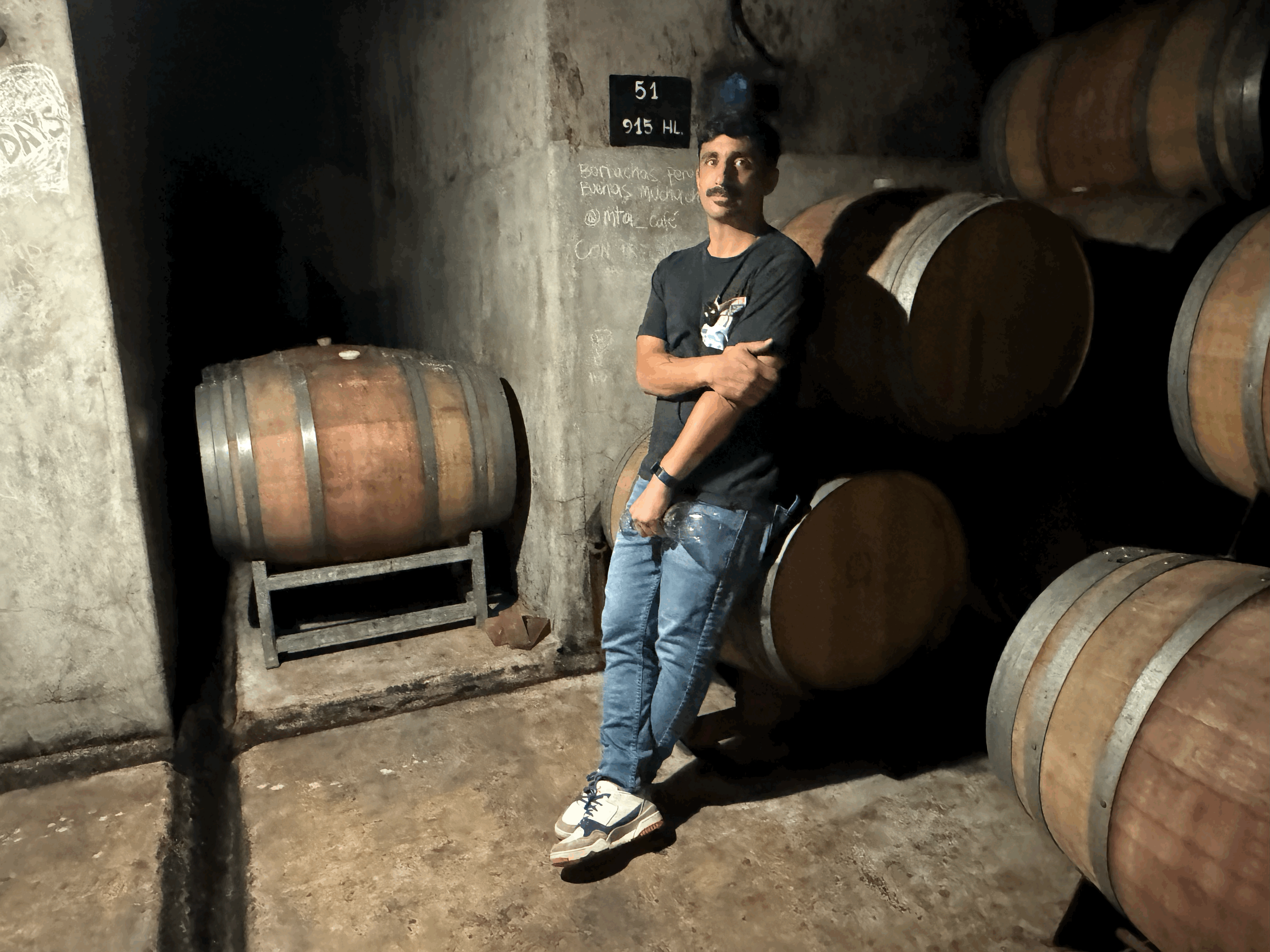
This will hide itself!
During our wine tour through Argentina, we spent a day with Pulmary winemaker Ramiro Maures. He and his mother own this family winery in the center of Chacras de Coria, just south of the city of Mendoza.
Ramiro is like his wine: expressive, energetic, and demanding the center of attention, with more layers of complexity waiting underneath. All the characteristics of a true Leo, which he happens to be.
Pulmary’s organic Malbec tastes so expressive because the family begins with organically grown grapes and then uses winemaking to reveal different sides of the same fruit. One version spends approximately six months in concrete, preserving its vibrant fruit. Another spends 18 months in 60 percent new American oak, building rounder tannins and flavors of vanilla, cedar, tobacco, and coconut.
Tasting them side by side showed us how much winemaking can change Malbec without changing the vineyard source.
How Did Pulmary’s Organic Wine Story Begin?
Ramiro’s parents planted a vineyard in Medrano, a small village approximately 45 kilometers southeast of Luján de Cuyo.
In 1998, when very few people in Mendoza were talking about organic winegrowing, they became the first family in Argentina to certify their vineyard organic.
The original plan was simply to grow and sell grapes. Ramiro’s mother, an art teacher, felt called to make wine from the fruit herself. That decision placed the family on a new path.
Ramiro followed in her footsteps. He left law school and enrolled in the enology program at the National University of Cuyo.
His mother established the direction. Ramiro carried it forward through winemaking.
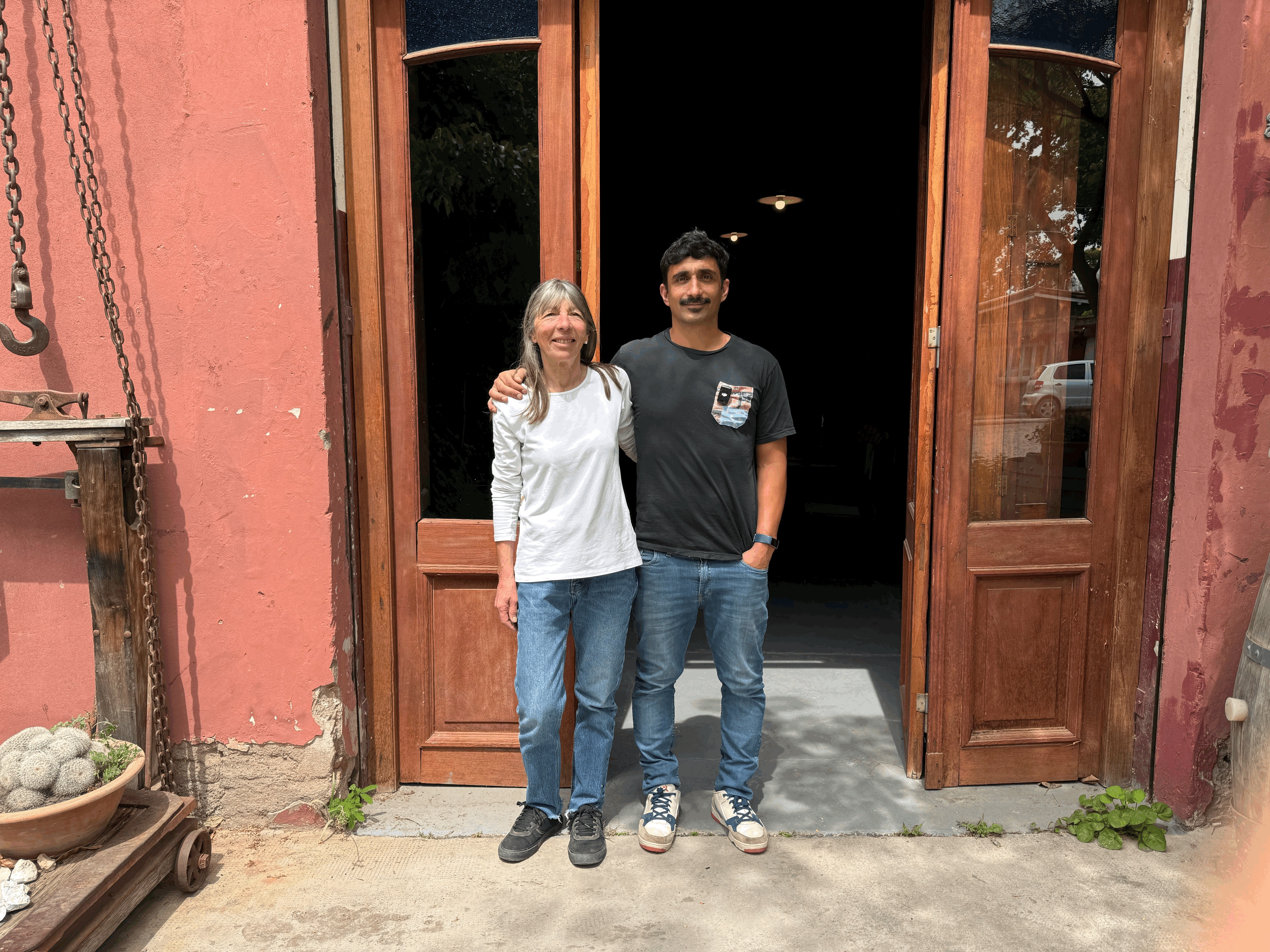
Ramiro Maures with his mother outside their family winery in Chacras de Coria.
What Does Organic Farming Mean at Pulmary?
Pulmary’s story began with the decision to farm organically before organic wine became a widely used selling point in Mendoza.
For the Maures family, organic farming was not added later to fit a trend. It came before the winery itself. The family began with organic grapes and only afterward moved from selling fruit into making wine.
That history helps explain Ramiro’s description of his process:
“Starting with nature, sprinkling it with science and applying art.”
Each part has a role. Nature provides the grapes. Science helps guide fermentation and aging. Art enters through the choices Ramiro makes about how the finished wine should express itself.
How Does Concrete Change Pulmary Malbec?
One of the most interesting moments of our visit was comparing two wines made from the same source.
The first was a fresh 2023 Malbec bottled directly from the concrete vat where it had fermented and aged for approximately six months. Without oak shaping its flavor, the wine was vibrant, present, and full of fruit.
It was an explosion of flavor that remained with us long after the first sip.
Concrete gives the wine room to develop without introducing the toast, spice, vanilla, or coconut flavors that can come from a new barrel. The resulting wine placed the freshness and energy of the Malbec at the center of the experience.
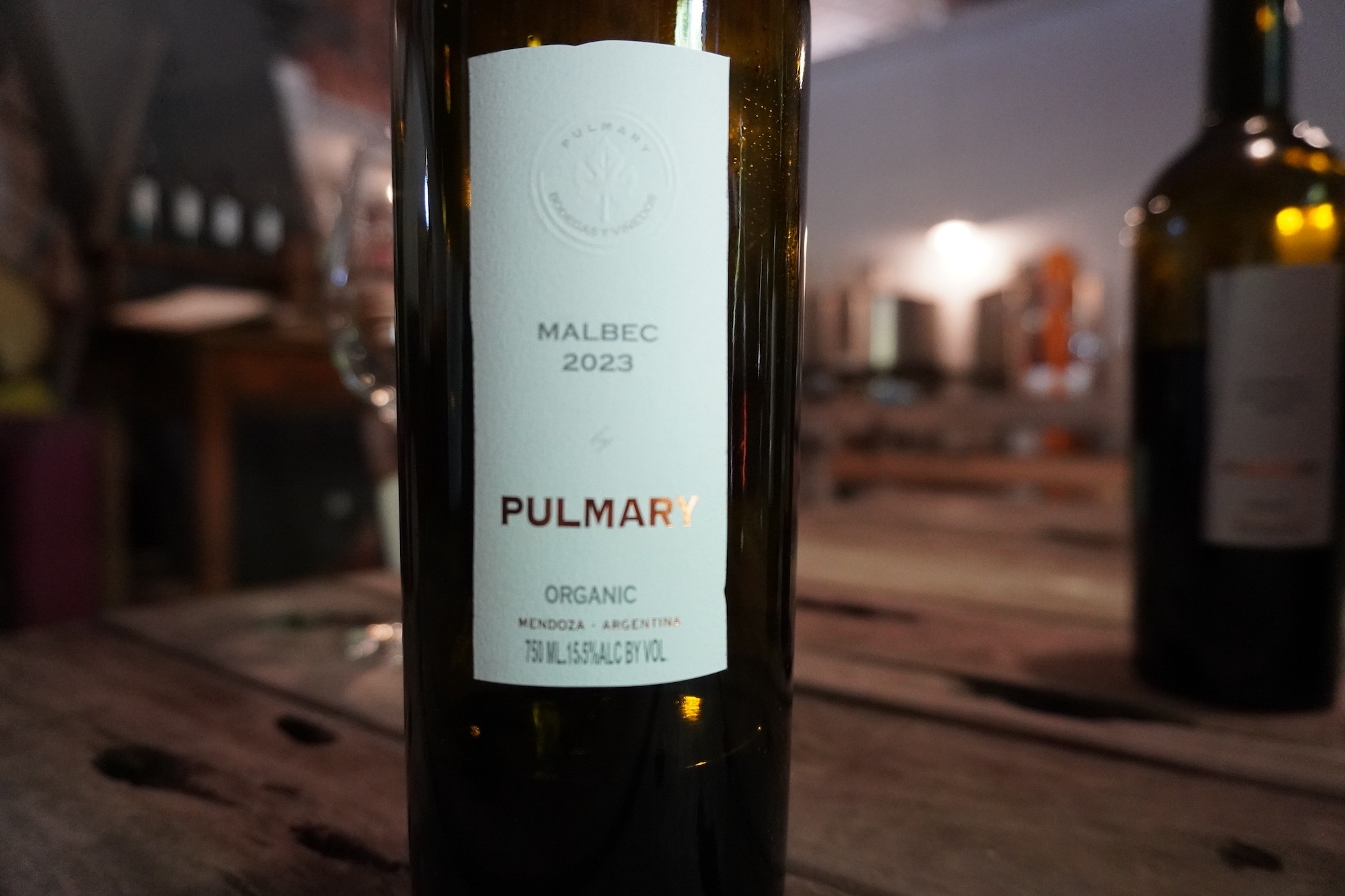
Pulmary’s 2023 Organic Malbec, fermented and aged in concrete.
How Does American Oak Change the Same Wine?
We then tasted the reserve version produced from the same source two years earlier.
This wine had spent 18 months in 60 percent new American oak. Ramiro believes American oak complements Malbec particularly well because it contributes coconut and vanilla flavors.
The reserve showed rounded oak tannins with vanilla, cedar, and tobacco. At the time we tasted it, those flavors were still masking some of the powerful fruit underneath. It needed more time for the fruit and oak to come together.
Both wines were balanced from the first sip through the lingering finish, but they expressed the fruit very differently.
The concrete-aged Malbec felt vivid, immediate, and fruit-driven. The reserve was deeper and more layered, with the structure and flavor contributed by American oak.
This is a useful comparison for anyone choosing Malbec. If you want freshness and pure fruit, look for a wine made without oak. If you enjoy vanilla, cedar, tobacco, and a rounder structure, look for a reserve that has spent time in barrels.
Can an Organic Malbec Offer Exceptional Value?
At the time of our visit, the 2023 Pulmary Organic Malbec cost approximately $10, while the reserve was approximately $30.
Those prices may change, but what surprised us was the quality in both bottles. The wines were expressive, balanced, and persistent while offering two distinctly different experiences.
The fresh Malbec was so vibrant that I began to wonder whether I might have to move to Mendoza. 😁
Across our travels in the region, we kept discovering that Mendoza Malbec cannot be reduced to one style. Pulmary gave us one of the clearest examples: the same fruit could become either an energetic, fruit-driven wine or a structured reserve shaped by oak.
Where Should You Start With Pulmary?
If both wines are available, taste the concrete-aged Organic Malbec and the oak-aged reserve side by side.
Begin with the fresh wine and pay attention to the fruit, energy, and length of the finish. Then move to the reserve and notice what the American oak contributes. Look for coconut, vanilla, cedar, tobacco, and a rounder tannin structure.
This comparison makes the effect of winemaking much easier to understand than tasting either bottle by itself.
Explore Pulmary’s current wines and winery visits through the official Pulmary website.
For more context on Malbec and the regions surrounding Mendoza, continue through our look at how the Andes shape Mendoza’s wines.

Leaving a small Spoken Wines memory on the wall of Pulmary’s underground cellar.
Pulmary’s story began when Ramiro’s mother decided that growing organic grapes was not enough. She wanted to make wine from them. Her son followed the path she created, bringing nature, science, and art together in the bottle.
As Ramiro told us, winemaking means “starting with nature, sprinkling it with science and applying art.”
Visit the Pulmary website: pulmary.com.ar
Visit our Argentina page for a full overview of wine in Argentina.
More from this country

Argentina
Why Pulenta Estate's Wines Taste So Precise
Inside the family winery in Luján de Cuyo, Mendoza, Argentina

Argentina
Why Visit Altieri Family Winery in Mendoza? The Story of the Three Marías
At Altieri Family Winery in Luján de Cuyo, three women carry a family wine tradition from historic concrete vats into precision viticulture.
Argentina
Why Does Zuccardi Wine Taste Like the Andes?
How mountain water, alluvial soils, precision viticulture, and concrete shape Zuccardi’s wines in Argentina’s Uco Valley.



From Vineyard to Inbox
Subscribe to our newsletter