Why Monte Dall’Ora Makes Amarone with Restraint, Not Excess
How one couple turned an abandoned vineyard into a different kind of Amarone
Jan de Weerd - Spoken Wines

This will hide itself!
High on a ridge in Valpolicella, amid limestone terraces overgrown with shrubs, trees, and an abandoned vineyard, Carlo Venturini proposed to Alessandra Zantedeschi. She said yes, not just to him, but to the land: to the daunting idea of clearing it, starting from scratch, and growing wine their own way. They had no investors, no polished winery, no blueprint. Just six hectares of neglected terraces and a dream that felt more like a calling.
That was 1995. What they built from it is an Amarone that asks to be understood rather than admired from a distance. Carlo and Alessandra reclaimed the abandoned vineyard, committed themselves to biodynamic farming and traditional pergola training, and developed a house style centered on freshness, balance, and vineyard character rather than sheer concentration. For someone choosing among the powerful wines of Valpolicella, this is what makes Monte Dall’Ora distinctive: its Amarone carries the dried-fruit depth and long aging associated with the style without becoming heavy or exhausting to drink. This is a story of quiet resistance, not in rebellion, but in reverence, and proof that less can be infinitely more.
A Conviction Held for Over 25 Years
“Biodynamics is the only way we know,” Alessandra tells us over homemade pasta. In a region often dominated by stylized, powerful Amarone wines that aim to impress, Monte Dall’Ora has always spoken in a different voice. At first, many didn’t want to hear it. “They thought we were strange,” she says. “Too different.”
Back then, the word “biodynamic” was barely a whisper in Valpolicella. There was no community, no guidebook. So they turned to friends in France and like-minded growers elsewhere in Italy. “We pursue connection and balance, between vine and soil and vine and man,” Carlo explained. They were outliers for a long time. Now that quiet way of farming is starting to sound like the future for many others.

“Biodynamics is the only way we know,” explained Alessandra. Demeter certifies biodynamic production.
Capturing the Ora of the Monte
The vineyards at Monte Dall’Ora (Hill of the Wind) are perched on one of Valpolicella’s five iconic ridges, geological fingers that descend from the Lessini Mountains. Their soils are rich in iron and limestone, porous enough to let vine roots pull deep into the story of the land.
Carlo farms only native grapes: Corvina, Corvinone, Rondinella, Molinara, Oseleta, Dindarella. Some are nearly forgotten. He trains them in the traditional pergola style, letting the wind move underneath the vines while the leaves form a canopy that protects the grapes from the sun above. “In the Guyot style,” he tells us, “the bunches get big and prone to disease. Pergola allows space, breath, light, and smaller, more expressive fruit.”
Soft, active soils run between the rows, filled with grasses and flowering plants. Olive trees, cherry trees, and native weeping willows are dotted throughout the vineyard, part of a biodiversity philosophy where all living matter is interconnected and draws strength from that connection to protect the vines and give voice to the wine.
“When there’s equilibrium in the vineyard,” Carlo says, “there is balance in the cellar.”

The pergola trellis system catches the wind and protects the grapes from the sun.
Wines That Whisper Elegance
Monte Dall’Ora wines do not overpower. They are composed like chamber music: intimate, elegant, and lingering. But to understand their Amarone, it helps to understand what Amarone is first. Amarone della Valpolicella is one of Italy’s most iconic and powerful red wines, and it can only be made in the Valpolicella region. What makes it so distinctive is appassimento, a grape-drying method with roots that trace back to Roman winemaking: after harvest, the grapes are carefully laid out on wooden racks and dried for months. That slow dehydration concentrates the sugars and flavors, creating rich, intense wines with deep complexity. Amarone is not just wine. It is time, transformed.
Yet while many producers chase Amarone’s potential for richness and power, Monte Dall’Ora has chosen a different path.
Amarone della Valpolicella Classico ‘Stropa’ was described to us during our visit as a wine ten years in the making, with five years in large oak barrels and the remainder of that time in bottle. It carried a complex elegance of dried cherry and plum, saddle leather, cacao, and a haunting mineral length. It did not demand our attention. It earned it slowly. The winery’s current technical information describes the present aging regimen as four years in 25-hectoliter oak barrels followed by a minimum of three years in bottle, showing that the precise timeline can vary while patience remains central to the wine.
Recioto della Valpolicella Classico ‘Sant’Ulderico’ offers the sweeter, richer side of Valpolicella’s dried-grape tradition. Like Amarone, it is made from grapes that have undergone appassimento, but fermentation is stopped early enough to retain natural sweetness. The result layers intense dried fruit and a velvety texture with enough brightness to keep the wine from feeling heavy.
Valpolicella Classico Superiore ‘Camporenzo’ is a distinct single-vineyard wine from the hills of San Pietro in Cariano. Bright, taut, and deeply aromatic, it shows that Valpolicella does not need to hide behind weight to have substance.
Each wine carries the quiet signature of Monte Dall’Ora, revealing itself slowly and staying with you long after the glass is empty.
To learn more about the wine and inquire about current availability, visit Monte Dall’Ora’s official Stropa product page. This is a winery information and contact route, not a confirmed online retailer.
Monte Dall’Ora belongs within the Valpolicella chapter of our guide to the most important wine regions in Italy, where readers can understand how Amarone fits alongside the wines of Tuscany, Piedmont, Sicily, and Alto Adige.
For a broader introduction to the country’s wine culture and the places shaping it, continue with our Italy wine guide.
For more firsthand stories about compelling wines and the people behind them, subscribe to the Spoken Wines newsletter.
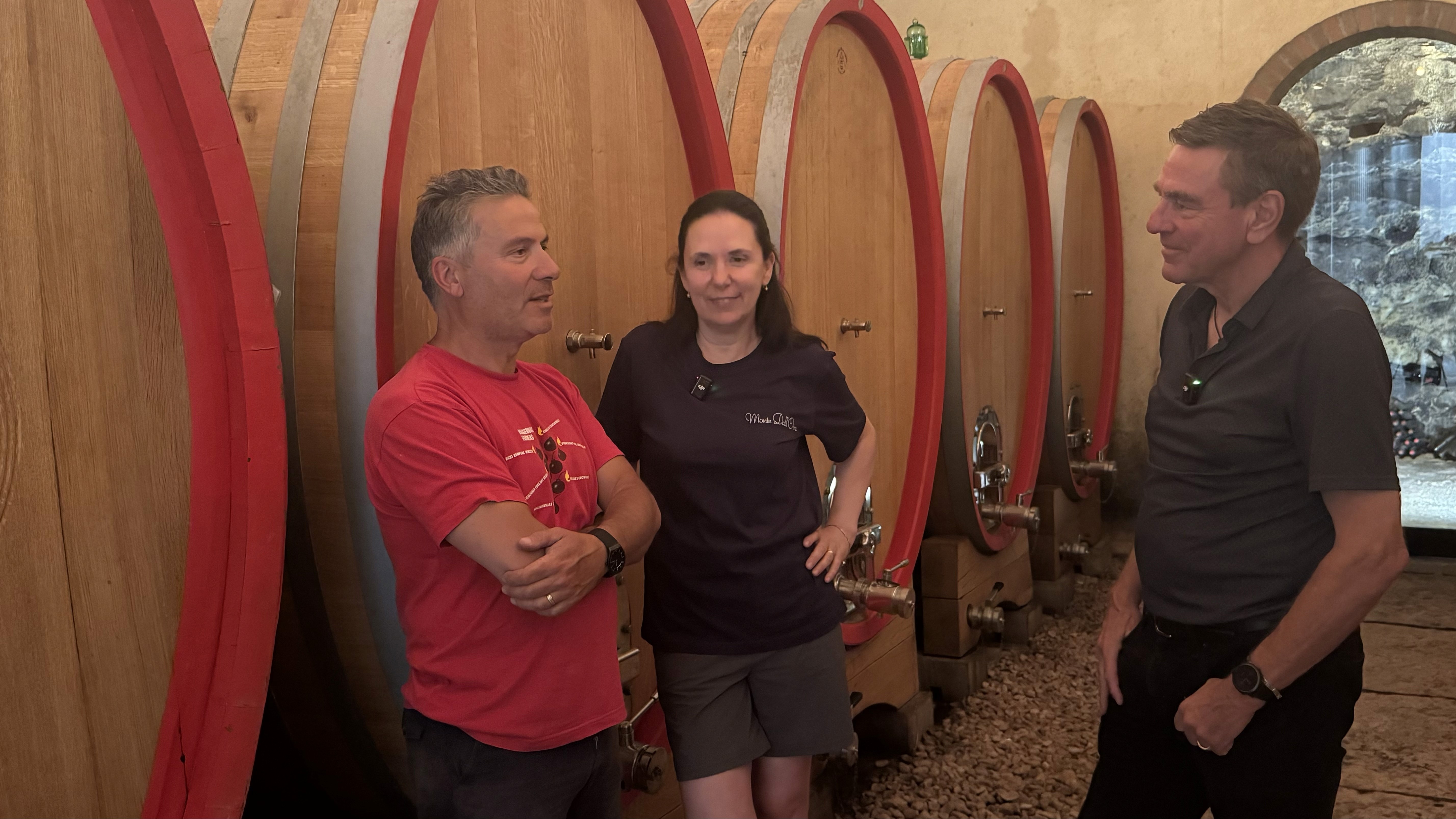
During our visit, Amarone ‘Stropa’ was described as a wine ten years in the making, with five years in large oak barrels and the remainder of that time in bottle.
“When there’s equilibrium in the vineyard, there is balance in the cellar.”
More from this country

Italy
The Most Important Wine Regions in Italy, and Where Should You Start?
A traveler's guide to the regions, producers, and stories that make Italian wine easier to understand

Italy
Why Daniel Sigmund’s Alto Adige Mountain Wines Taste So Fresh
A first-generation winemaker turns the steep vineyards of the Eisack Valley into Silvaner, Riesling, and Pinot Noir defined by freshness, elegance, and place.

Italy
900 Years Later, This Winery Is Still Making Some of Italy's Most Remarkable White Wines
How Abbazia di Novacella has balanced centuries of tradition with wines that still feel vibrant, fresh, and unmistakably Alpine.



From Vineyard to Inbox
Subscribe to our newsletter