Why Visit De’ Ricci in Montepulciano? Vino Nobile Beneath the City
Inside De’ Ricci’s historic cellar, Nicolò Trabalzini is carrying Montepulciano’s wine legacy forward while letting the vineyards speak for themselves.
Jan de Weerd - Spoken Wines
This will hide itself!
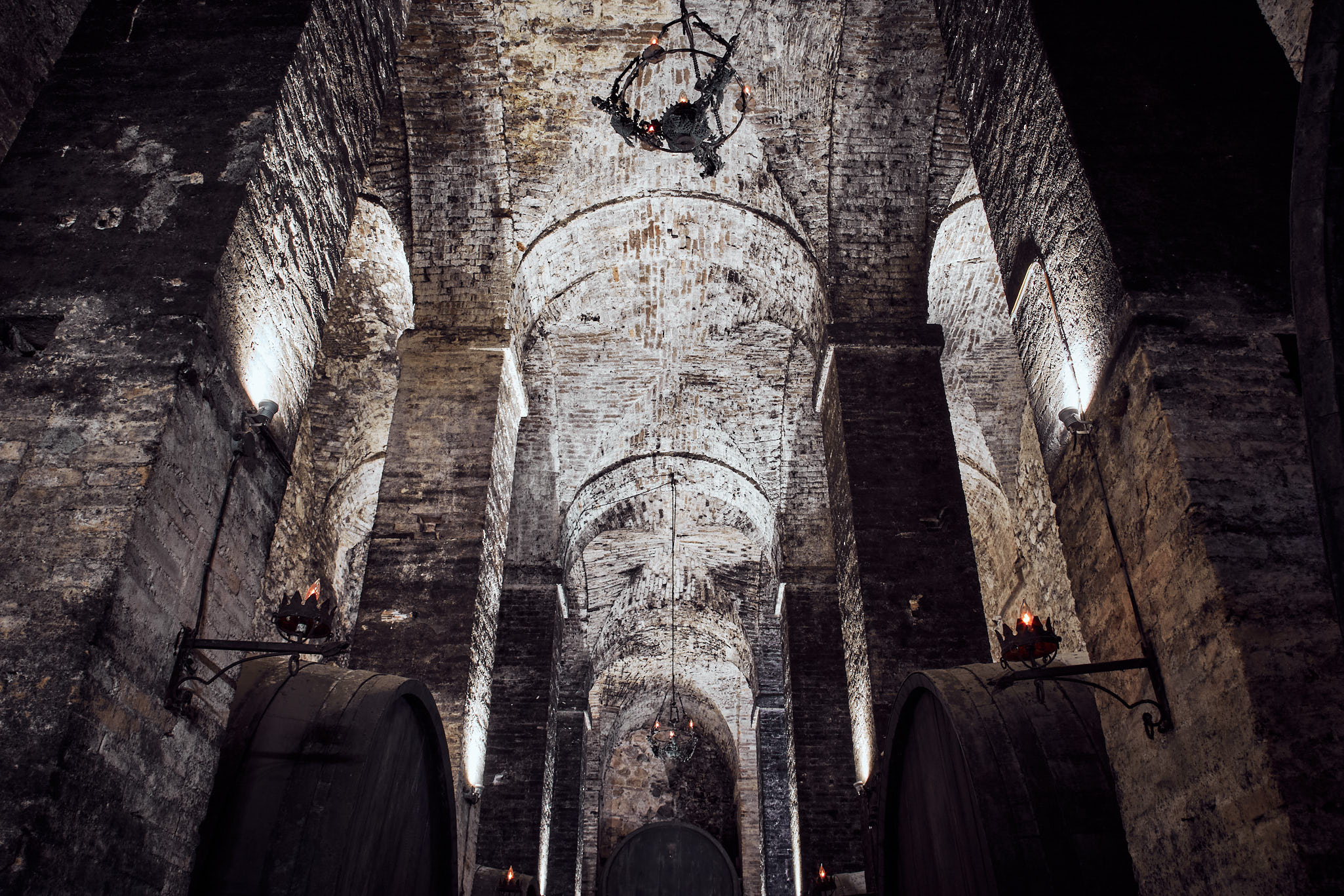
Beneath the sunlit streets of Montepulciano in Tuscany, hidden under the weight of centuries, we found a place carved in stone and memory. De’ Ricci Cantine Storiche is not simply a winery built on history. It exists within it.
Its vast, cathedral-like cellar extends beneath the historic center of Montepulciano. Barrels rest below the streets while Vino Nobile matures beneath vaulted stone. According to the story shared with us, a 13th-century recluse once watched the movements of a hedgehog here to interpret changes in the weather. Stories still echo through these chambers and into the wines.
The cellar alone makes De’ Ricci worth visiting, but the deeper reason is the attitude of the people caring for it.
Nicolò Trabalzini, the winemaker and caretaker, sees himself as someone entrusted with a story that began long before he arrived and will continue after him. That humility shapes the wine. De’ Ricci’s Vino Nobile di Montepulciano is made to express Sangiovese, the vineyards, the vintage, and the character of this part of Tuscany, not to make the winemaker the center of attention.
We came to taste wine. We left thinking about what it means to care for a place whose history is much larger than any one person.
Nicolò Trabalzini: a caretaker, not a conqueror
Nicolò is the son of Enrico Trabalzini, whose family became connected with the historic cellar after acquiring it from the last Ricci marquess.
As he guided us through the stone chambers, Nicolò spoke with quiet respect for the place.
“If these stones could speak,” he told us, “I hope they would feel that we are doing a good job, that we are doing them justice.”
He compared his role to Alfred, the butler in Batman and Robin: someone working behind the scenes to support something larger.
The comparison was unexpectedly revealing. Nicolò is not trying to force a signature onto every wine. His goal is to help the vineyard, vintage, and land express themselves clearly.
He does not speak of employees as employees. He describes them as part of his extended family.
That humility is not separate from the wine. It is part of the reason the experience feels so grounded.
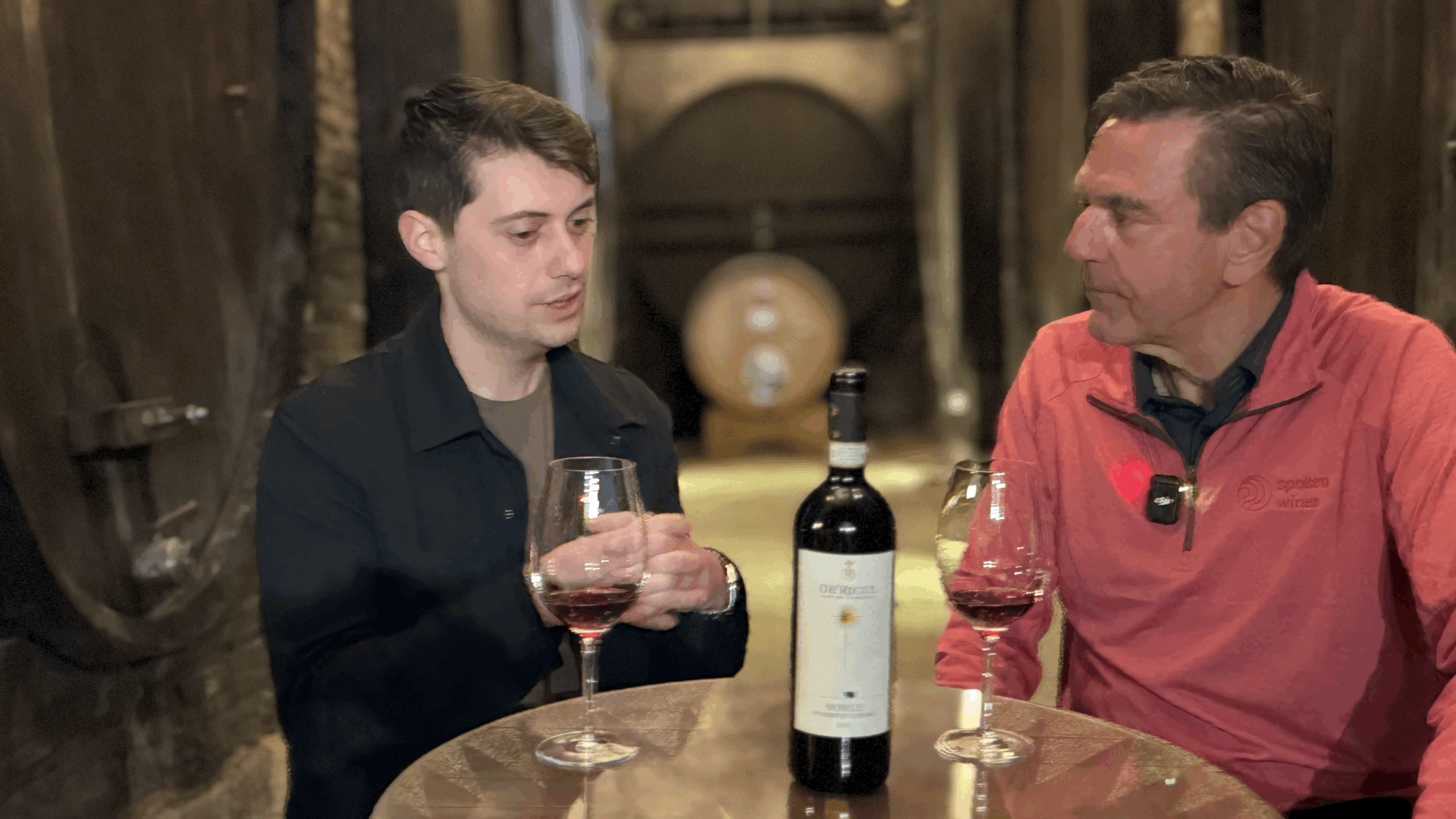
Nicolò telling the story of De’ Ricci and sharing his ethos
Tradition at De’ Ricci Means Adapting
Since 1337, the vaulted caves of what is now De’ Ricci Cantine Storiche have held barrels, harvests, and generations of stories.
The site was once a medieval fortress. During the Renaissance, it became the noble residence of the Ricci family. Its deep, barrel-vaulted chambers extend beneath Montepulciano, their soaring ceilings standing as silent witnesses to centuries of storms, wars, celebrations, harvests, and patience.
Standing beneath those arches, Nicolò knows he represents only one moment in a much longer story.
“We are caretakers,” he told us, “and we must adapt if we want to keep honoring this place.”
The world around De’ Ricci is changing. Seasons shift, and the climate presents new challenges. Nicolò believes deeply in tradition, but not in standing still.
“To make great wines today,” he said, “we must be open to change.”
For De’ Ricci, moving forward does not mean abandoning the past. It means evolving carefully and thoughtfully, honoring what previous generations understood while remaining willing to meet new conditions without leaving a heavy footprint.
That balance gives the cellar meaning beyond its beauty. A visitor is not simply entering an underground monument. You are seeing how one family is working to protect a living wine tradition.
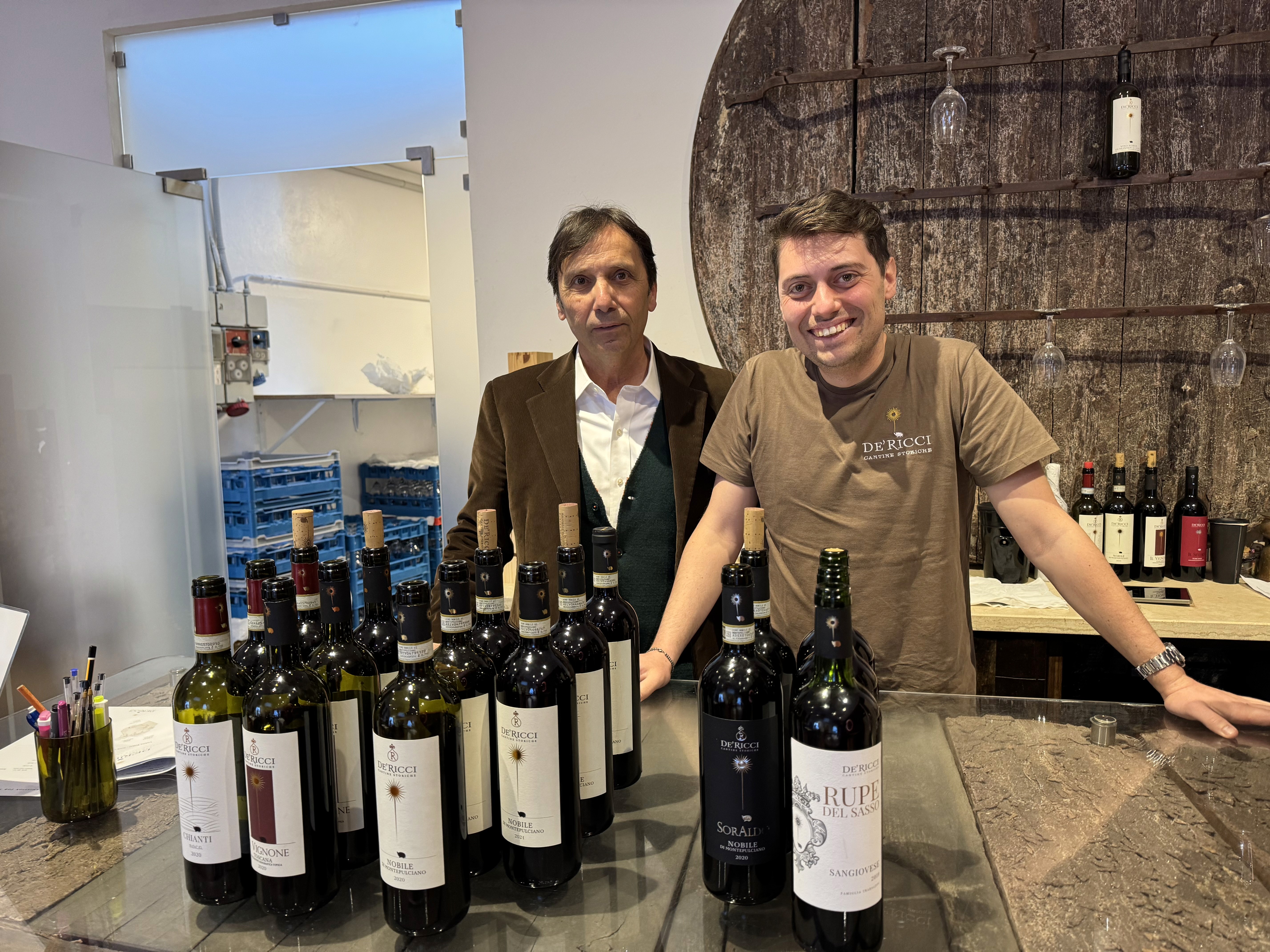
Nicolò and his father Enrico Trabalzini, whose father had bought the historic cellar from the last Ricci marquess
What makes Vino Nobile di Montepulciano distinctive?
At the center of De’ Ricci’s work is Vino Nobile di Montepulciano, a Tuscan wine based on Sangiovese.
The original tasting we experienced was a 100 percent Sangiovese blend drawn from three vineyards around Montepulciano. It showed the variety in a different register from the Sangiovese many readers may first encounter in Chianti Classico.
The wine carried dark cherry and plum, along with mineral notes and an earthy, iron-like character. It had structure and vibrancy, but also an elegance that kept it from feeling heavy.
That distinction is useful when choosing a bottle. Vino Nobile di Montepulciano is not simply “another Tuscan red.” The city, vineyards, soils, and local tradition give Sangiovese a particular voice.
SorAldo: the single-vineyard expression
Jan’s favorite wine from the tasting was SorAldo, De’ Ricci’s single-vineyard expression from the Ascianello vineyard.
The vineyard is described as the estate’s highest-elevation site, north of Montepulciano, with sandy clay soils and fossil-shell deposits. In the glass, SorAldo combined weight and grace: structure, freshness, and elegance rather than simple power.
It was the wine that made the idea of site-specific Sangiovese tangible.
The broader Vino Nobile showed the character of Montepulciano. SorAldo narrowed the focus to one vineyard and allowed us to taste the difference that a particular site can make.
Deep beneath the streets of Montepulciano lies a place carved in stone storing De’ Ricci Vino Nobile
Why Visit De’ Ricci in Montepulciano?
De’ Ricci is worth seeking out if you want a Tuscany wine experience that brings history, people, place, and Sangiovese together.
The underground cellar makes that history physically tangible. Nicolò’s philosophy gives it a human voice. The opportunity to compare De’ Ricci’s broader Vino Nobile with the single-vineyard SorAldo shows how one grape can express Montepulciano at two different levels of focus.
Check De’ Ricci’s current visitor experiences before planning a trip: https://www.cantinadericci.it/en
To learn more about SorAldo or inquire about current availability, visit the winery’s SorAldo page.
De’ Ricci is one of the Montepulciano producers featured in our guide to the most important wine regions in Italy. That guide places Vino Nobile within the broader story of Tuscany and introduces the other regions that make Italian wine so rewarding to explore.
De’ Ricci’s philosophy is simple to describe but difficult to practice: care for the place, allow the wine to speak, and leave the story stronger than you found it.
Continue exploring Italian wine through our Italy page.
For more firsthand reports from the vineyards and cellars we visit, subscribe to the Spoken Wines newsletter.
More from this country

Italy
The Most Important Wine Regions in Italy, and Where Should You Start?
A traveler's guide to the regions, producers, and stories that make Italian wine easier to understand

Italy
Why Daniel Sigmund’s Alto Adige Mountain Wines Taste So Fresh
A first-generation winemaker turns the steep vineyards of the Eisack Valley into Silvaner, Riesling, and Pinot Noir defined by freshness, elegance, and place.

Italy
900 Years Later, This Winery Is Still Making Some of Italy's Most Remarkable White Wines
How Abbazia di Novacella has balanced centuries of tradition with wines that still feel vibrant, fresh, and unmistakably Alpine.



From Vineyard to Inbox
Subscribe to our newsletter