Why Carpineta Fontalpino’s Chianti Classico Shows Two Sides of Tuscany
At Carpineta Fontalpino near Siena, Gioia Cresti turns contrasting soils, family legacy, and organic farming into two distinct expressions of Sangiovese.
Tammy de Weerd - Spoken Wines
This will hide itself!
When we met Gioia Cresti at Fattoria Carpineta Fontalpino, she gave us a wonderfully simple way to understand how place changes Chianti Classico. She described two of the estate’s single vineyards as the sun and the moon.
Vigna Dofana, where layers of silt and sand rest over clay, gives Sangiovese structure, strength, and persistence. Vigna Montaperto, with calcareous soil, sedimentary rock, and galestro, produces a more graceful and lifted expression. One carries the strength of the sun. The other holds the balance of the moon.
For anyone trying to understand Chianti Classico, that contrast matters. The same grape, grown by the same family, can show two distinct personalities because the vineyard changes what appears in the glass. At Carpineta Fontalpino, Gioia has made that lesson both memorable and deeply personal.
A little girl bound to the land
Gioia greeted us with a warmth so immediate that it felt like being welcomed by an old friend. She is a winemaker, enologist, farmer, sister, and daughter, but none of those titles fully captures her connection to this place.
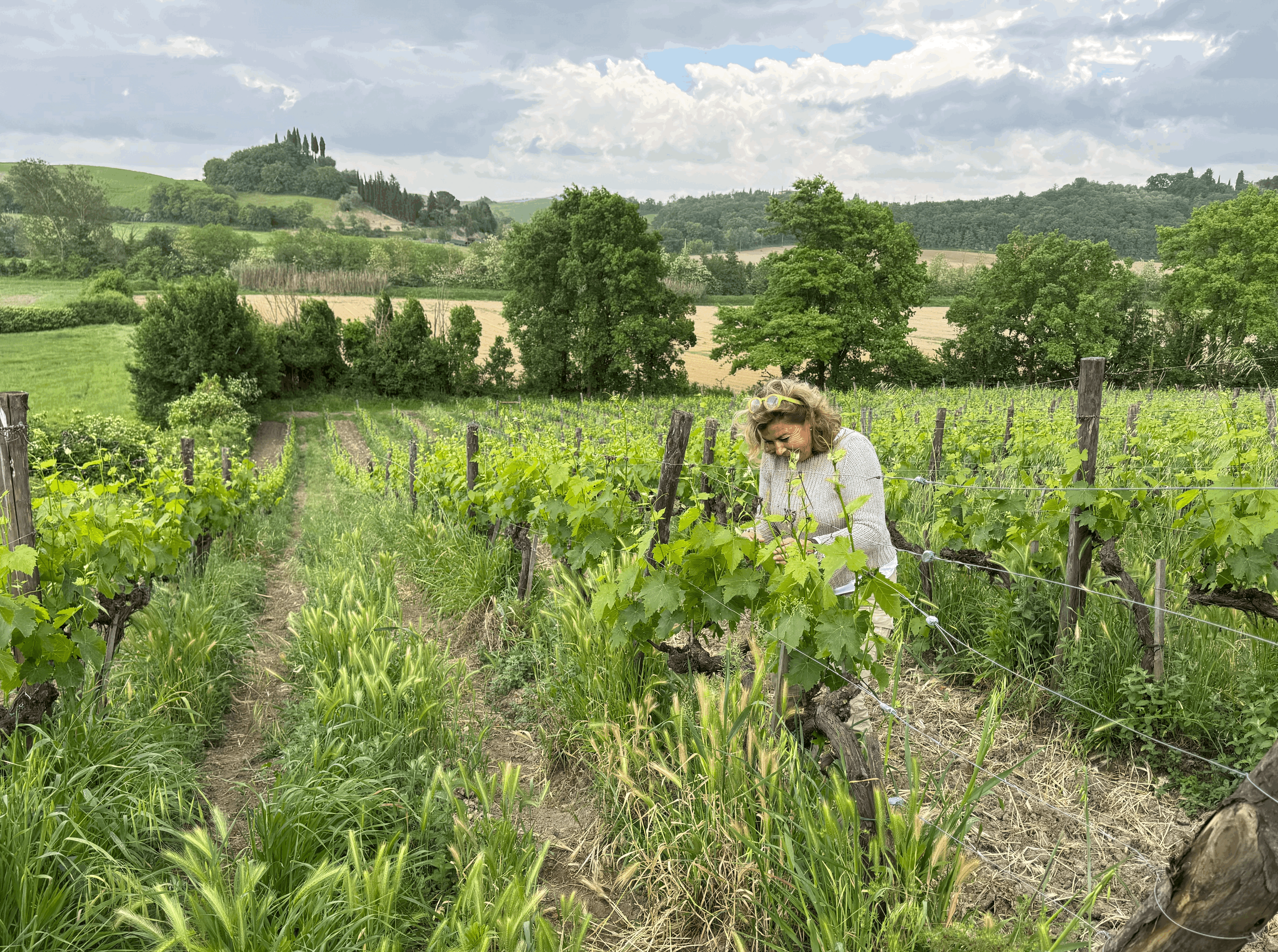
Gioia Cresti of Carpineta Fontalpino, an organic winemaker and enologist in Chianti Classico
When Gioia was four, she lost her father, Italo. He had begun turning the family’s agricultural roots into a wine business in 1967. While her siblings pursued architecture, Gioia chose agriculture and enology, eventually studying in Bordeaux before returning to Tuscany.
Together with her brother Filippo, she continued what their parents had built. Gioia oversees the winemaking, from harvest through maturation, while Filippo leads sales, communication, and marketing. Today, a new generation is also becoming part of the story through Sara, who is studying enology and helping with hospitality at the estate.
What Gioia inherited was not simply a winery. It was an unfinished dream and a relationship with the land that she chose to carry forward.
At the time of our visit, Gioia had recently been recognized as Best Woman Winemaker in Japan.
Where Chianti Classico meets Siena
Carpineta Fontalpino sits near Siena, at the southern edge of the Chianti Classico denomination in Castelnuovo Berardenga. The Cresti family owns approximately 90 hectares, with 30 hectares planted to vines. Visit the Carpineta Fontalpino website for more on the estate’s history and current releases.
Its location allows the estate to produce Chianti Classico DOCG, Chianti Colli Senesi DOCG, and Toscana IGT wines. Sangiovese leads the vineyard plantings, joined by Merlot, Cabernet Sauvignon, Petit Verdot, Alicante, and other varieties.
The vineyards contain sandy, calcareous, and clay-rich soils supported by rocky material beneath them. Those differences give Gioia several expressions of place to work with, but the contrast is clearest in the estate’s two single-vineyard Gran Selezione wines.
Vigna Dofana is the sun. Its soil consists of silt and sand over clay, producing a structured and vigorous Sangiovese with robust but velvety tannins.
Vigna Montaperto is the moon. Its calcareous soil, sedimentary rocks, and galestro bring greater delicacy, savory character, and elegance. During our visit, the vineyards were described to us at elevations of 300 and 600 meters.
Gioia Cresti explaining the sun and moon personalities of the Vigna Dofana and Vigna Montaperto vineyards
This is terroir made understandable. You do not need to memorize a soil chart. Taste the two wines together, and the difference between sun and moon becomes something you can feel.
Organic farming as a family commitment
Carpineta Fontalpino has long approached farming as a responsibility to the land. The estate received official recognition as an organic winery in 2008, after years of working to protect the soil and its natural balance.
That commitment is not separate from the family’s philosophy. It reflects the same belief expressed by the words printed on the estate’s most important label: Do ut Des, or “I give so that you will give.”
The Cresti family describes the phrase as a prayer to the land. Their work is an offering of attention, effort, and patience, with the hope that the vineyard will return something meaningful.
This is what stayed with us about Gioia. Her wines feel polished and precise, but the person behind them remains grounded, generous, and closely connected to the daily work.
What to taste first
For a direct introduction to the estate, begin with the Fontalpino Chianti Classico. Made from Sangiovese, it brings together berry fruit, cherry, light spice, and the balanced structure that makes Chianti Classico so useful at the table.
Then taste Vigna Dofana and Vigna Montaperto together if you have the opportunity. Their contrast offers a memorable lesson in how two vineyards can give the same grape entirely different personalities.
Do ut Des reveals another side of Gioia’s winemaking. This Toscana IGT blend of Cabernet Sauvignon, Merlot, and Petit Verdot is deeper and more powerful, with ripe dark fruit, sweet spice, mineral notes, and a long, persistent finish.
A bottle of Do ut Des from Carpineta Fontalpino, the Tuscan wine named for the principle of giving to the land
See current Fontalpino Chianti Classico availability on Wine.com.
Some links may be affiliate links, which means Spoken Wines may earn a commission at no additional cost to you.
Planning a visit to Carpineta Fontalpino
Carpineta Fontalpino offers reservation-only tastings at the estate in Castelnuovo Berardenga, a short distance from Siena. Current experiences include tastings of four or six wines, with an additional option that includes a food board.
Because schedules, prices, and availability can change, review the winery’s current tasting options before planning your visit.
A visit makes particular sense for someone beginning to explore Tuscany. You can taste familiar Sangiovese, compare two single vineyards, and see how one family has connected organic farming, place, and legacy.
Do ut Des, in every sense
Gioia’s story could easily become a grand narrative about a little girl who returned to complete her father’s dream. But when you meet her, the scale of that story becomes quieter and more human.
What remains is a woman who shows up each day with intuition, discipline, and love for the land. She gives herself to the vineyard, and the vineyard answers through wines that carry structure, grace, and two distinct sides of Tuscany.
Carpineta Fontalpino belongs to the Tuscany chapter of our guide to the most important wine regions in Italy. Its story also shares a deep connection with the Anichini family at Vallone di Cecione, another Tuscan family whose wines cannot be separated from their relationship with the land.
As Gioia Cresti said, “The land teaches you patience. If you give it love, it gives you more than you ever expect in return.”
Visit our Italy page to continue exploring the regions, producers, and wines that make Italy easier to understand.
For firsthand reports from the vineyards we visit, subscribe to the Spoken Wines newsletter.
More from this country

Italy
The Most Important Wine Regions in Italy, and Where Should You Start?
A traveler's guide to the regions, producers, and stories that make Italian wine easier to understand

Italy
Why Daniel Sigmund’s Alto Adige Mountain Wines Taste So Fresh
A first-generation winemaker turns the steep vineyards of the Eisack Valley into Silvaner, Riesling, and Pinot Noir defined by freshness, elegance, and place.

Italy
900 Years Later, This Winery Is Still Making Some of Italy's Most Remarkable White Wines
How Abbazia di Novacella has balanced centuries of tradition with wines that still feel vibrant, fresh, and unmistakably Alpine.



From Vineyard to Inbox
Subscribe to our newsletter