The Last Sharecroppers of Tuscany: The Anichini Family at Vallone di Cecione
How the Anichini family transformed hardship, land, and memory into one of Chianti’s most authentic family wines.
Jan de Weerd - Spoken Wines

This will hide itself!
There are places in Tuscany that feel almost too beautiful to be real: cypress-lined roads, olive groves rolling over soft hills, stone villas glowing in the evening light, and vineyards stretching toward medieval villages.
But the Tuscany, people dream about today, was shaped by struggle as much as beauty. Before the postcard landscapes and agriturismo escapes, the region was defined by the mezzadria system, a centuries-old form of sharecropping in which families worked land they did not own and shared the proceeds with their landlords.
It was a hard life, but it also created a deep connection between families, land, and survival. Then, between the 1950s and 1970s, much of that world disappeared as families left the countryside for factories and city salaries.
But not everyone left.
Just outside Panzano in Chianti, at the small organic winery of Vallone di Cecione, the Anichini family stayed. Their story helps explain why some Chianti Classico wines feel like more than expressions of grape and place. They also carry the memory of the people who worked that land long before wine tourism transformed the region.
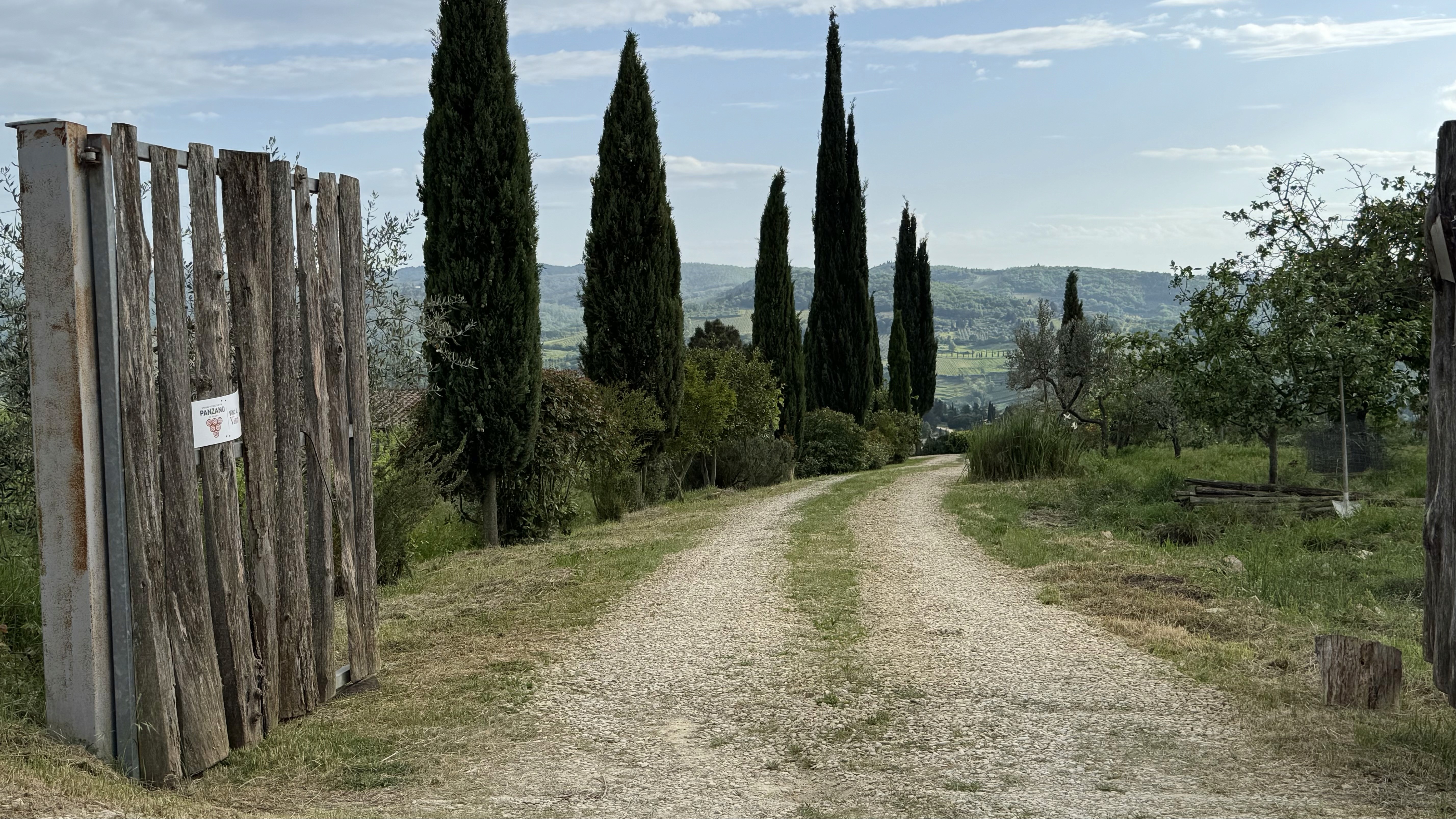
Long before Tuscany became the postcard landscape we know today, these hills were shaped by centuries of sharecropping.
The Family Who Refused to Leave
By the 1970s and 1980s, Tuscany was changing rapidly. Families left the countryside searching for stable salaries and easier lives in the cities. Many farms were abandoned. Investors slowly began arriving. The old sharecropping system was collapsing.
Most people left, but the Anichinis stayed.
In 1984, despite having almost no money, Giuliano and Anna made a decision that would change everything: they decided to buy the land they had worked for decades.
To afford it, they worked everywhere they could. During the day, they farmed. At night, they worked in a nearby restaurant. Anna cooked while raising children and helping manage the animals, vineyards, and extended family household.
Francesco describes that old family structure as “like a commune,” with grandparents, uncles, children, and everyone else contributing together to survive.
Looking back now, Francesco believes 1984 may have been one of the very last moments when ordinary farming families could still afford to buy land in Chianti, before prices exploded. Against all odds, they succeeded.
Their story is part of a larger pattern in Chianti Classico: families holding onto the land while the region around them changed. We found a similar story with the Machetti family in Ville di Corsano, where the family is opening up their vineyard and small winery for people to stay and explore.
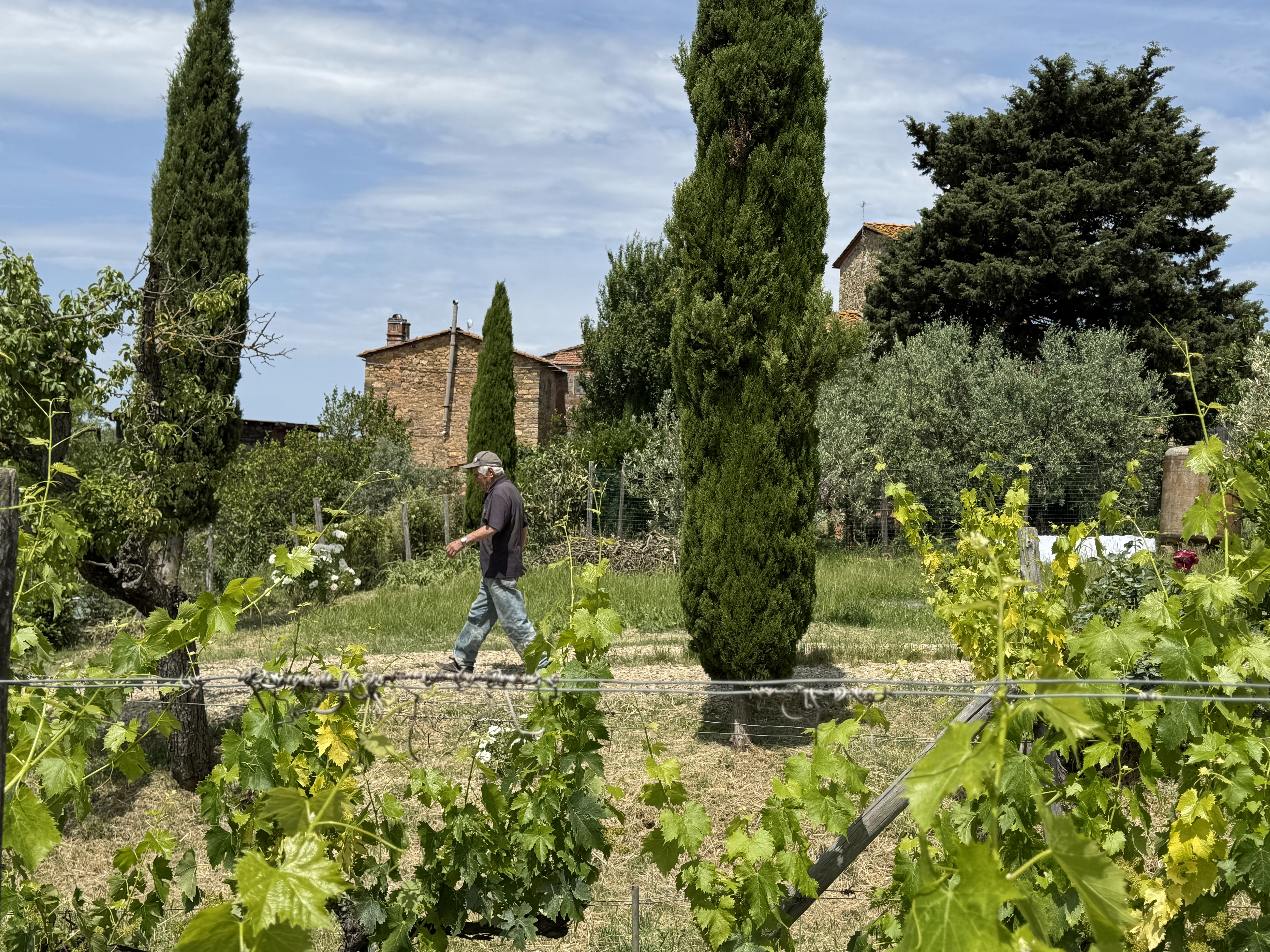
In the 1970s and 1980 families left the countryside, but the Anichinis stayed.
When Wine Becomes Family History
By the time we sat down around the table with Francesco, Anna, and Giuliano, we realized we were no longer simply tasting Chianti Classico. We were tasting the story we had just heard.
Every bottle Francesco produces carries a piece of his family’s history. The labels are family photographs. His Chianti Classico features an image of his parents harvesting grapes together in 1975, while they were still sharecroppers, smiling despite the hard work and uncertainty that defined those years.
His Campo dell’Orzo Gran Selezione honors his grandfather. It comes from the very field where the family once grew barley and vegetables to feed themselves, before it became the family’s finest Sangiovese vineyard.
As we tasted both the Chianti Classico and the Campo dell’Orzo Gran Selezione, traditional Chianti came to mind. The wines offered expressive aromas of dark cherry, subtle spice, and earthy undertones, unfolding with depth and lingering persistence.
Francesco calls his approach “old style,” and you can taste what he means. Fermentation takes place naturally in stainless steel before the Chianti Classico rests for eight months in large traditional chestnut and oak barrels. The Gran Selezione spends thirty months maturing before release.
The wines preserve the freshness, balance, and vibrant character that have long defined traditional Chianti Classico, but the family history gives them another layer of meaning. You are not only tasting Sangiovese from Tuscany. You are tasting what the Anichinis managed to preserve.
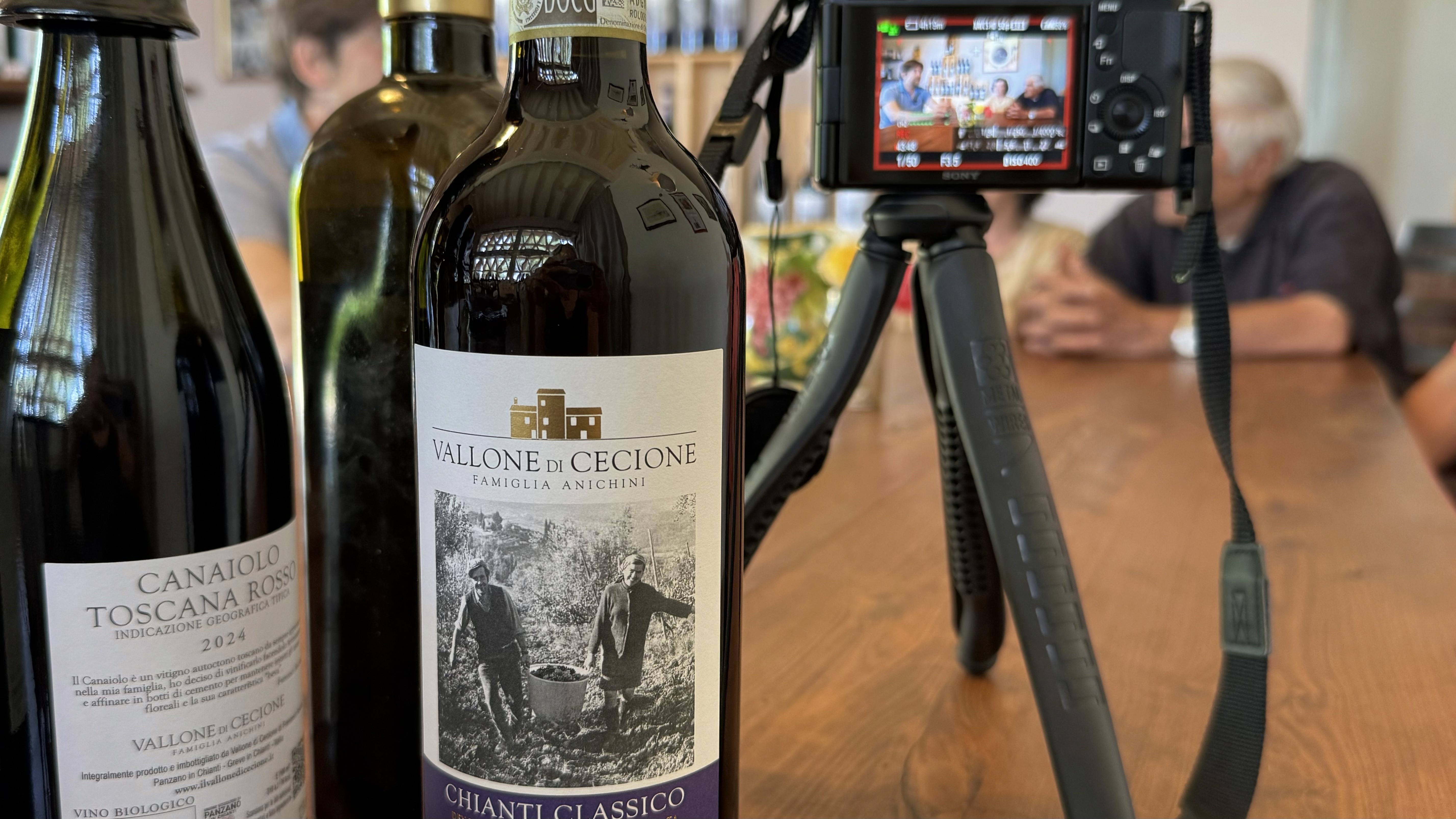
Interviewing the Anichini family took us back to the Tuscany of the past—a history Francesco keeps alive on every bottle.
A Wine That Feels Grounded
In many ways, the wines reminded us of the Anichini family themselves: honest, grounded, unpretentious, and inviting.
During our conversation, Giuliano interrupted with another story. Anna quietly smiled. Francesco laughed often. There was no sense of anyone trying to impress us. Instead, there was an ease among them, a quiet optimism woven into both the family and the wines.
That feeling is familiar in the best family-run wineries of Tuscany. At Carpineta Fontalpino, we found a kindred spirit, where a family’s relationship with the land shapes the character of every wine.
As Francesco told us:
“Wine is not just alcohol to drink… you drink the story behind.”
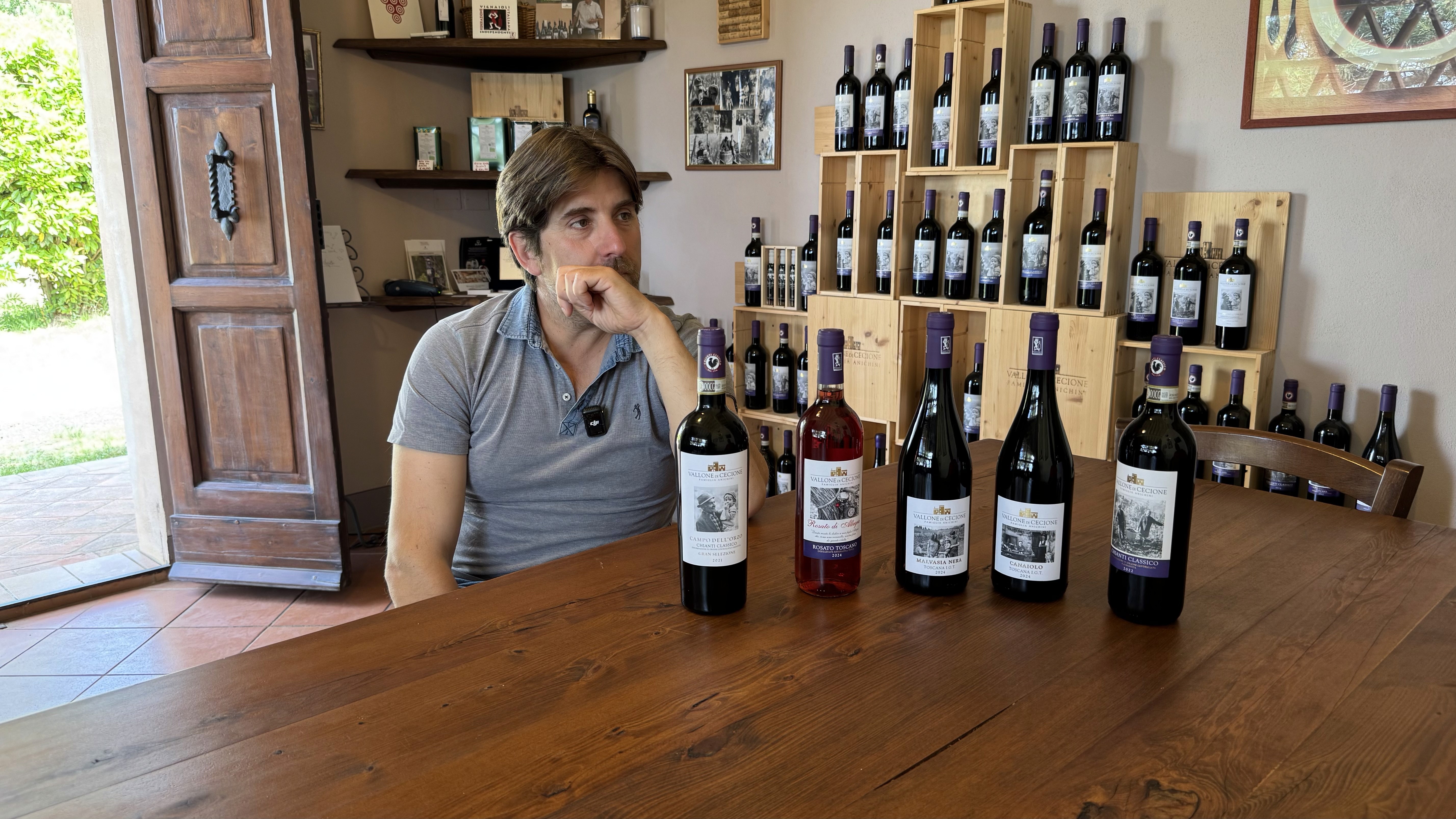
Every bottle Francesco produces carries a piece of his family’s history - the labels are family photographs.
That may be the best way to understand Vallone di Cecione. The story is not separate from the wine. It is in the family photographs, the fields that changed purpose, the cellar, the old barrels, and the decision to stay when leaving might have been easier.
It is also why the winery belongs in the larger story of Italy’s wine regions. Tuscany is beautiful, but its beauty becomes more meaningful when you understand the people who worked to preserve it.
Visit the Vallone di Cecione website: https://www.ilvallonedicecione.it/en/
Visit our Italy page for a full overview of wine in Italy.
More from this country

Italy
Italian Wine Regions Guide: Tuscany, Piedmont, Valpolicella, Sicily, and Alto Adige
Where to begin with the wines, producers, and firsthand stories that helped us understand five distinctive corners of Italy.

Italy
Why Daniel Sigmund’s Alto Adige Mountain Wines Taste So Fresh
A first-generation winemaker turns the steep vineyards of the Eisack Valley into Silvaner, Riesling, and Pinot Noir defined by freshness, elegance, and place.

Italy
900 Years Later, This Winery Is Still Making Some of Italy's Most Remarkable White Wines
How Abbazia di Novacella has balanced centuries of tradition with wines that still feel vibrant, fresh, and unmistakably Alpine.



From Vineyard to Inbox
Subscribe to our newsletter